
The $1 home program in Sardinia made headlines worldwide, and the internet ran with it. Most people pictured lavish seaside villas, practically free, waiting to be claimed.
- Island Overview: What Makes Sardinia Special
- Sardinia Key Regions:
- Getting There: Sardinia’s Logistics
- 10 days in Sardinia
- Please leave your email to start the download
- Sardinia Road Trip
- Day 1: Cagliari
- Day 2: Iglesias
- Day 3: Barumini
- Day 4: Bosa
- Day 5: Alghero
- Day 6: Sassari
- Day 7: Bear Rock
- Day 8: Gola su Gorropu
- Day 9: Bue Marino Caves
- Day 10: Return to Cagliari
- Day 1: Arrival in Cagliari
- Day 2: Iglesias and Pan di Zucchero
- Day 3: Barumini and Giara di Gesturi Plateau
- Day 4: Tharros and Bosa
- Day 5: Alghero – Grotta di Nettuno and Alghero
- Day 6: Holy Trinity of Saccargia and Sassari
- Day 7: Bear Rock and Perda e Liana
- Tip
- Day 8: Gola su Gorropu and Tiscali Nuragic Village
- Day 9: Bue Marino Caves and Supramonte Mountains
- Day 10: Return to Cagliari
- 10-day Sardinia Itinerary Map with Landmarks
- Sardinia $1 Homes
- Nulvi, Sassari
- Montresta, Oristano
- Romana, Sassari
- Bonnanaro, Sassari
- Ollolai, Nuoro
- Costs and Conditions of Sardinia $1 Houses Program
The reality is a little different. Costa Smeralda draws the luxury crowd, but the $1 program has nothing to do with that part of the island. It targets depopulated inland villages, where local governments are attempting to attract new residents willing to restore long-neglected homes. This 10-day itinerary loops through the entire island, covering the regions that matter most — useful context for tourists and anyone curious about what that $1 deal actually involves.
Island Overview: What Makes Sardinia Special
Sardinia is the Mediterranean’s second-largest island (after Sicily) and one of the world’s Blue Zones. If you didn’t know, a Blue Zone is an area with an abnormally high life expectancy (80+). Sardinia is an outdoor lover’s paradise with hiking trails like Gola su Gorropu and cultural gems like Su Nuraxi di Barumini, a UNESCO-listed Nuragic site.
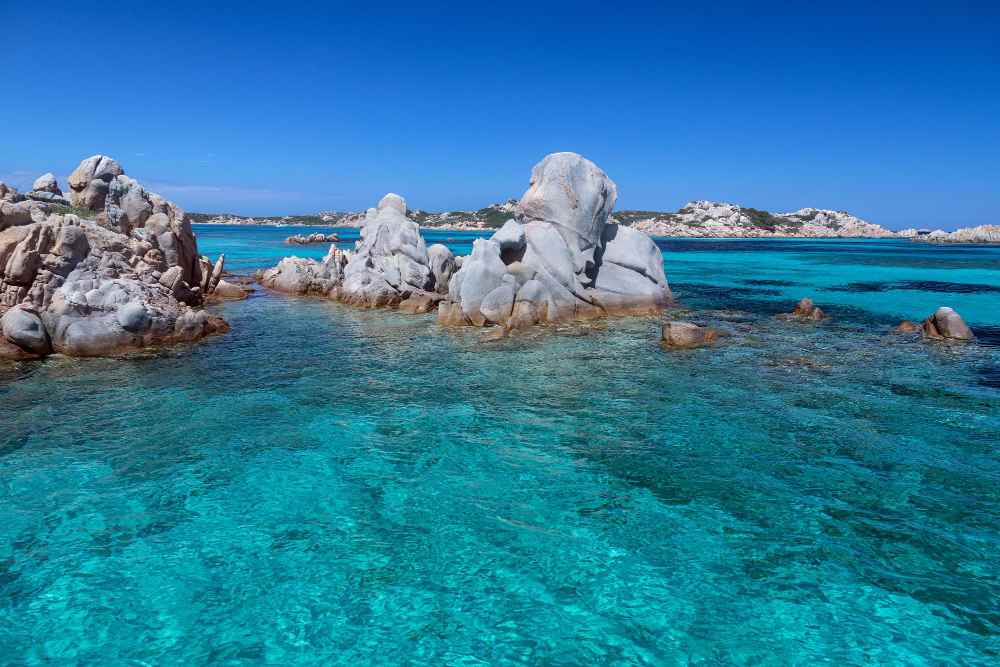
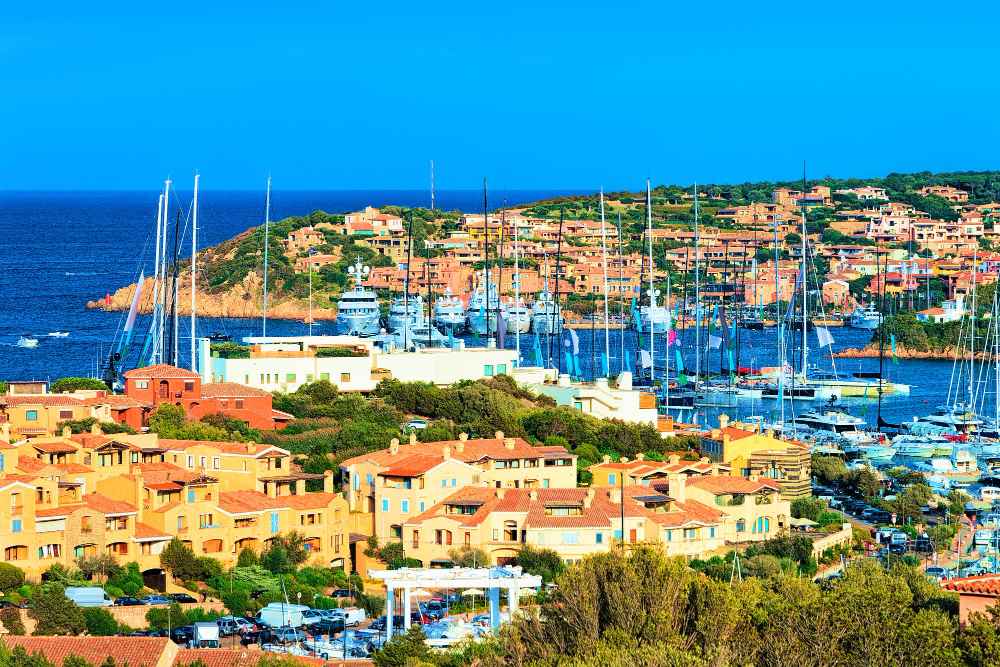
What sets this place apart comes down to scale, variety, and age. You can swim in water that looks like the Caribbean, hike a canyon that rivals the Alps for drama, and then eat dinner in a village where the same family has lived for four centuries.
Sardinia Key Regions:
Sardinia breaks naturally into 4 areas, each with a different character.
The south (Cagliari and surroundings) anchors the island with the capital city, ancient Phoenician ruins, and the dramatic Costa Verde coastline. The Sulcis-Iglesiente area carries a mining history unlike anything else in Italy.
The center (Barbagia and Nuoro) is where the real Sardinia lives. Mountain villages, Nuragic ruins, and the Supramonte range define this quiet interior. It’s the least visited region and often the most rewarding.
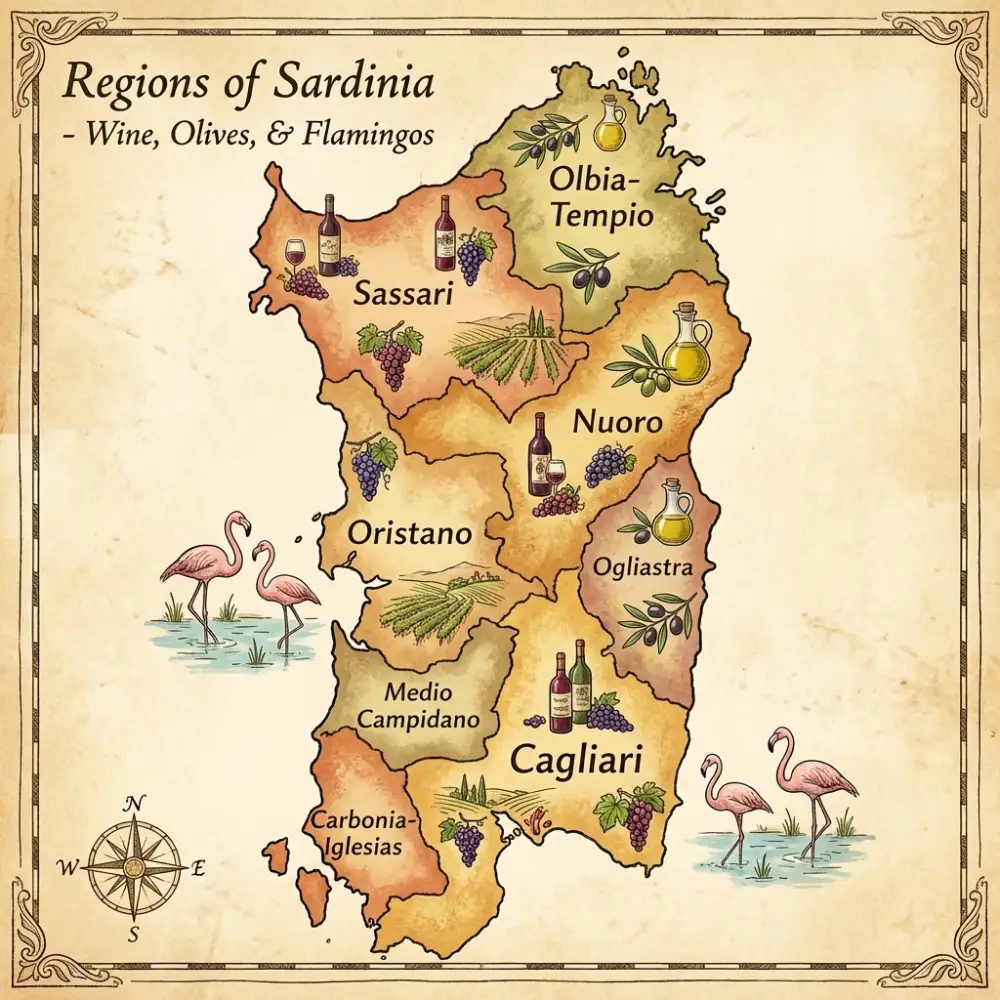
The northwest (Alghero and Sassari) has a Catalan past you can still hear in the local dialect. The coastline around Capo Caccia holds sea caves that rank among the finest in Europe, and the city of Alghero has a historic center that earns every superlative.
The north (Gallura) is home to the Costa Smeralda, granite rock formations, and the La Maddalena Archipelago. It’s glamorous and expensive in August. Shoulder season is when it genuinely shines.
Getting There: Sardinia’s Logistics
Sardinia has 3 international airports. This itinerary starts and ends in Cagliari, so Cagliari Elmas is the most practical entry point. Olbia and Alghero work well if you want to reverse the route or fly in and out of different airports.
| Airport | Location | Code | Best For |
|---|---|---|---|
| Cagliari Elmas | Southern Sardinia | CAG | This itinerary, with a south and interior focus |
| Olbia Costa Smeralda | Northeast Sardinia | OLB | Northern Sardinia, Costa Smeralda, Palau |
| Alghero Fertilia | Northwest Sardinia | AHO | Alghero-first itineraries; budget airlines from Europe |
By ferry — the alternative to flying, especially if you’re coming from mainland Italy with your own car:
- Civitavecchia (Rome) to Cagliari or Olbia: Most popular route; overnight crossings available
- Genoa to Porto Torres or Olbia: Long crossing (~20 hrs) but direct and comfortable on modern ships
- Livorno to Olbia: Shorter than Genoa; good for northern Italy departures
- Barcelona to Porto Torres: Useful if you’re traveling overland through Spain
- Toulon to Porto Torres: The main option for travelers coming from southern France
10 days in Sardinia
This itinerary focuses on a car route, as public transport is limited in rural areas. As you can see below, Sardinia is relatively small, and it will take less than 14 hours to drive around all of it.
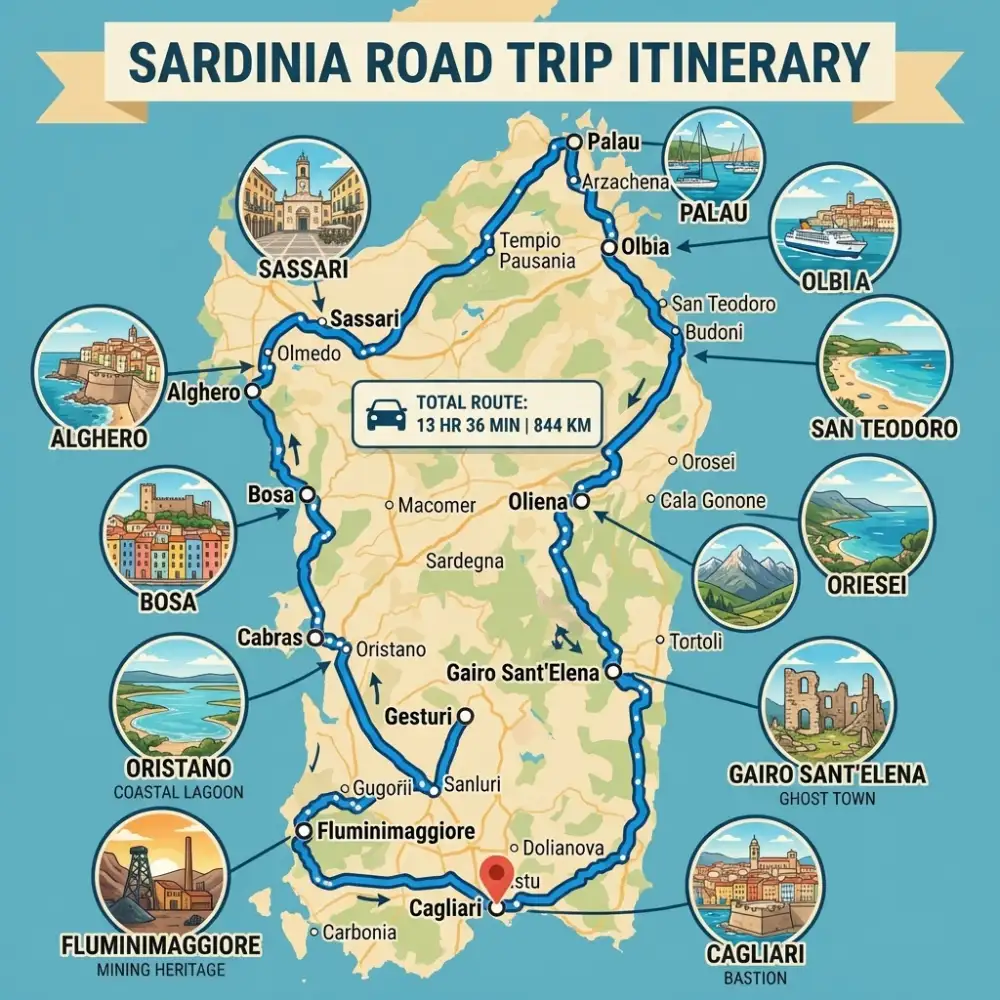
The route loops south to north, then cuts back down the east coast. You’ll shift bases roughly every two nights, which covers significant ground without the exhaustion of nightly hotel changes. Each day is designed to be full but not frenetic.
Sardinia Road Trip
Day 1: Cagliari
- Roman Amphitheatre
- Castello District
- Bastione di Saint Remy
Day 2: Iglesias
- Su Mannau Cave System
- Masua
- Pan di Zucchero
Day 3: Barumini
- Su Nuraxi di Barumini
- Giara di Gesturi Plateau
- Oristano
Day 4: Bosa
- San Giovanni Tower
- Malaspina Castle
- Church of Our Lady of Regnos Altos
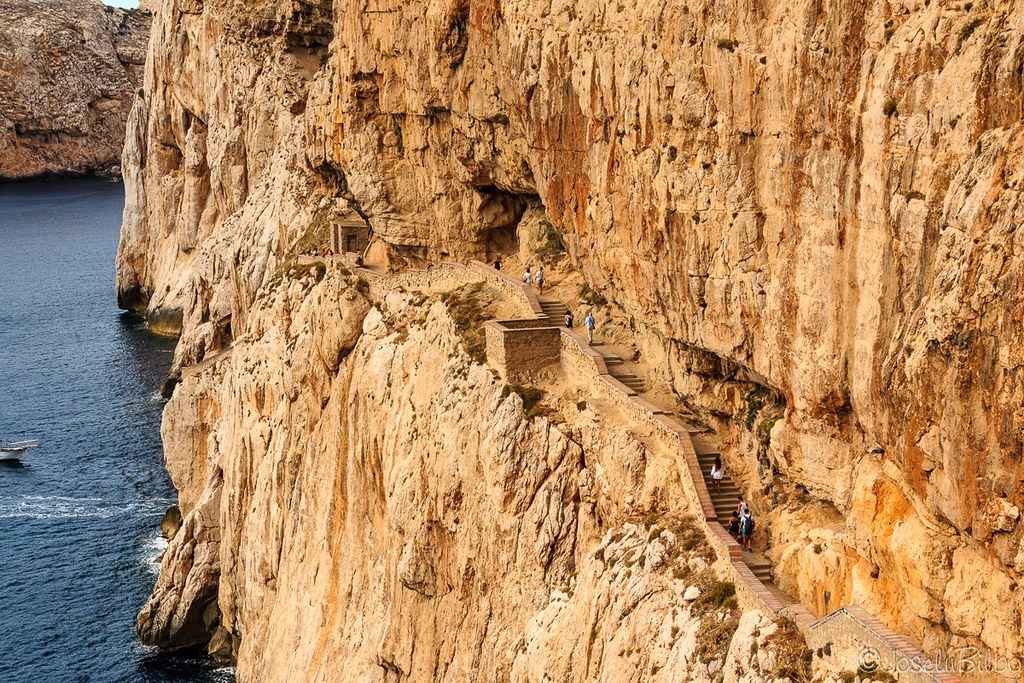
Day 5: Alghero
- Grotta di Nettuno
- Escala del Cabirol
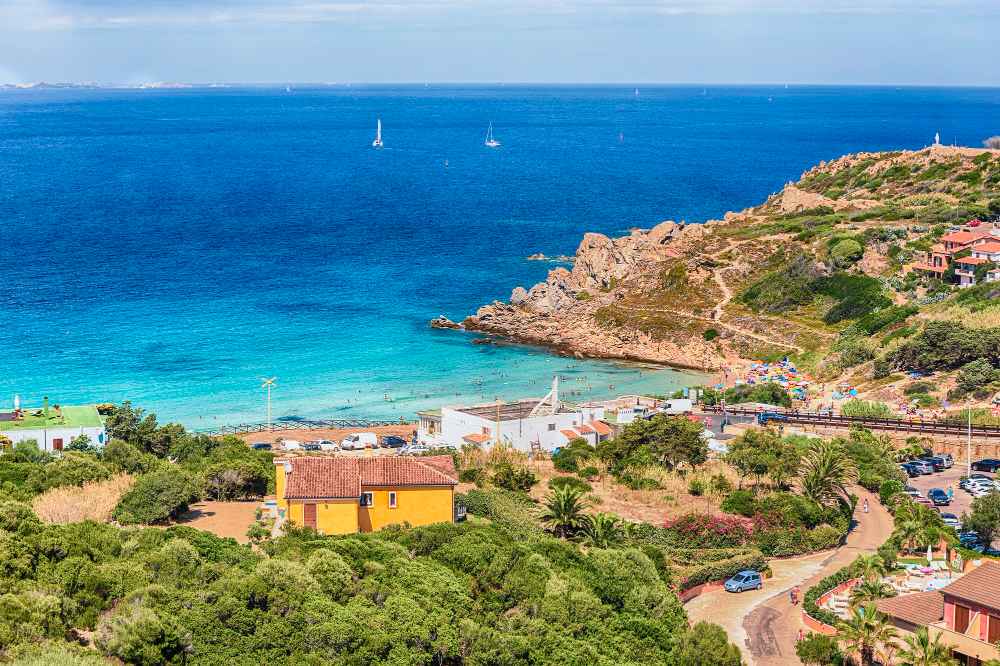
Day 6: Sassari
- Holy Trinity of Saccargia
- Palazzo della Provincia
- Duomo of St. Nicholas
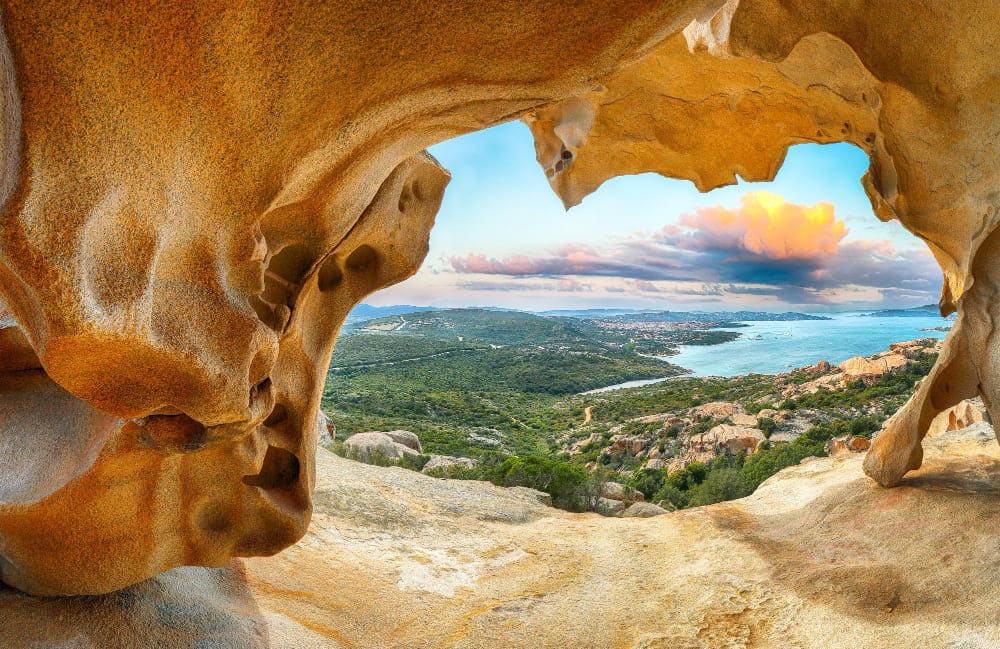
Day 7: Bear Rock
- Roccia dell’Orso
- Maddalena Archipelago
- Perda e Liana
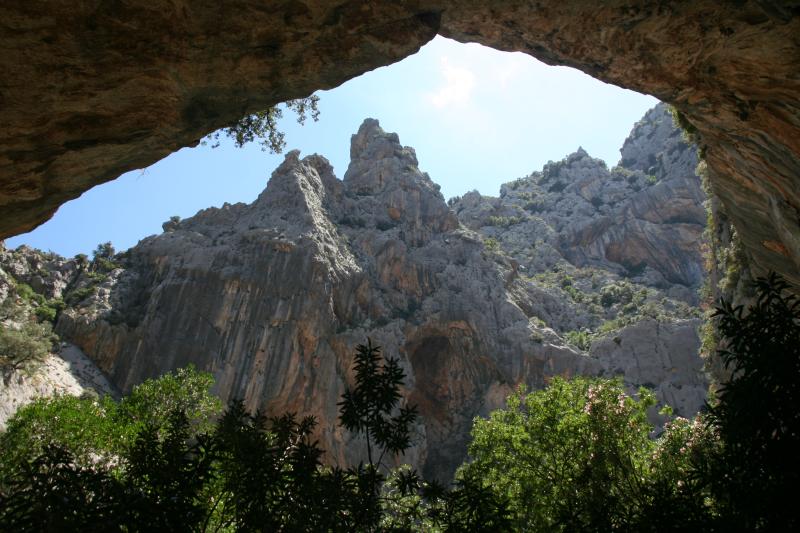
Day 8: Gola su Gorropu
- Gola su Gorropu
- Tiscali Nuragic Village
Day 9: Bue Marino Caves
- Bue Marino Caves
- Cala Gonone
- Supramonte Mountains
Day 10: Return to Cagliari
- Molentargius-Saline Nature Park
- Bellarosa Maggiore Lagoon
- Città di Sale
Day 1: Arrival in Cagliari
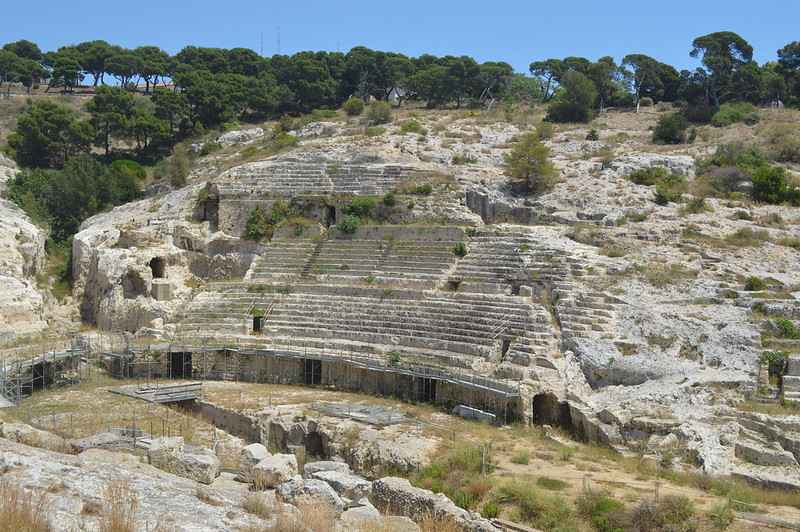
Once in the city, start your exploration at the Roman Amphitheatre, a 2nd-century structure carved into limestone that once hosted thousands for gladiatorial games and public events. It may not be as big and spectacular as the Colosseum, but it is well worth a visit, especially after the recent release of Gladiator II.
After lunch, head to the Castello District, a historic quarter of Cagliari. Its labyrinth of cobblestone streets leads you past landmarks like the Torre dell’Elefante, a 14th-century defensive tower, and the Cathedral of Santa Maria, known for its mix of Romanesque and Baroque styles. Many buildings here date back to the Pisan rule.
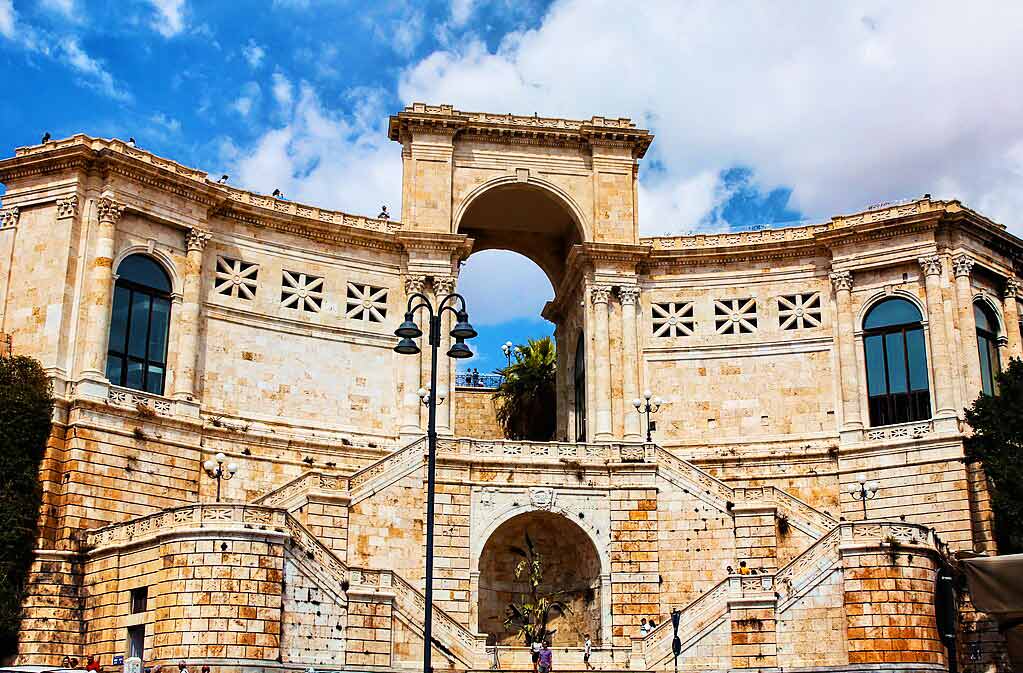
As evening falls, make your way to the Bastione di Saint Remy. This terrace, built in the late 19th century, provides uninterrupted views of the city, port, and surrounding coastline.
Day 2: Iglesias and Pan di Zucchero
Drive 1.5 hours southwest from Cagliari to Iglesias, a historic town with medieval charm and mining heritage. Start your day at the Su Mannau Cave System, a fascinating natural site with chambers and underground streams that date back to the Nuragic period.
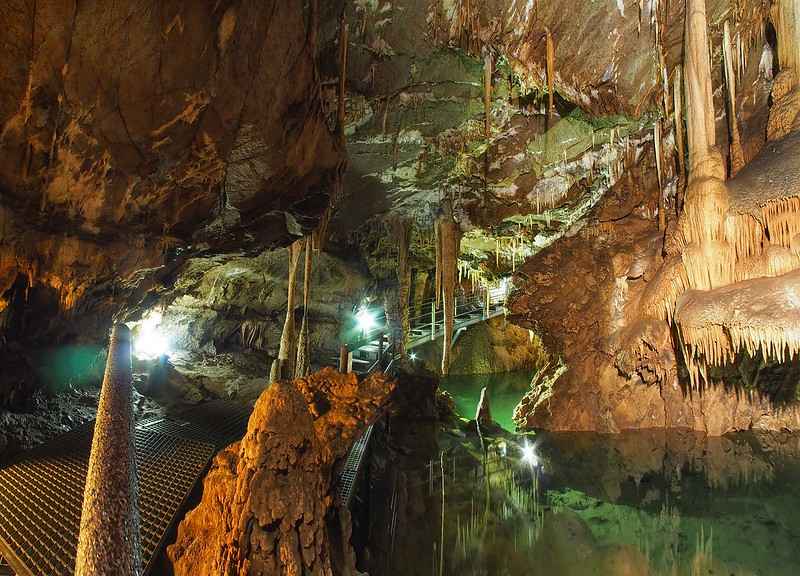
This extensive cave system is among the oldest in the world (roughly 540 million years). It winds for approximately 8 km / 5 mi, but the visitors explore around 500 m / 1600 ft of it, with a tour taking ≈1 hour.
As legend has it, an ogre named Mannau was condemned to live in the cave. His tears are said to have formed the tunnels and blue lakes.
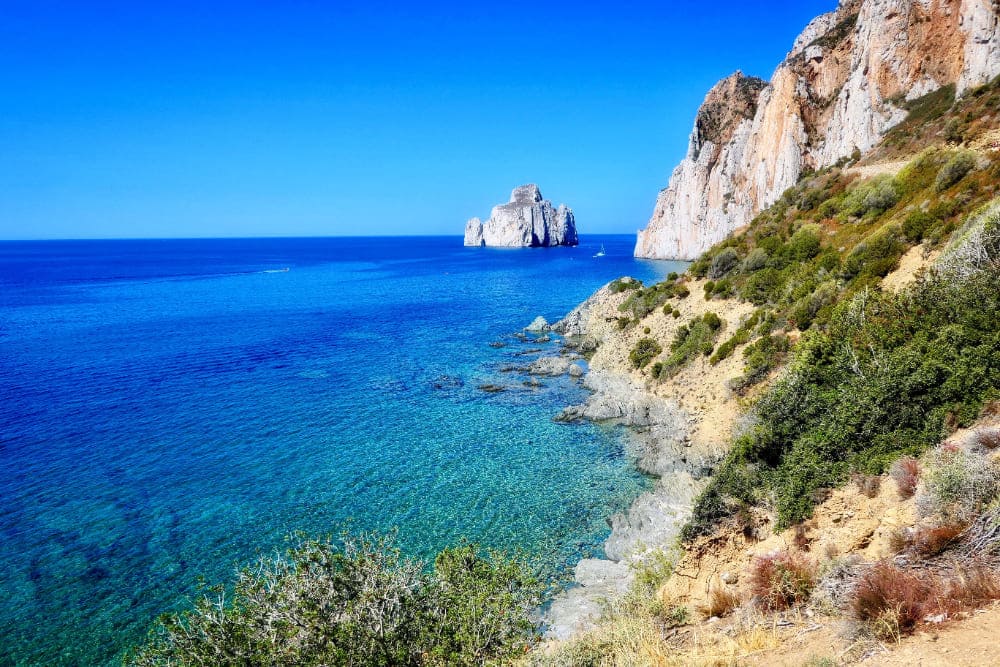
In the afternoon, head to Pan di Zucchero, Sardinia’s tallest sea stack at 133 meters (436 feet), located near the coastal village of Masua. Pan di Zucchero, or “Sugar Loaf”, was named after a bigger, similar formation located in Rio de Janeiro. It can be reached by boat or kayak. If you pass by the gorge and whisper your wish, it will come true; that’s the belief.
Overnight in Iglesias.
Day 3: Barumini and Giara di Gesturi Plateau
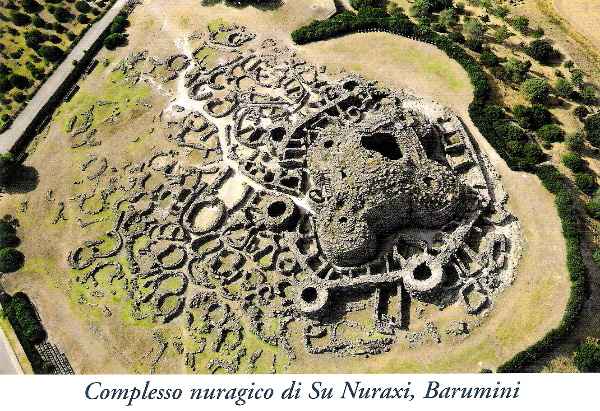
Start with a drive to Su Nuraxi di Barumini, a UNESCO World Heritage Site about 1 hour from Cagliari. This Nuragic complex, dating back to 1500 BCE, features a central stone tower and a surrounding village.
A 30-minute drive takes you to the Giara di Gesturi Plateau, a volcanic highland renowned for its wild Giara horses, which roam freely among the plateau’s unique flora, including cork oaks and Mediterranean shrubs.
Overnight in Oristano.
Day 4: Tharros and Bosa
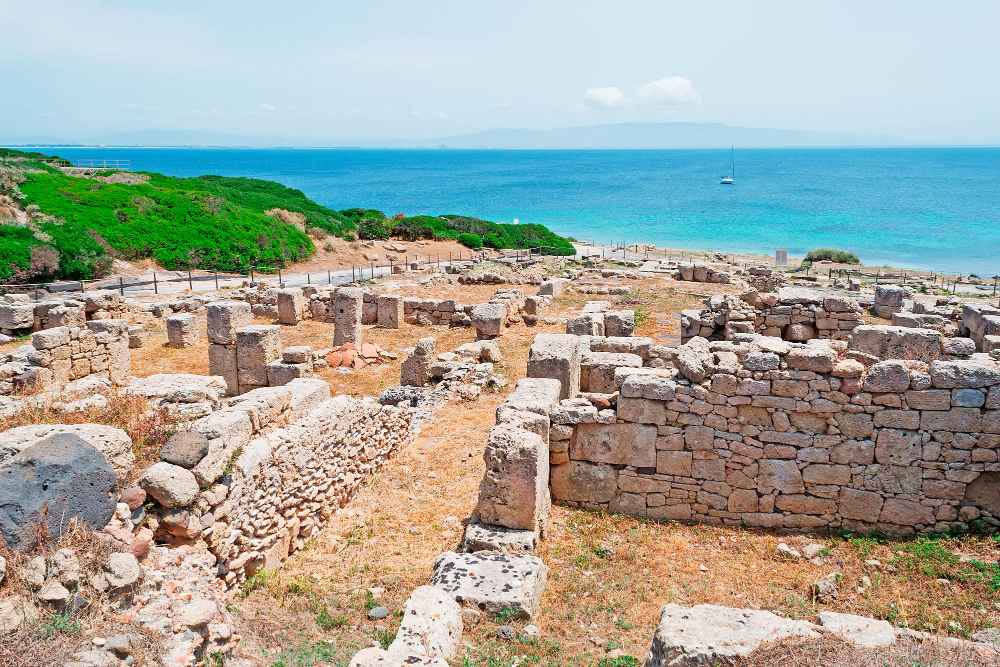
Begin your day with a 30-minute drive west from Oristano to Tharros, an ancient city on the Sinis Peninsula. Once a thriving Phoenician, Carthaginian, and later Roman settlement, Tharros is now an archaeological site. Wander through the remains of Roman baths, temples, and a necropolis. Don’t miss the chance to climb the nearby San Giovanni Tower for panoramic views of the peninsula.
After lunch, drive 1.5 hours north along Sardinia’s scenic coastal road to reach Bosa. It’s located on the banks of the Temo River, the island’s only navigable river. Bosa is distinguished by its brightly painted houses, part of the historic district of Sa Costa, which stretches up the hill toward Malaspina Castle.
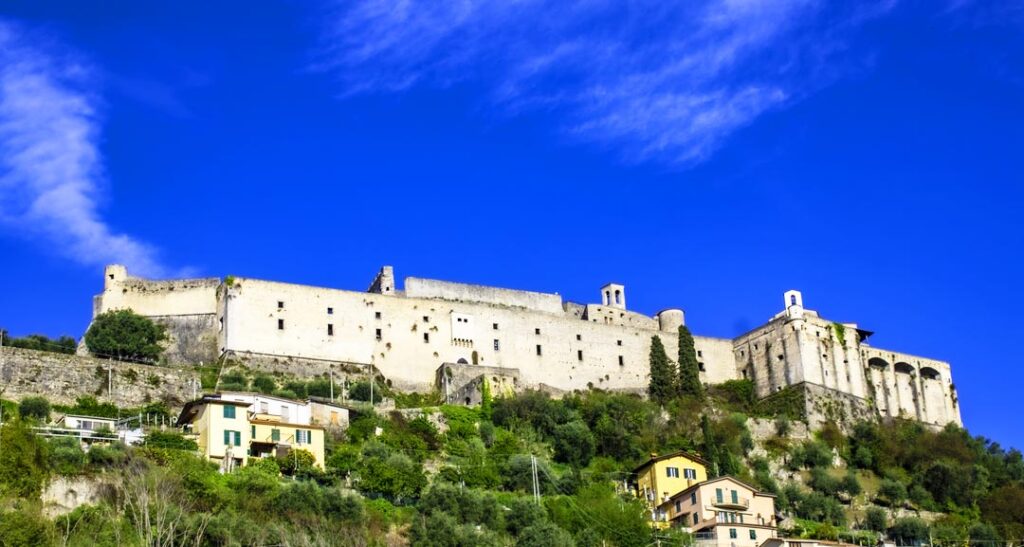
Explore the castle grounds and visit the Church of Our Lady of Regnos Altos, adorned with medieval frescoes.
A fascinating legend surrounds the castle: A jealous marquis allegedly built an underpass to the cathedral for his beautiful wife. In a fit of jealousy, he cut off her fingers. The crime was exposed when he accidentally revealed the fingers to his friends. Some believe certain rocks within the castle are petrified fingers or witnesses.
Overnight in Bosa.
Day 5: Alghero – Grotta di Nettuno and Alghero
Begin your day with a scenic 1-hour drive from Bosa to Alghero, a historic coastal city known for its Catalan-Gothic architecture. First, visit the Grotta di Nettuno, one of Sardinia’s most famous caves.
Accessible by boat (weather permitting) or via the Escala del Cabirol, a dramatic staircase carved into the cliffside with 654 steps descending to the cave entrance. Inside, marvel at the stalactites, stalagmites, and the crystalline underground lake.
The tickets to Grotta di Nettuno can be purchased online, or you can get a joint ticket with passes to all Alghero attractions at once. The cave is not open all year round; it’s usually closed from November to March.
Overnight in Alghero.
Day 6: Holy Trinity of Saccargia and Sassari
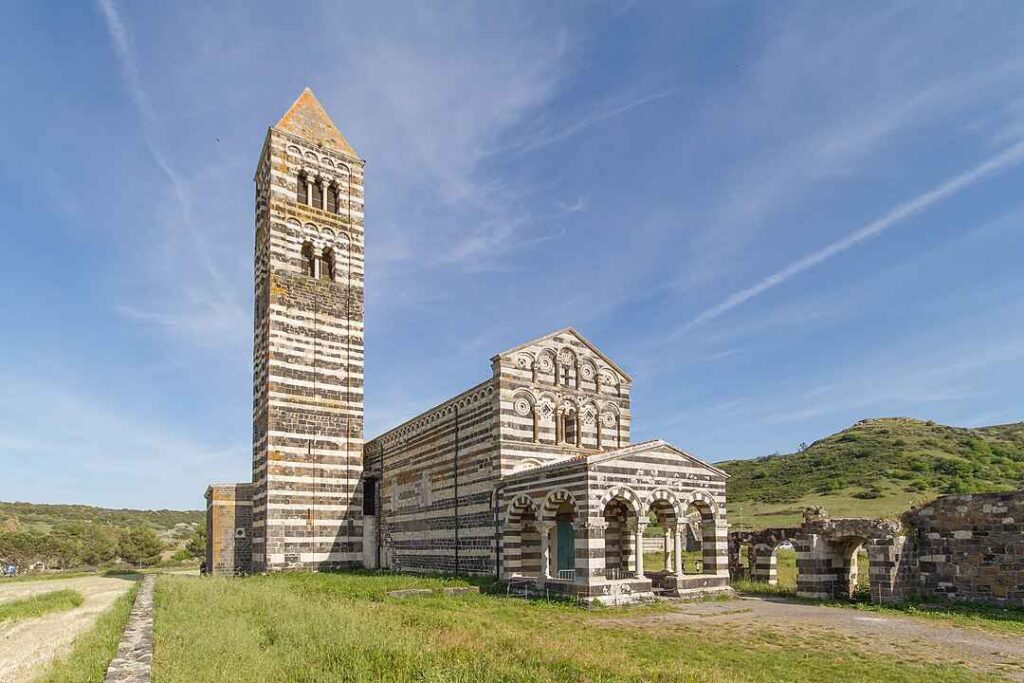
Drive 45 minutes to the Holy Trinity of Saccargia, a 12th-century Romanesque church known for its striking black-and-white stone design. Inside, you’ll find well-preserved medieval frescoes, a rarity for Sardinia.
From there, continue for 30 minutes to Sassari, Sardinia’s second-largest city. Start at Piazza d’Italia, the city’s grand central square, surrounded by 19th-century palaces like the Palazzo della Provincia. Visit the Duomo of St. Nicholas, which reflects Sardinia’s complex past through its Gothic, Baroque, and Romanesque architectural elements.
Sassari province towns are participating in the “1 Euro House” program. Even though Sassari itself is not participating, it’s a great starting point for exploring the area and getting clues about life in the North of Sardinia.
The region is known for producing high-quality olive oil and Vermentino wines, offering potential opportunities for those looking to engage in Sardinia’s growing agritourism sector. Located just 15 km / 9 mi from the coastline, the city is within easy reach of beaches such as Platamona and Porto Ferro. Its position also allows convenient access to the airport in Alghero (40 minutes by car) and tourist spots like Asinara National Park.
Overnight in Sassari.
Day 7: Bear Rock and Perda e Liana
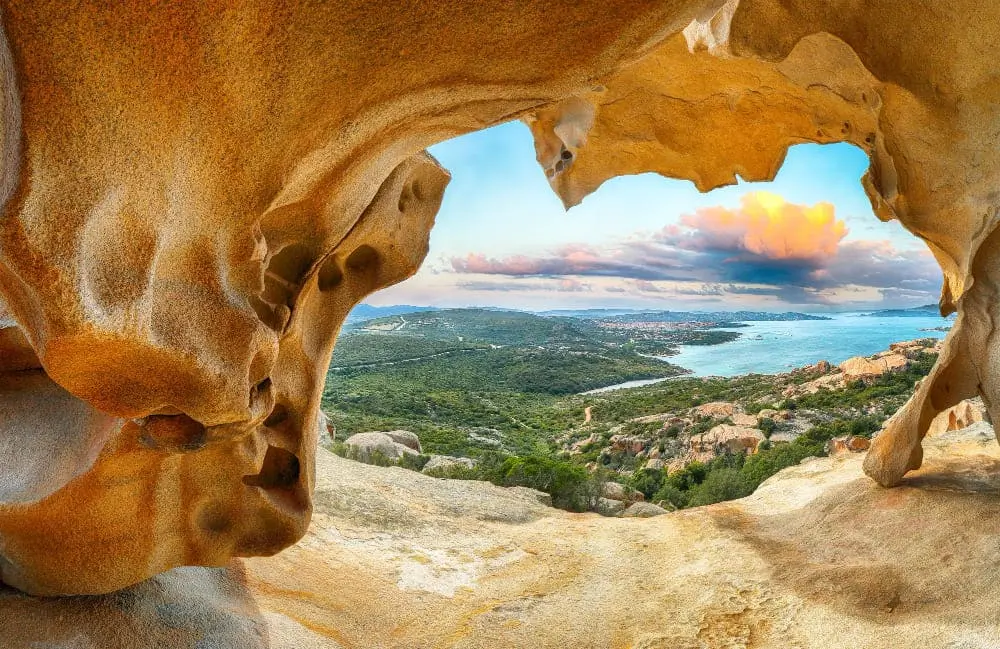
Start the day with a 2-hour drive southeast to Roccia dell’Orso (Bear Rock) near Palau, a granite formation sculpted by natural erosion over centuries into the shape of a bear. The site offers a viewing platform with panoramic views of the Maddalena Archipelago and the northern Sardinian coast. Nearby, Palau serves as a gateway to the archipelago, making it a popular stop for visitors heading to its islands.
Tip
Roccia dell’Orso is closed for the winter season, check the opening status and hours before going.
From Palau, drive 3.5 hours southeast to Perda e Liana, a striking limestone pinnacle rising to 1,293 meters (4,243 feet) above sea level. Located in the Ogliastra region, this natural monument is part of the Gennargentu mountain range.
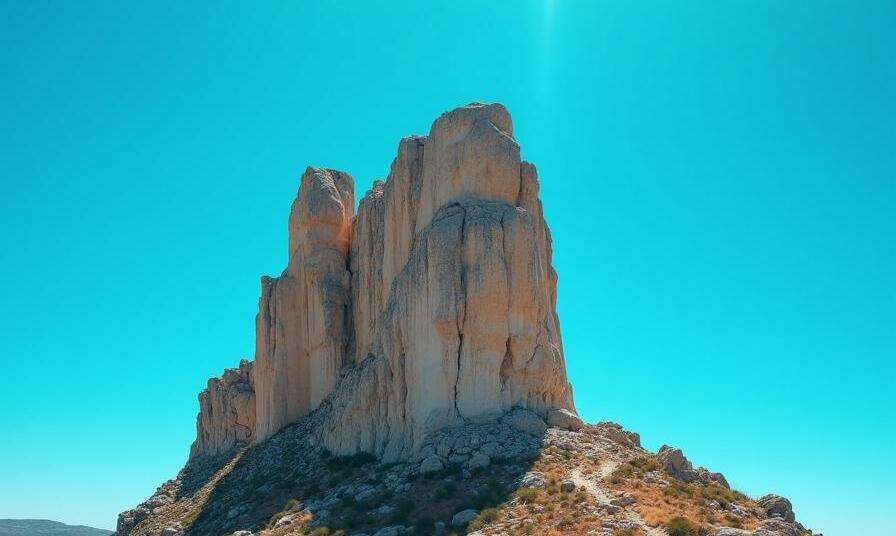
Short trails in the area allow for closer views of the monolith, which is surrounded by dense woodlands and grazing areas used for sheep farming.
Overnight in Arzana.
Day 8: Gola su Gorropu and Tiscali Nuragic Village
Begin your day with a drive to Gola su Gorropu, also known as Gorropu Gorge, one of Europe’s deepest canyons. Located in the Supramonte mountain range, the gorge is over 500 meters (1,640 feet) deep in places and offers hiking trails ranging from moderate to challenging.
The route along the Flumineddu River provides stunning views of the canyon’s towering limestone walls. Ensure you wear sturdy footwear and carry water, as the hike can be physically demanding, especially during warmer months.
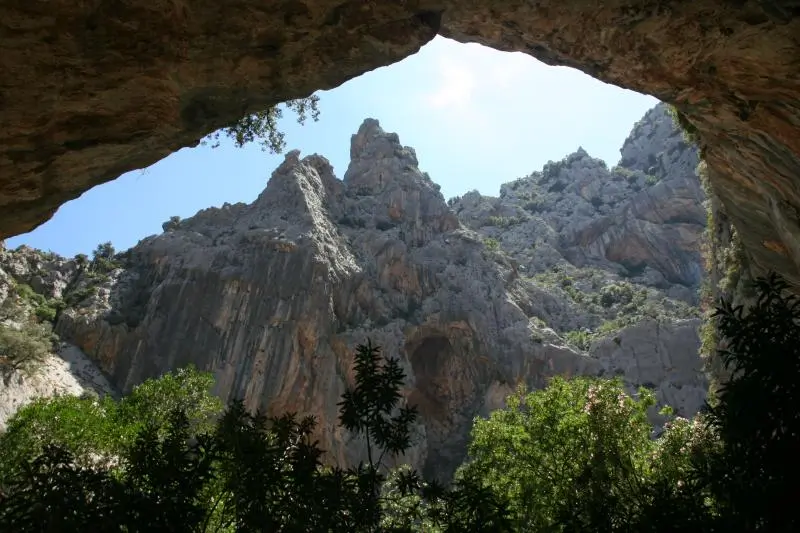
In the afternoon, head to the Tiscali Nuragic Village, a unique archaeological site concealed within a mountain hollow. This ancient settlement, thought to date back to the Bronze Age, is notable for its mysterious origins and location within a collapsed karstic cave.
The hike to Tiscali requires a moderate level of fitness and takes about 2 hours round trip, with paths offering sweeping views of the rugged Supramonte landscape.
Overnight in Cala Gonone.
Day 9: Bue Marino Caves and Supramonte Mountains
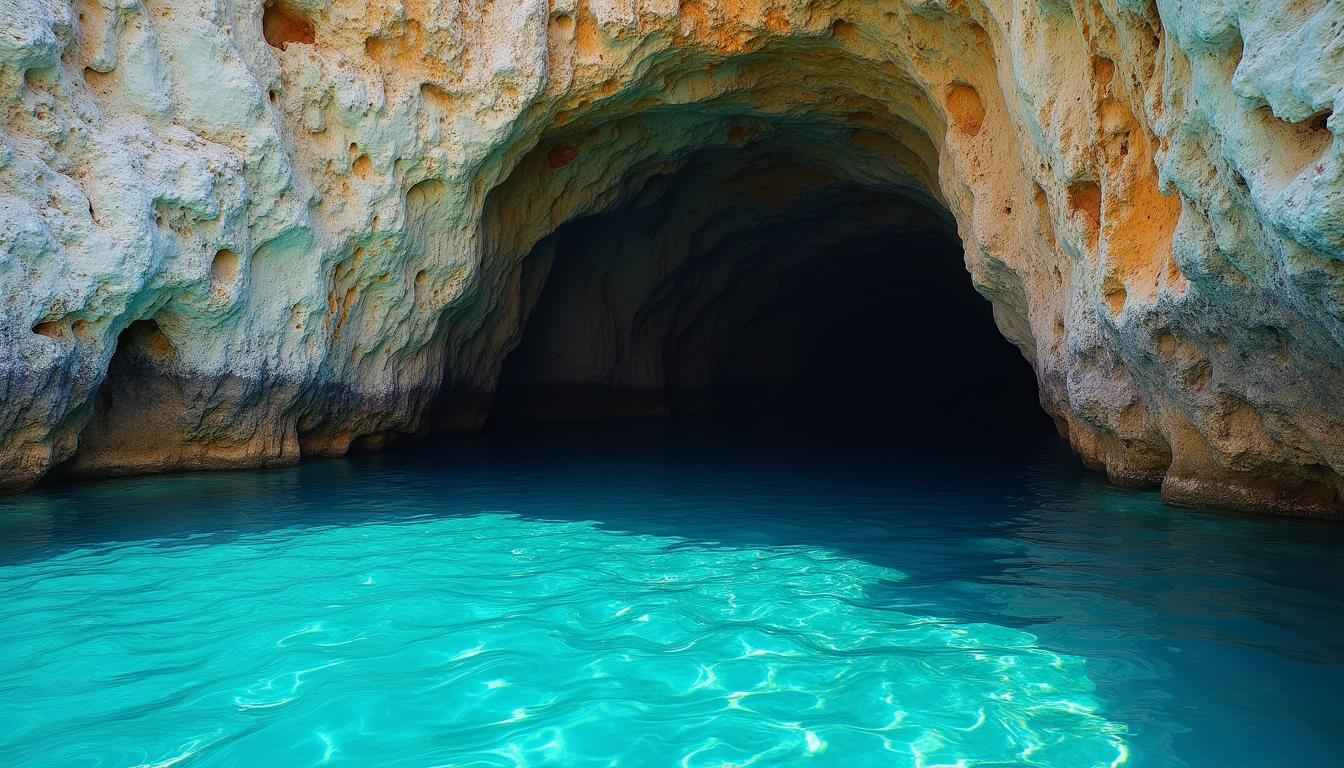
Start your day with a visit to the Bue Marino Caves, located 5 kilometers (approximately a 10-minute drive) south of Cala Gonone. These limestone caves extend for over 20 kilometers, with about 1 kilometer accessible to visitors.
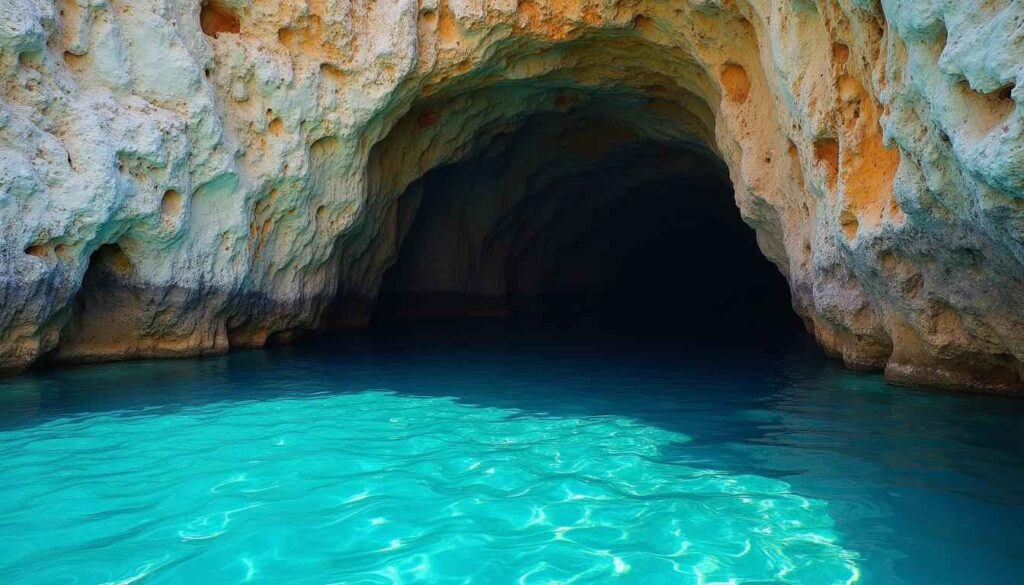
The caves are named after the Mediterranean monk seals (bue marino, or “sea ox”), which once inhabited the area. Inside, you’ll find fascinating petroglyphs dating back over 3,000 years, alongside impressive stalactites and stalagmites illuminated for a dramatic effect. Boats to the caves depart from Cala Gonone’s harbor, offering a scenic ride along Sardinia’s rugged coastline.
Afterward, drive approximately 30 kilometers (40 minutes) into the Supramonte Mountains, a region spanning 35,000 hectares known for its steep limestone cliffs and vast plateaus. Trails in this area lead to sites like Monte Corrasi (1,463 meters), Sardinia’s highest peak in this range.
For those interested in history, the Supramonte Mountains house ancient shepherd shelters known as pinnettas, and trails often intersect with archaeological sites. Adventurous visitors may explore natural springs like Su Gologone, Sardinia’s deepest freshwater spring, which reaches depths of over 100 meters.
Overnight in Nuoro or Oliena.
Day 10: Return to Cagliari
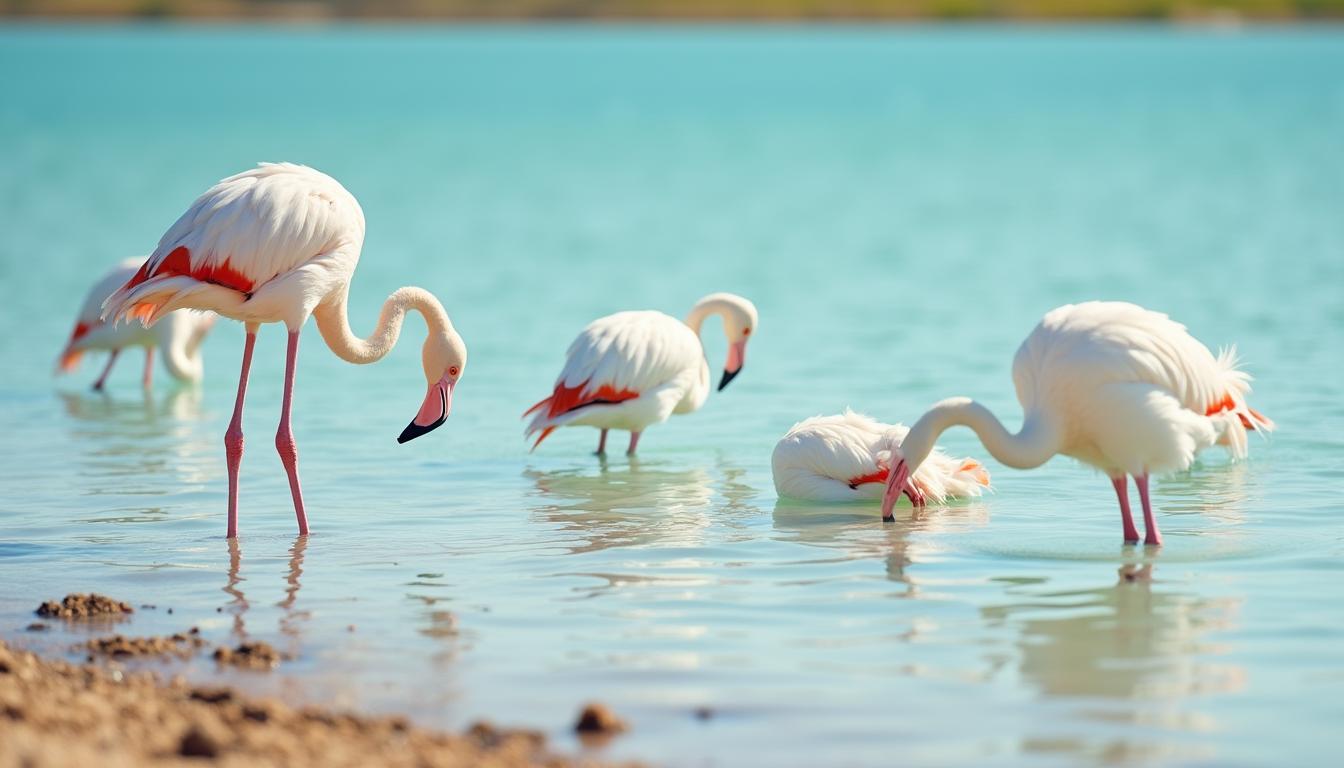
Start your journey back to Cagliari with a scenic 2-hour drive from Nuoro or Oliena. Before heading to the airport or ferry terminal, consider a visit to the Molentargius-Saline Nature Park, located just 10 minutes from Cagliari’s city center. This unique reserve spans over 1,600 hectares and offers a rare blend of wetlands and urban proximity.
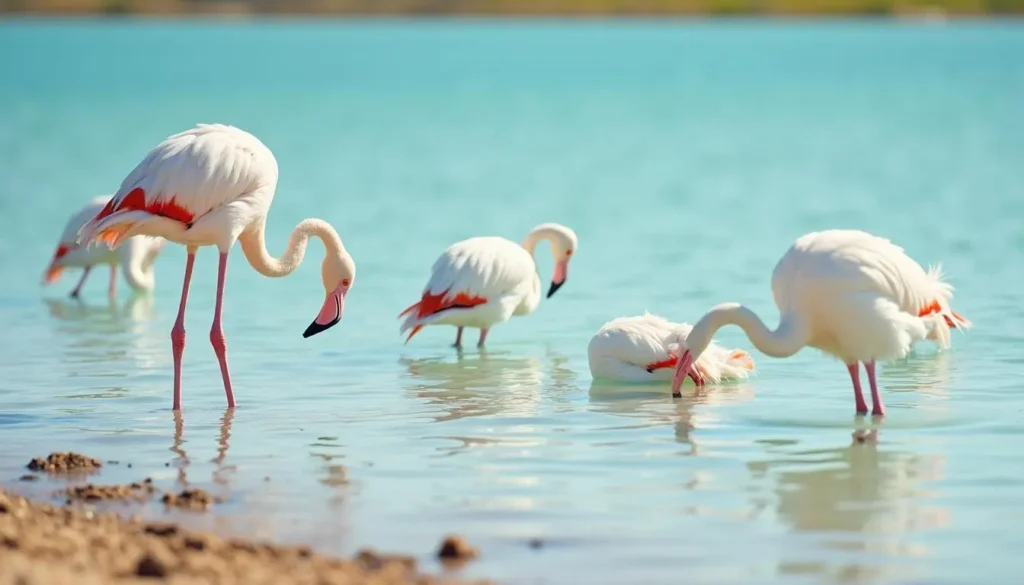
It is renowned for its thriving population of greater flamingos, which have made it their year-round home. This is one of the few places in Europe where flamingos nest, taking advantage of the park’s saltwater lagoons. Beyond flamingos, Molentargius is a haven for birdwatchers, with over 230 recorded species, including herons, cormorants, and marsh harriers.
Explore the Bellarosa Maggiore Lagoon, which is saltwater, and the Bellarosa Minore Lagoon, which is freshwater. The interaction between these ecosystems supports diverse flora and fauna. Visitors can walk or bike along well-marked trails or rent electric scooters to explore further. Don’t miss the Città di Sale, a historic structure used for salt production.
10-day Sardinia Itinerary Map with Landmarks
Sardinia $1 Homes
As mentioned before, Sardinia’s $1 homes aren’t close to Costa Smeralda or other luxury resorts. They are mainly in the Bosa and Sassari provinces (days 4 to 6 of the itinerary). Unfortunately, $1 isn’t the entire budget; taking part in this program will incur quite a bit more expenses, which we will break down below. But let’s look at the exact locations first.
Nulvi, Sassari
Nulvi is a historic town known as the main center of Anglona in Medieval times. It was the first to launch the €1-program back in 2016. Nulvi’s strategic location offers proximity to the Tyrrhenian Sea, with coastal towns like Castelsardo and Marina di Sorso accessible within a 30-45 minute drive, and the closest beach is in 15-minute drive. The distance from Sassari is 20 km / 12.5 mi. The population is estimated at ≈ 2,500 inhabitants.
Montresta, Oristano
Montresta joined the program in 2019. Administratively it belongs to Oristano, but the closest town to it is Bosa (15 minutes away). Founded around 1750, originally called Villa San Cristoforo. The estimated population is about 400. It boasts of rich archaeological heritage, including Punic and Nuragic sites.
Romana, Sassari
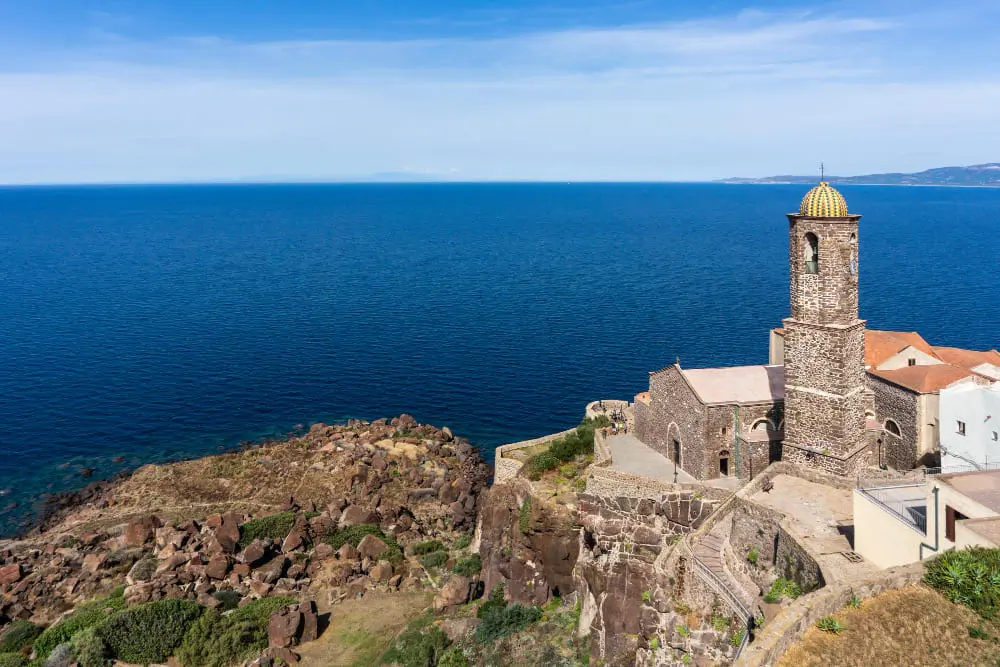
Romana has a slightly bigger population than Montresta — estimated at 500. It’s a 40-minute drive away from Alghero, with its airport and beaches. And slightly smaller distance to Sassari. Like all towns and villages in the area, it has a rich Nuragic heritage. It joined the program in June 2021 and still has some properties available.
Bonnanaro, Sassari
Bonnanaro joined the program in November 2022, and images of available houses were made public, providing potential buyers with insights into the properties up for renovation. It’s around 30-minutes drive from Sassari and Alghero. The population is estimated at 1000. Founded around the year 1000, originally called “Gunar” and then “Gunnanor”. The town is renowned for its cherry orchards and vineyards. In mid-June, Bonnanaro hosts a popular cherry festival.
Ollolai, Nuoro
Ollolai made the headlines in late 2024 following the elections in the United States, appealing to U.S. citizens looking for relocation opportunities. Ollolai is one of the Blue Zones, positioned in the very center of Sardinia. The drive from Cagliari is 2-2.5 hours, depending on the route. It sits high in the mountains with an elevation of 970 meters (3,180 ft) above sea level. The population is estimated at 1200 inhabitants. Ollolai was historically the capital of the Barbagia district during the Giudicati period (Sardinia’s medieval kingdoms).
Costs and Conditions of Sardinia $1 Houses Program
As appealing as it may seem in terms of costs, this program comes with certain time constraints and financial commitment required.
| Renovation Commitment | Buyers must commit to renovating the property within a specified timeframe, usually within 3 years of purchase |
| Security Deposit | Usually around €5,000 / $5,200 / £4,200 may be required by the municipality as a guarantee of commitment to renovate. |
| Minimum Investment | about €20,000-25,000 / $21,000 – 26,000 /£16,000 – 21,000 |
| Residency Requirements | Obtaining an Italian tax code (Codice Fiscale) is necessary. |
| Architectural Restrictions | Any significant changes to the house structure require obtaining proper licenses |
| Additional Costs | Notary fees, taxes, and renovation costs, which can vary depending on the property’s condition |
| Project Planning | New owners are required to develop a restructuring and revaluation project, typically within 365 days of acquiring the property |
To wrap up, the program aims to fight depopulation, which is why the program requires substantial commitment from the new owners to reside and work on their newly purchased properties. Nevertheless, Sardinia itself and the program are well-worth exploring.
How many days do you need in Sardinia?
Sardinia is a relatively small island; you can drive through it in 8 hours. However, it’s tightly packed with historic sites and natural wonders, not to mention the cozy towns, agritourism, and a lot more to do, so at least 7 days is strongly recommended
Is Sardinia worth visiting?
Definitely, yes, you just need to decide what time of the year fits you best.
What is the best town in Sardinia to stay?
We recommend Cagliari (South) or Olbia (North) due to their proximity to the airports
Barcelona to Sardinia ferry
Barcelona to Sardinia ferry will take 14 hours, and the costs are roughly $312 / €300 / £250 for 2 people if you travel with a vehicle
What is the best time to travel to Sardinia, Italy?
For beach time, it’s obviously the summer. For exploration, Spring and Autumn are preferable because some sites, like Roccia dell’Orso, are closed during the winter season.
Pin this for later





to write a little comment to support you.
same niche. Your blog provided us beneficial information to work on. You have done a wonderful job!
Keep up the good writing.
found you by error, while I was searching on Aol for something
else, Regardless I am here now and would just like to say cheers for a tremendous post
and a all round enjoyable blog (I also love the theme/design), I don't have time to
read through it all at the moment but I have book-marked it and also added in your RSS feeds, so when I have time I will be back to read a great
deal more, Please do keep up the superb work.