Spring break in Europe has a secret. Most people show up in summer and wonder why it’s so crowded. The ones who come in March, April, or May get the festivals, the flowers, and the prices before everyone else does.
- 1. Keukenhof Tulip Gardens, Netherlands
- 2. Cherry Blossoms in Bonn, Germany
- 3. Cherry Blossoms at Parc de Sceaux, France
- Tip
- 4. Madeira Flower Festival, Portugal
- Parade routes and village displays
- 5. Istanbul Tulip Festival, Turkey
- 6. Côte d’Azur Before the Crowds, Nice, France
- 7. Apricot Blossom Season in Wachau Valley, Austria
- Insight
- 8. Las Fallas in Valencia, Spain
- Tip
- 9. Semana Santa in Seville, Spain
- 10. Feria de Abril in Seville, Spain
- Tip
- 11. Sant Jordi’s Day in Barcelona, Spain
- 12. Patio Festival in Córdoba, Spain
- Tip
- 13. Scoppio del Carro in Florence, Italy
- Easter Sunday fireworks in Piazza del Duomo
- 14. Greek Orthodox Easter in Athens, Greece
- 15. Easter Week at the Vatican, Rome, Italy
- Tip
- 16. Good Friday Processions in Valletta, Malta
- 17. Beltane Fire Festival in Edinburgh, Scotland
- 18. Wildflower Fields of Val d’Orcia, Tuscany
- 19. Poppy Plains of Alentejo, Portugal
- 20. Stork Migration in Extremadura, Spain
- 21. Alpine Wildflowers in the Swiss Alps
- 22. Amalfi Coast, Italy
- 23. Coastal Trail in Cinque Terre, Italy
- 24. Dubrovnik Old City, Croatia
- Tip
- 25. Crete in Orthodox Easter Season, Greece
- Read more
This list is built around experiences that only happen in spring, or happen best then. Cherry blossoms that disappear in weeks. Festivals that close streets for days. Wildflower fields that peak and vanish. If you’ve been waiting for the right time to go, this is it.
1. Keukenhof Tulip Gardens, Netherlands
Keukenhof is one of those places that sounds almost too obvious until you actually go. Seven million bulbs bloom across 79 acres every spring, and even if you’ve seen the photos a hundred times, nothing quite prepares you for the real thing. It opens in late March and closes by mid-May, so the window is tight.
Most visitors walk the main garden paths and leave. That’s a mistake. The fields around Lisse, the nearby town, are just as spectacular and completely free. Rent a bike and ride through the Bollenstreek flower route, a 25-mile stretch connecting Leiden to Haarlem through open tulip fields. You’ll see more color and fewer crowds than inside the park itself.
2. Cherry Blossoms in Bonn, Germany
Bonn doesn’t get the spring break attention it deserves. For two weeks in April, the Heerstraße neighborhood transforms into one of the most photographed streets in Europe, its rows of Japanese cherry trees arching into a full pink canopy overhead. Local and international photographers descend, but it still feels manageable compared to Tokyo’s famous spots.
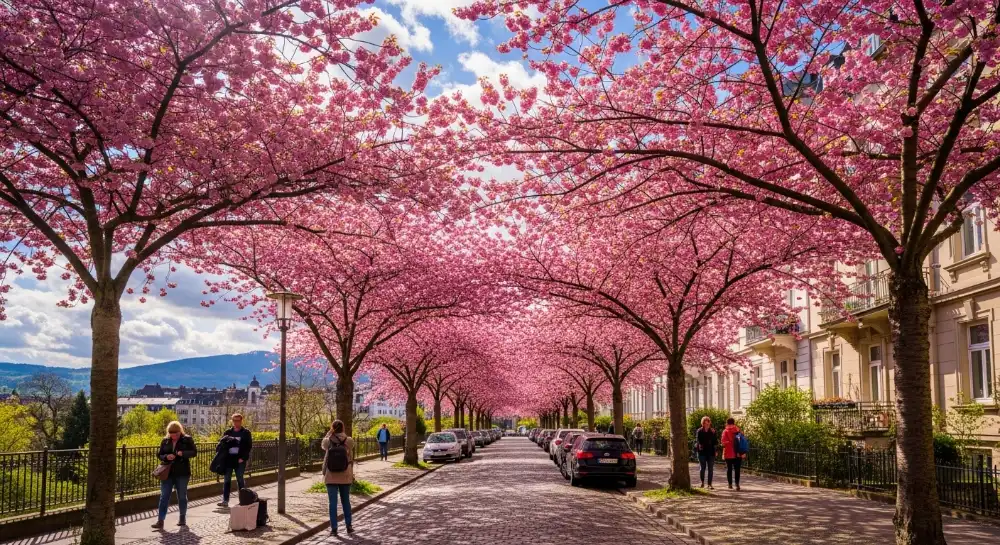
The street itself is only a short walk from the city center, so you can combine it with an afternoon exploring Bonn’s old town. Peak bloom usually falls between late March and mid-April, depending on the year. Arrive before 9 AM to get the light and avoid the midday crowds. The nearby Rheinaue park also blooms beautifully and is far less visited.
- Best time to visit: early morning on a weekday
- Peak bloom window: late March to mid-April
- Nearest transport: Bonn Hbf, then a short tram ride
- Best pairing: Beethoven-Haus museum, then Bonn Münster square
3. Cherry Blossoms at Parc de Sceaux, France
Paris gets all the credit, but Parc de Sceaux is where the cherry blossoms actually happen. This 17th-century park sits just 20 minutes south of the city by RER B train, and in late March it fills with Japanese cherry trees in full bloom.
Locals come with picnic blankets. The mood is completely different from anything you’ll find inside Paris itself.
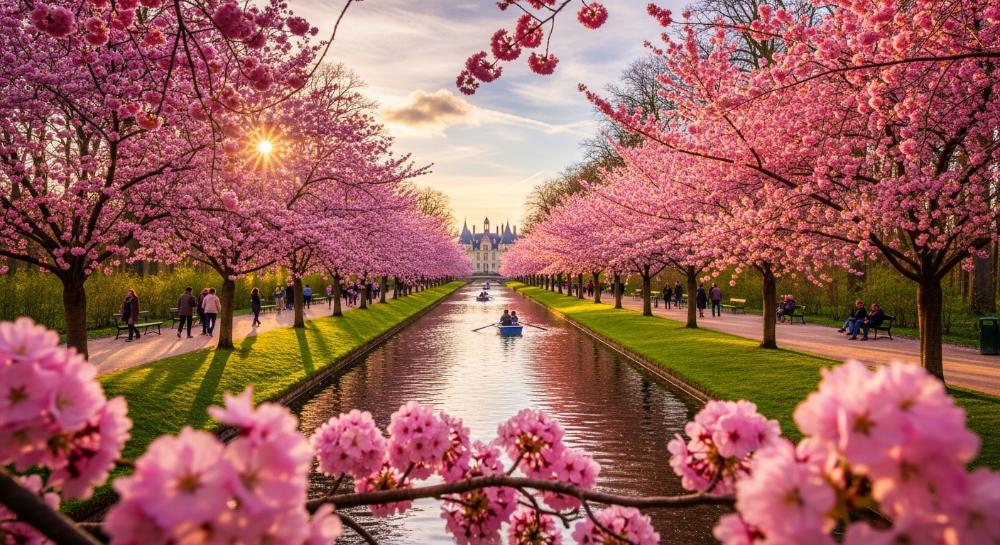
The park is free to enter, which makes it one of the best value spring experiences near Paris. Pack a baguette, some cheese, and a bottle of rosé, and you’ll fit right in.
Tip
Check the bloom forecast on the official Sceaux tourism board and make a reservation before making the trip. Timing varies by up to two weeks depending on the year.
The formal French gardens surrounding the Château de Sceaux add a striking contrast to the soft pink trees. Give yourself two to three hours.
4. Madeira Flower Festival, Portugal
Madeira holds a flower festival every spring, and it’s one of the most genuinely joyful events you can attend in Europe.
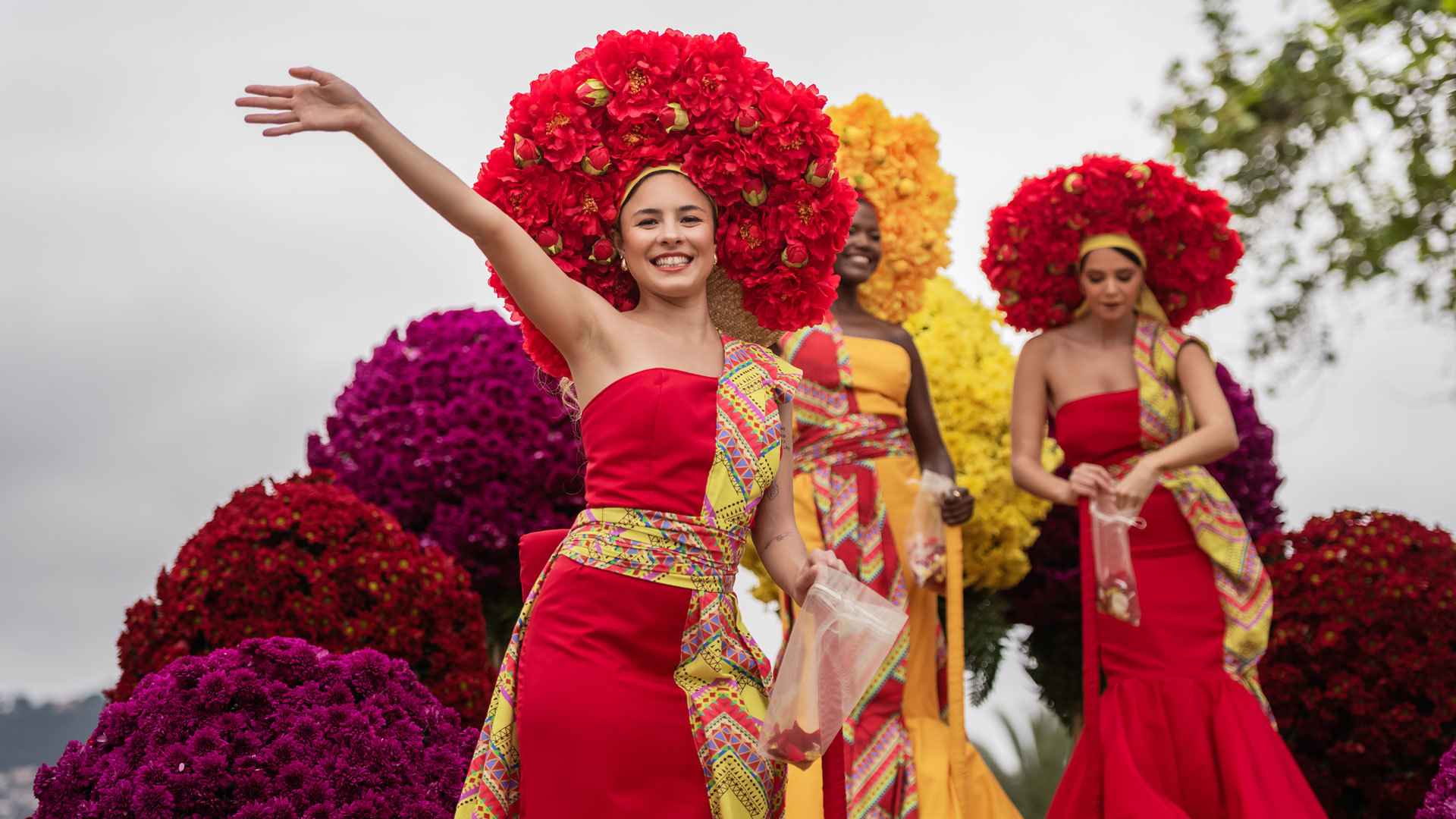
The island blankets its streets, churches, and public squares with elaborate floral displays, and the main parade through Funchal draws thousands of participants in flower-covered costumes. It typically runs in late April or early May.
Parade routes and village displays
The parade along Avenida Arriaga is the centerpiece, but the church wall covered entirely in flowers in Funchal’s old town is worth seeking out separately.
Here are the key spots to hit across Funchal, each with a distinct moment tied to the festival:
- Avenida do Mar: the main waterfront stretch, best backdrop for photos with the harbor behind the floats
- Praça da Autonomia: parade starting point; arrive by 3 PM to claim a free standing spot
- Praça do Município: where children build the Wall of Hope on Saturday morning, one of the most quietly moving moments of the entire festival
- Avenida Arriaga (Placa Central): flower market running throughout the festival with regional food, crafts, and daily folk performances
- Largo da Restauração: hosts the Flower Exhibition and the Wall of Solidarity ceremony
Villages across the island also participate with their own displays, so renting a car and driving the coastal road gives you a much richer experience than staying in Funchal alone. The markets overflow with tropical flowers that grow nowhere else in Europe.
5. Istanbul Tulip Festival, Turkey
Most people don’t know that tulips originally came from Turkey, not the Netherlands. Istanbul reclaims that history every April with a city-wide tulip festival that plants over 30 million bulbs across more than 800 locations. It’s completely free, it’s spectacular, and almost no spring break listicle mentions it.
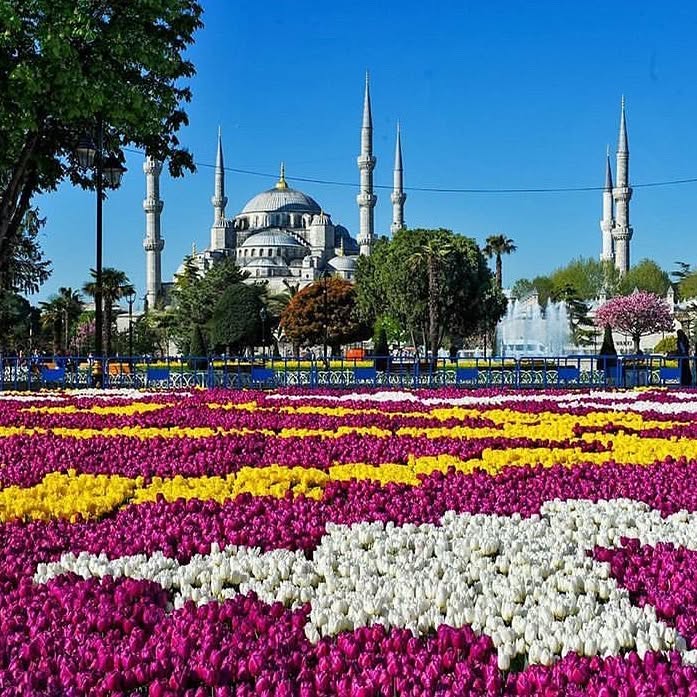
Emirgan Park on the European shore of the Bosphorus is the festival’s main hub, with entire hillsides covered in tulips in red, yellow, purple, and white. Take the ferry along the Bosphorus on your way there and the view from the water is almost as good as the park itself.
| Emirgan Park | Largest display, hillside views | Bosphorus ferry stop |
| Gülhane Park | Central location, historical setting | Topkapi Palace |
| Yıldız Park | Less crowded, wooded trails | Beşiktaş |
| Fatih Park | Local atmosphere, no tourists | Fatih district |
Gülhane Park, near Topkapi Palace, is another strong spot and lets you combine tulips with sightseeing in the old city.
6. Côte d’Azur Before the Crowds, Nice, France
Nice in spring is a different city than the one that fills up in summer. The Promenade des Anglais is walkable without being elbow-to-elbow, restaurant tables spill onto the pavement in the warm afternoon sun, and prices drop significantly across hotels and flights. April temperatures settle around 16-18°C, which is warm enough for the beach and cool enough to actually explore.
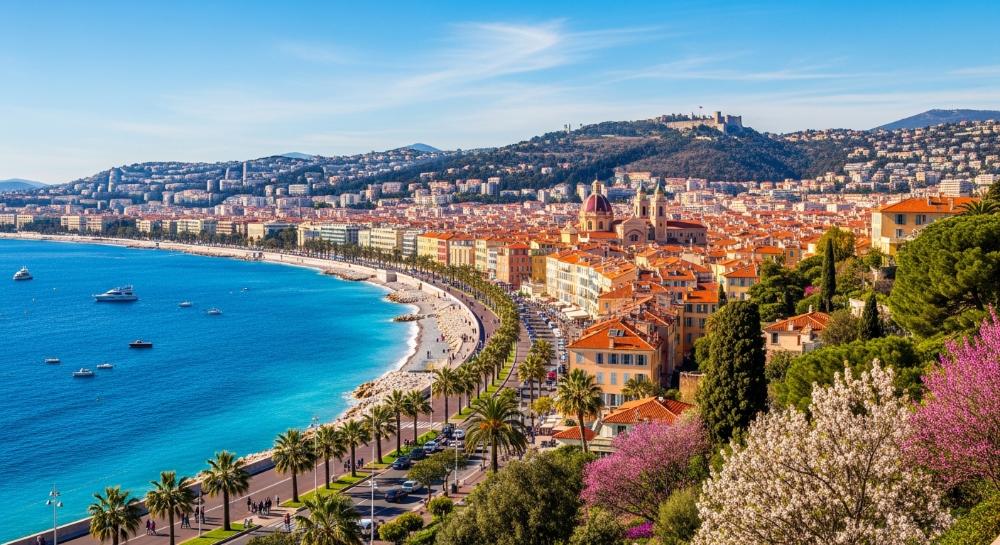
Nice works well as a base for day trips to Monaco, Antibes, and Èze, all of which are far more enjoyable in April than in August.
- Èze: medieval village on a cliff above the sea, far better in spring before the heat makes the climb punishing
- Monaco: 22 minutes by train, walkable, and free once you arrive
- Cours Saleya market: runs Tuesday to Sunday, closes at 1:30 PM
- Hotel rates in April: roughly 40 to 50 percent below July prices
The Nice Jazz Festival doesn’t start until July, but the city’s weekly markets, particularly Cours Saleya, are at their best in spring when local produce peaks. Cap Ferrat, one of the most beautiful peninsulas on the Riviera, is quietly spectacular and rarely crowded before June.
7. Apricot Blossom Season in Wachau Valley, Austria
The Wachau Valley doesn’t make a lot of noise about its spring display, which is exactly why it’s worth going. Every April, the 25-mile stretch of the Danube between Krems and Melk turns white and pale pink as thousands of apricot trees come into bloom along terraced hillsides above the river. The villages are medieval, the light off the water is extraordinary, and almost nobody outside Austria knows to show up for it.
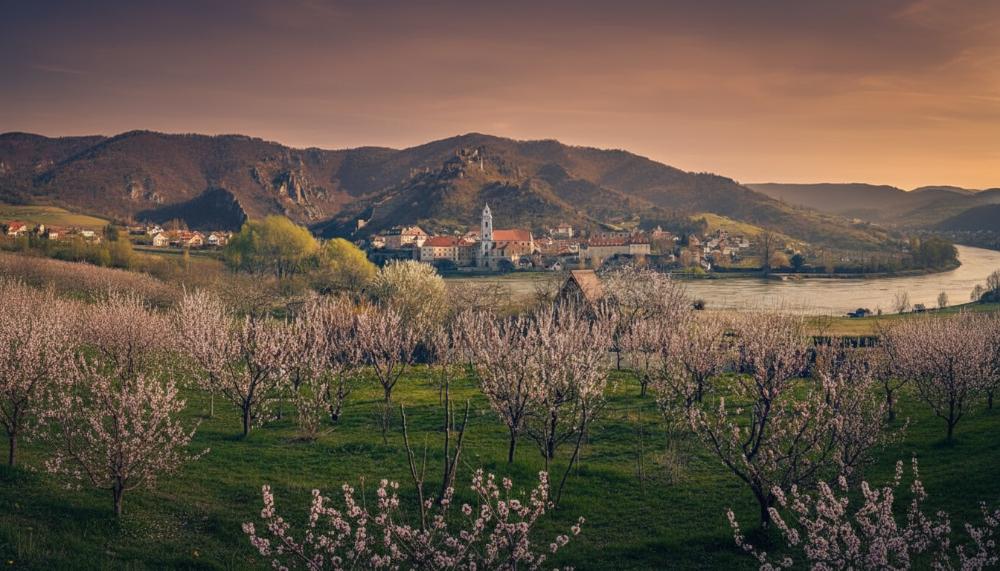
The Wachau is one of the most beautiful cycling routes in Europe under any circumstances. In blossom season, it’s something else.
- Bike rentals: available in Krems and Melk, drop-off included
- Best cycling direction: Krems to Melk (mostly flat, slight tailwind advantage)
- Best stop: Dürnstein for lunch and the ruined castle above the village
- Peak bloom window: late March to mid-April, depending on the year
The riverside path connects Krems to Melk in a single day of easy riding, passing through Dürnstein, Weißenkirchen, and Spitz along the way. Each village has its own orchards climbing the slopes behind it, and the backdrop of crumbling fortresses and Baroque abbey towers makes the whole thing feel slightly unreal.
Insight
The bloom is fast. It peaks in roughly ten days and drops within two weeks. Follow Austrian agricultural accounts on Instagram in late March for real-time orchard updates before you commit to dates.
The local apricot blossom festival, the Marillenblüte, runs across multiple weekends in April with tastings, markets, and guided orchard walks in villages like Spitz and Weißenkirchen. Wachau apricots have EU-protected status and are used in everything from schnapps to jam to dumplings. The festival markets are the best place to eat your way through all of them in one afternoon.
8. Las Fallas in Valencia, Spain
Las Fallas is one of those festivals that sounds slightly unbelievable until you experience it. For five days in March, Valencia fills its streets with enormous papier-mâché sculptures, some four stories tall, built by neighborhood groups over an entire year.
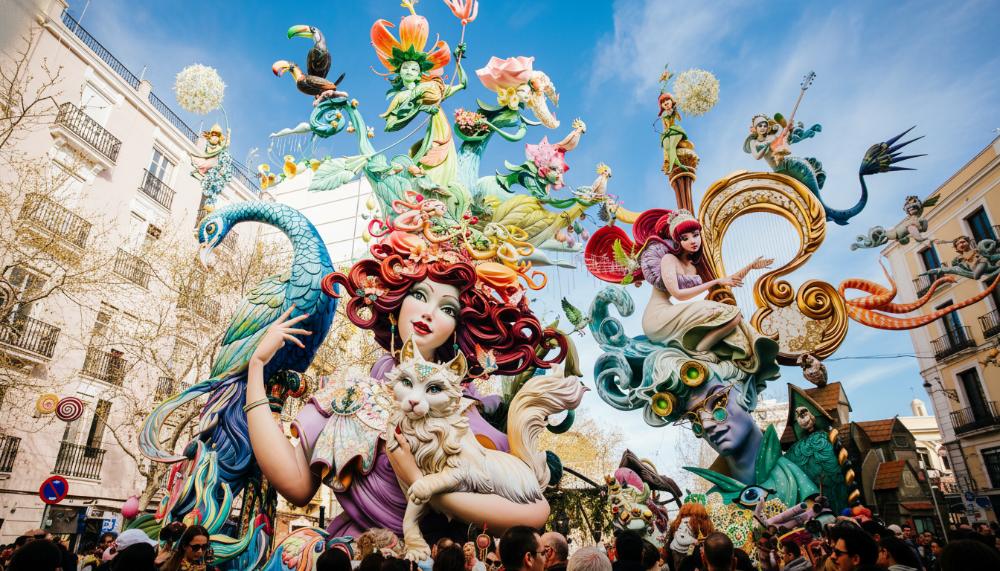
On the final night, all of them are set on fire simultaneously. The city smells of smoke and gunpowder for a week, and absolutely nobody minds.
Tip
The mascletà, a daily firecracker display at 2 PM in the Plaza del Ayuntamiento, is as loud as a jet engine. Earplugs are not embarrassing. Bring them.
The cremà, the burning, happens on the night of March 19th. Each neighborhood burns its falla at midnight while firefighters stand by to protect surrounding buildings.
- Festival dates: March 15-19 annually
- Key event: cremà on the night of March 19
- Best viewing spot: Plaza del Ayuntamiento for the main falla
The last to burn is the winning falla in the Plaza del Ayuntamiento, usually just before dawn. Stake out your spot around 11 PM and prepare to stand for a few hours. It’s worth every minute.
9. Semana Santa in Seville, Spain
Seville’s Holy Week is the most theatrical religious event in Europe. Every evening for a week before Easter, brotherhoods carry massive floats depicting scenes from the Passion through the city streets, accompanied by marching bands and tens of thousands of candles. It’s slow, reverent, and completely unlike anything else you’ll attend.
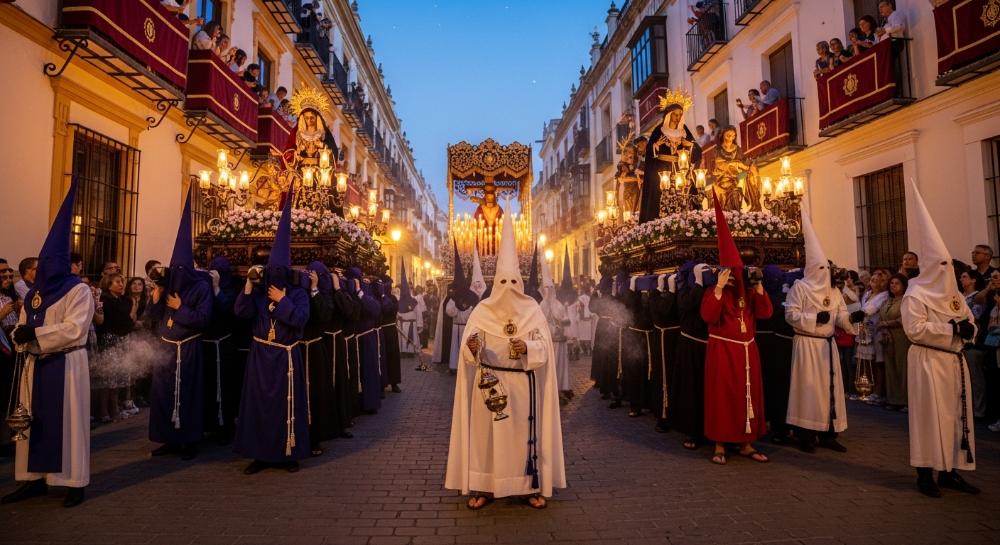
The official route runs through the city center along Calle Sierpes and past the Cathedral, but the processions also wind through residential neighborhoods, which is where the atmosphere gets most intense.
| Night | Atmosphere | Crowd level |
|---|---|---|
| Palm Sunday | Festive, celebratory | Moderate |
| Easter Thursday | Solemn, emotional | High |
| Good Friday | Most intense, late night | Very high |
| Easter Saturday | Quieter, reflective | Low |
Locals line the streets for hours with folding chairs and thermoses of coffee. The Easter Thursday and Good Friday processions are the most dramatic. If you can only pick one night, make it Good Friday.
10. Feria de Abril in Seville, Spain
2 weeks after Semana Santa, Seville throws a completely different kind of party. The Feria de Abril sets up an entire temporary city of striped tents called casetas on the fairgrounds across the river.
Each caseta is hosted by a family, business, or social club. Inside, people drink manzanilla, eat fried fish, and dance sevillanas all night. It runs for a week in late April.
The fairground entry is free and open to everyone. Yes, most of the 1,200-plus casetas are private, but there are plenty of ways in without a local contact.
Tip
The rebujito is chilled fino sherry mixed with lemon soda. Order it in any public caseta, and you’re doing it exactly right.
The Caseta del Turista on Pascual Márquez Street near Calle del Infierno is specifically set up for foreign visitors, with free entry, rebujito on sale, and live sevillanas playing throughout.
Beyond that, there are 6 casetas representing each district of Seville, 2 municipal ones, and casetas run by political parties and trade unions, all open without an invitation. Pick up a map at the information kiosk near the entrance, where public casetas are marked, and staff will point you in the right direction.
The rest of the Feria needs no invitation at all. The Paseo de Caballos runs from noon until 8 PM daily, filling the fairground streets with over 600 Andalusian horses, ornate carriages, and riders in traditional dress.
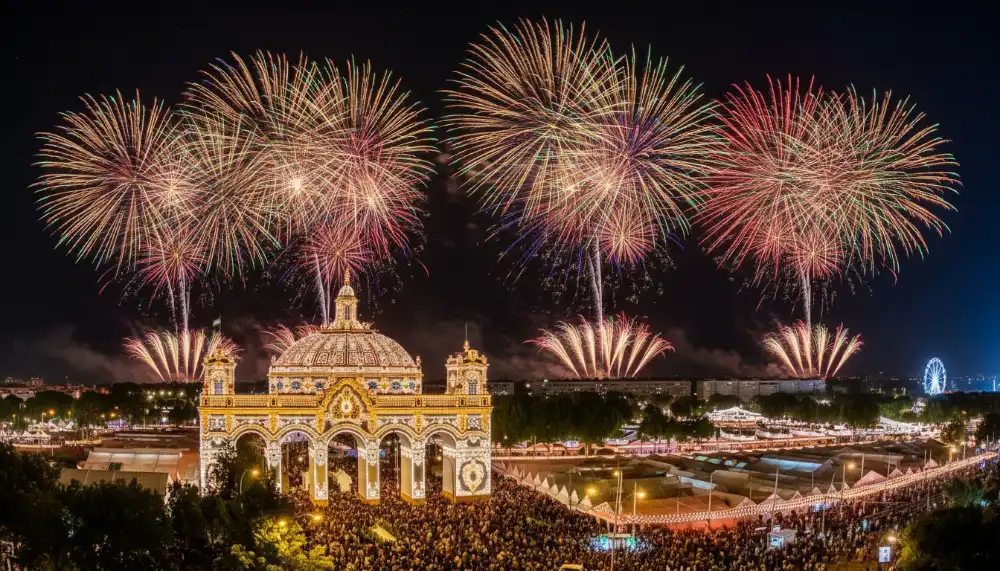
Calle del Infierno, the fairground’s amusement park, runs alongside the casetas and is open to everyone. The closing night fireworks over the Guadalquivir river are a spectacle worth staying late for, with the best views from Muelle de las Delicias.
11. Sant Jordi’s Day in Barcelona, Spain
April 23rd in Barcelona is the city’s most romantic day of the year, and also one of its most distinctly local. Sant Jordi is Catalonia’s patron saint, and the tradition is simple: men give women roses, women give men books.
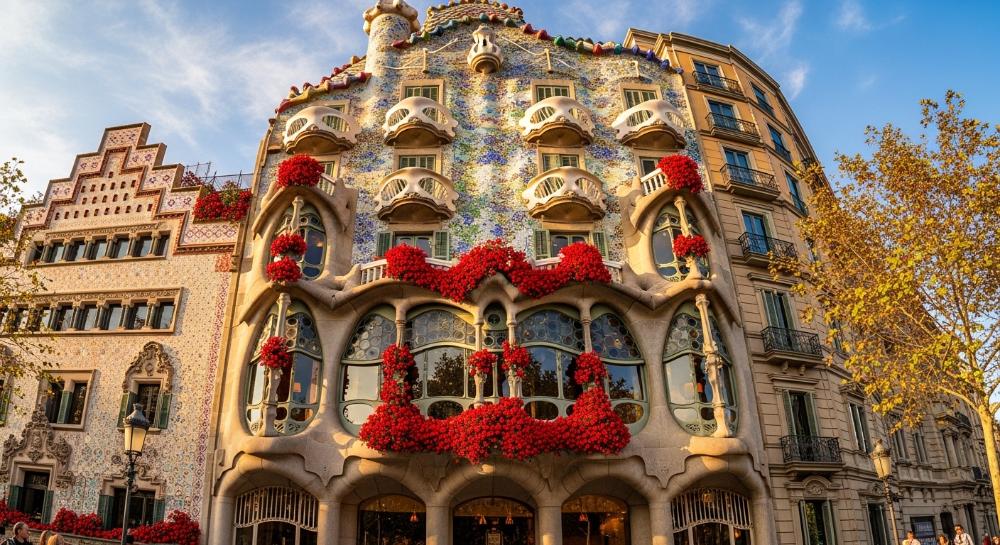
Las Ramblas and the Gothic Quarter fill with flower stalls and pop-up bookshops, and the city takes on a festive energy that has nothing to do with tourists.
- Date: April 23 annually
- Best neighborhoods: Gothic Quarter, Las Ramblas, Passeig de Gràcia
- Best souvenir: a book in Catalan or Spanish from one of the street stalls
- Best evening add-on: a concert at the Palau de la Música
The Gothic Quarter is the best place to spend Sant Jordi’s Day. Streets that are normally crowded with visitors take on a genuinely local character as families, couples, and friends exchange gifts on every corner.
12. Patio Festival in Córdoba, Spain
Every May, the residents of Córdoba open their private patios to the public. These are not hotel courtyards or tourist attractions. They are actual family homes, and the owners spend months growing jasmine, geraniums, and roses up every available wall.
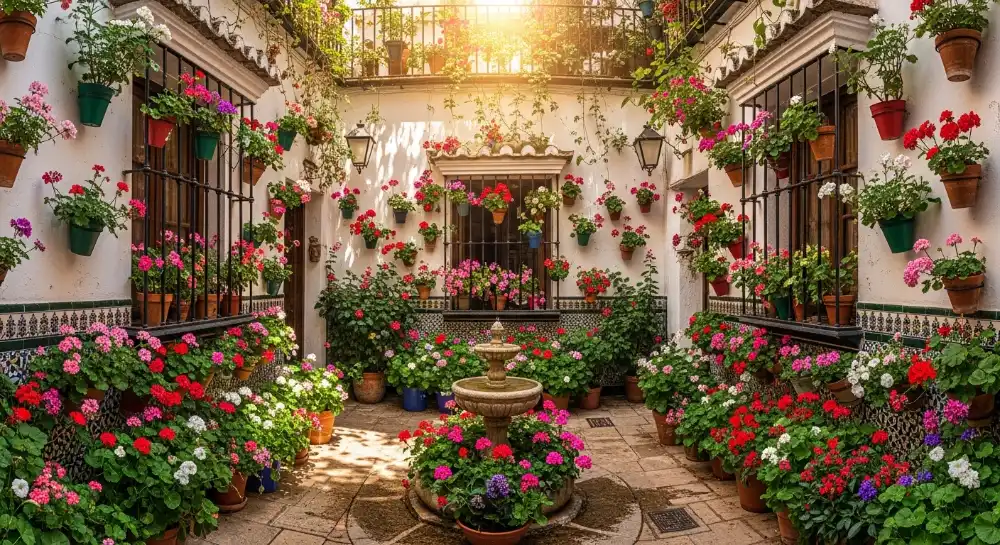
The result is something between a competition and a neighborhood celebration, and it’s one of the most quietly extraordinary things you can do in Spain. There are around 50 patios open during the festival, spread across the old Jewish Quarter and surrounding neighborhoods.
Tip
The festival runs for 2 weeks in May, but the first weekend draws the largest crowds. Visit mid-week in the second week for the quietest experience with the flowers still fully in bloom.
A printed map from the tourist office helps, but getting slightly lost between them is part of the experience. The patios that win prizes tend to get long queues by mid-morning, so start with the lesser-known ones first and circle back. Entry to all patios is free.
13. Scoppio del Carro in Florence, Italy
Florence has one of the most unusual Easter traditions in Europe. On Easter Sunday morning, a cart loaded with fireworks is pulled by white oxen through the city streets to the Piazza del Duomo.
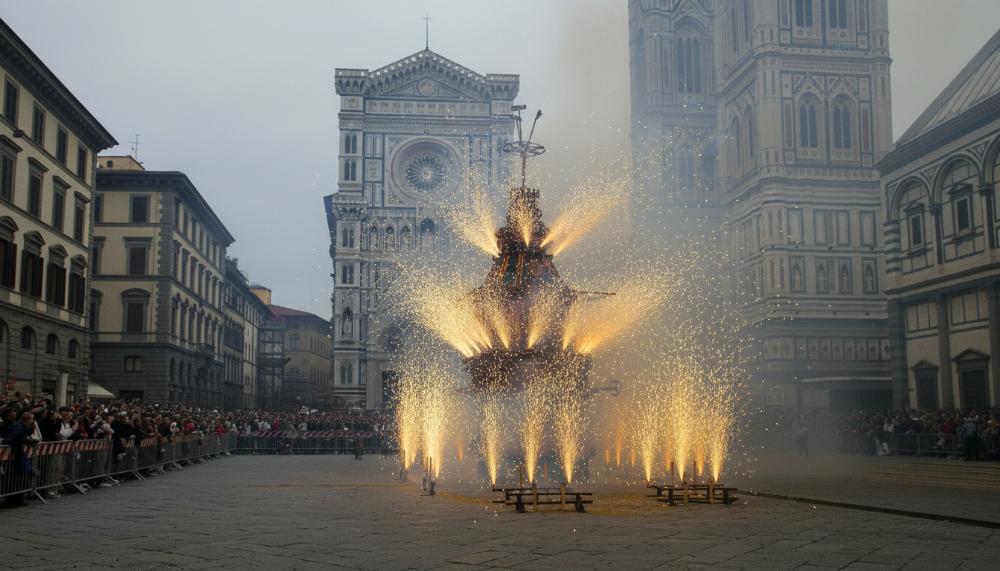
At noon, during the Gloria of the Easter Mass, a mechanical dove is fired along a wire from the altar inside the cathedral to ignite the cart. If the fireworks go off cleanly, it’s considered good luck for the city’s harvest.
Easter Sunday fireworks in Piazza del Duomo
The square fills hours before the noon ignition, so arrive by 9 AM to get a good position. The procession of oxen and historical pageantry starts around 10 AM and is spectacular in its own right.
- Arrive: by 9 AM for a good spot in the piazza
- Procession starts: 10 AM
- Ignition: noon
- Cost: free to watch from the piazza
The actual fireworks last about two minutes, but the buildup is half the experience. It’s free, it’s ancient, and most visitors to Florence don’t even know it exists.
14. Greek Orthodox Easter in Athens, Greece
Greek Orthodox Easter is calculated differently from Western Easter, so the dates don’t always match. When they do align, Athens celebrates both simultaneously, which is remarkable. When they don’t, Orthodox Easter is its own deeply felt occasion, and the midnight service on Holy Saturday is one of the most moving public rituals you’ll witness anywhere in Europe.
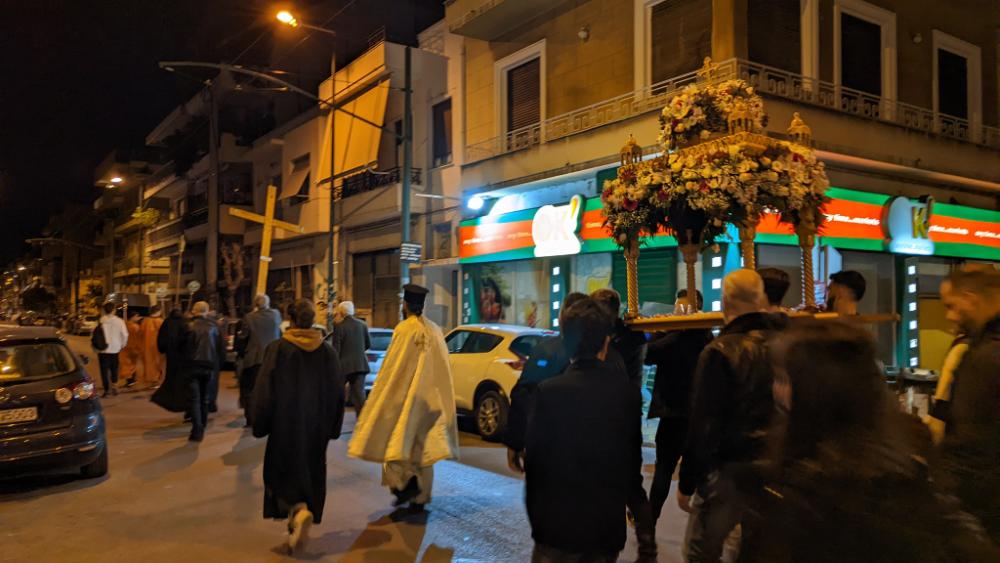
At midnight on Holy Saturday, churches across Athens go dark. The priest emerges with a single candle and passes the flame through the congregation until the entire church, and then the entire neighborhood, is lit by candlelight.
| Epitaphios procession | Good Friday evening | Neighborhoods across Athens |
| Midnight resurrection service | Holy Saturday, midnight | Any neighborhood church |
| Easter Sunday lamb roast | Easter Sunday | Everywhere, very public |
People carry their flames home through the streets. The traditional greeting exchanged in that moment is “Christos Anesti” (Christ is risen), answered with “Alithos Anesti” (Truly He is risen). Standing in Monastiraki or Thissio for this is something you won’t forget.
15. Easter Week at the Vatican, Rome, Italy
Rome during Easter Week is chaotic, magnificent, and completely worth the crowds if you plan carefully. The Pope leads the Via Crucis procession through the Colosseum on Good Friday evening, and the Easter Sunday Mass in St. Peter’s Square draws hundreds of thousands of people. These are once-in-a-lifetime scale events, and spring frames them in perfect light.
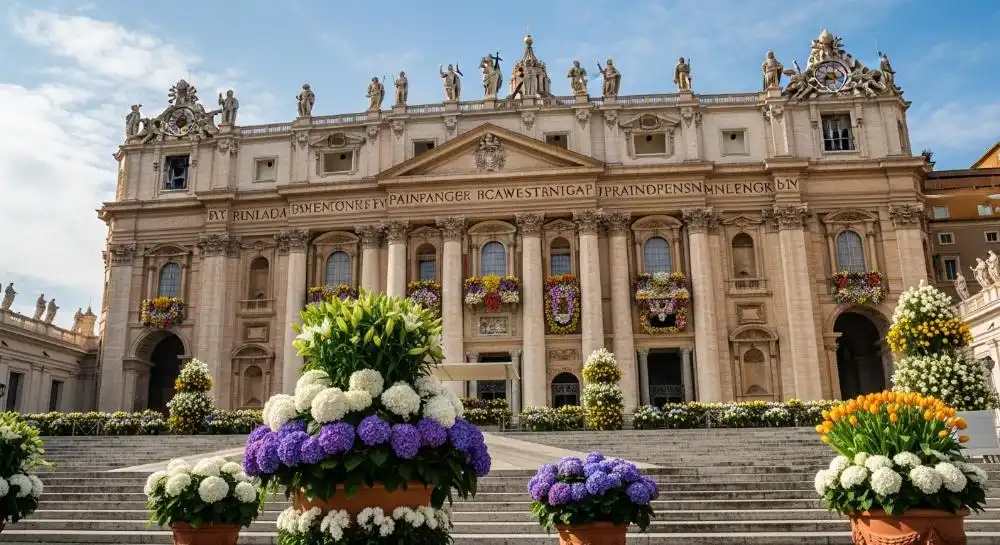
Free tickets for the Via Crucis and Easter Mass are required and available through the Prefecture of the Papal Household website, usually opening six to eight weeks before Easter.
Tip
Stay in Trastevere or Prati rather than near the Vatican itself. You’ll pay less, sleep better, and the walk to St. Peter’s is pleasant in the morning cool.
Arrive at least two hours early for the Mass, as security lines are long and space in the square fills fast. If you miss the tickets, the surrounding streets and the giant screens outside the square still give you a sense of the occasion. Book your Rome hotel four to six months out for Easter week.
16. Good Friday Processions in Valletta, Malta
Malta is tiny, which is exactly why Good Friday there feels so personal. In Valletta and in towns across the island, life-size statues depicting scenes from the Passion are carried through the streets in slow procession while crowds follow in near silence.
The island is deeply Catholic, and these events are not performances for visitors. They are real community observances that happen to be open to everyone.
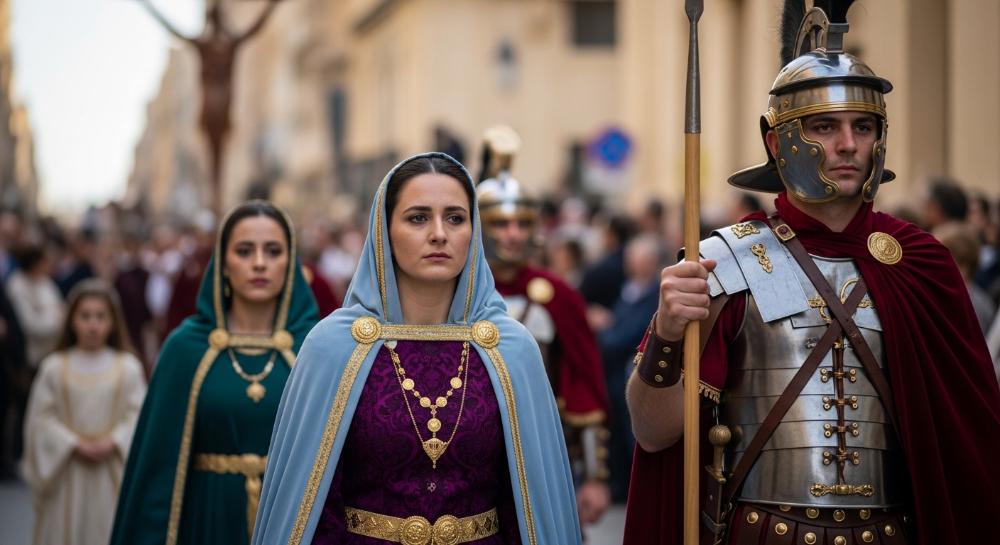
The Valletta procession moves through the city’s narrow Baroque streets, which creates a visual drama that larger cities can’t replicate. Seven statues represent the seven sorrows of the Virgin Mary, each carried by a different parish confraternity.
The entire procession lasts approximately 2 hours. Combine your Malta trip with a morning at the Blue Lagoon on Comino, which is spectacular in spring before summer boat traffic takes over. The Good Friday processions that are worth seeking out across the island:
- Valletta: the main procession, city center, late afternoon
- Rabat: intimate and traditional, set among ancient streets
- Żejtun: one of the oldest continuous processions on the island
- Naxxar: smaller crowd, strong local atmosphere
17. Beltane Fire Festival in Edinburgh, Scotland
Beltane is a Celtic fire festival marking the beginning of summer, and Edinburgh has revived it into one of the most extraordinary outdoor performances in Europe.
On the night of April 30th, thousands of performers in body paint and costume enact ancient rituals by torchlight on Calton Hill while an audience of up to 6,000 watches from the hillside. It is primarily strange and completely spectacular.
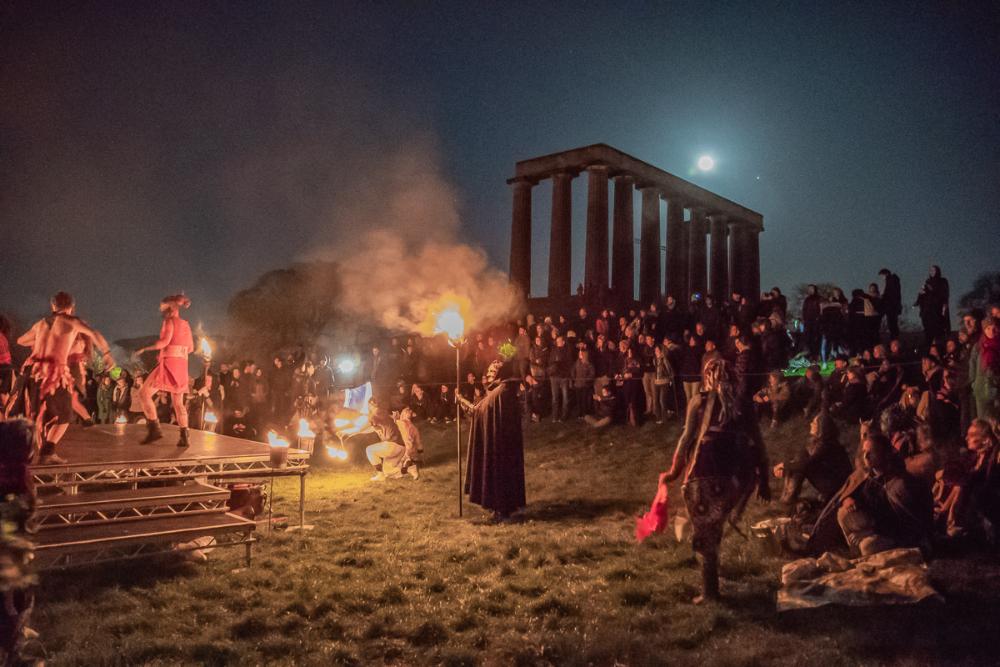
Tickets sell out months in advance, so this is one to plan around rather than stumble upon. The performance involves fire dancers, drummers, costumed characters representing seasons, and a lot of theatrical smoke.
Dress warmly. Edinburgh in late April at midnight is cold. The views of the city from Calton Hill, lit up below while fire burns above, make for the kind of memory that sticks for a long time.
18. Wildflower Fields of Val d’Orcia, Tuscany
Val d’Orcia in spring looks like a painting that someone forgot to make realistic. The rolling hills between Pienza and Montalcino turn green, gold, and red with wildflowers in April and May.
The cypress trees cut sharp lines against the sky, and the light in the late afternoon is almost unreasonably beautiful. This is the Tuscany that the postcards are always trying to capture, and spring is when you can actually find it.
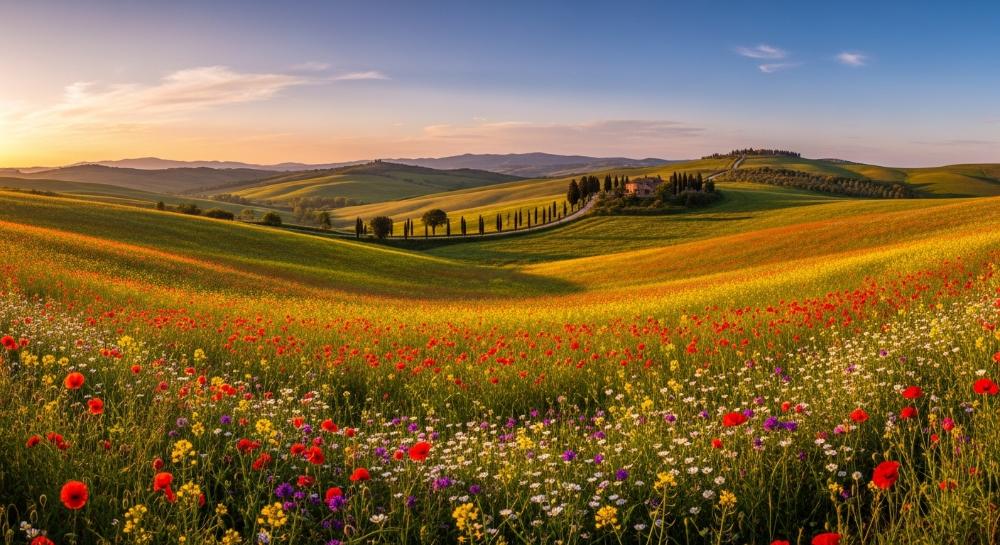
Skip the main road and take the SP146, the road from Pienza toward San Quirico d’Orcia. Stop whenever the view pulls you over, which will be often.
The fields alongside this road are the most photographed in the region. Continue to Montalcino for a glass of Brunello in the afternoon, then loop back through Bagno Vignoni, a tiny village built around a thermal spring pool, for a genuinely surreal end to the day.
19. Poppy Plains of Alentejo, Portugal
Alentejo is one of those places that Lisbon residents drive to on weekends in May and rarely tell anyone else about. The rolling cork oak plains southwest of Évora turn vivid red with poppies after the spring rains, and the contrast against the pale earth and olive groves is unlike anything else in Europe. There are no organized tours and no famous viewing platforms. You just drive until you find it.
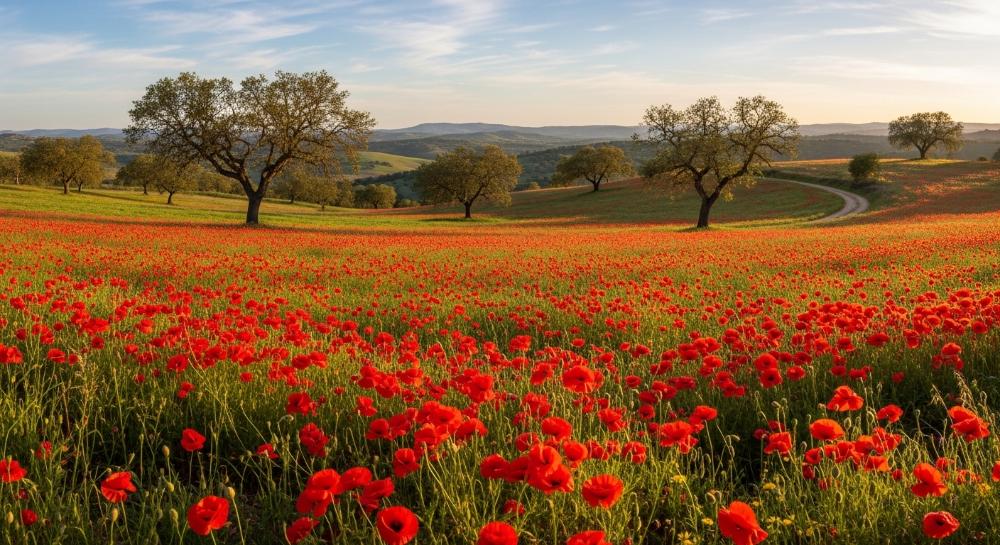
The area around Monsaraz, a medieval hilltop village near the Spanish border, is one of the best spots. The bloom peaks in mid to late April but varies significantly by year based on winter rainfall. Local farming forums and Instagram geotags are your best sources for real-time information.
- Best area: around Monsaraz and Évora in the Alentejo interior
- Peak bloom: mid to late April
- Worth adding: Cromeleque dos Almendres, a megalithic stone circle near Évora
- Best base: Évora, with good restaurants and central access
Pair the drive with a stop at one of Alentejo’s wine estates, which are at their greenest and most welcoming in spring. The poppies can vanish in a single warm week. If you’re planning around them, build in flexibility.
20. Stork Migration in Extremadura, Spain
Extremadura is the least-visited region in mainland Spain, which is either a problem or a feature depending on what kind of traveler you are. In spring, it becomes one of the best wildlife destinations in Europe. White storks arrive from Africa by the thousands to nest on church towers, Roman ruins, and medieval castles, while the surrounding plains fill with wildflowers and migratory birds of every kind.
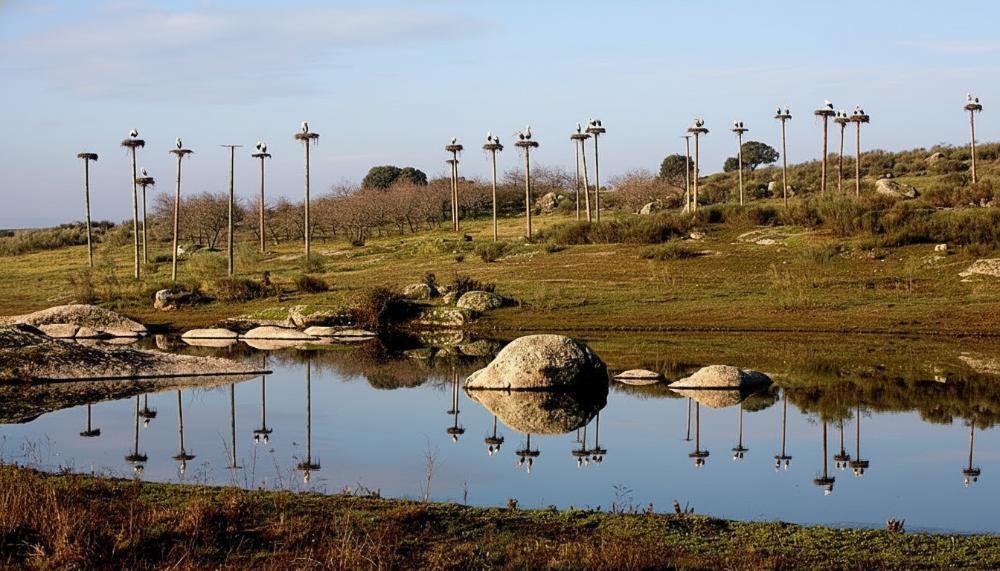
The city of Cáceres, a UNESCO World Heritage Site, has stork nests on nearly every tower in its old town, and watching them return in early spring is genuinely moving.
| White storks | Cáceres old town, Trujillo | March to May |
| Black vultures | Monfragüe National Park | Year-round, most active in spring |
| Spanish imperial eagle | Monfragüe canyon | March to June |
| Wildflowers | Dehesa plains around Cáceres | April to May |
Monfragüe National Park, an hour south of Cáceres, is one of Europe’s premier birdwatching destinations, with black vultures, Spanish imperial eagles, and black storks all visible in spring. You don’t need to be a birdwatcher to find it extraordinary.
21. Alpine Wildflowers in the Swiss Alps
The Swiss Alps in May occupy a very specific and underrated moment in the year. The ski lifts are winding down, the summer hiking crowds haven’t arrived, and the meadows at lower elevations are thick with wildflowers, many of which bloom for only a few weeks after the snow retreats. It’s dramatically beautiful and significantly cheaper than either ski season or peak summer.
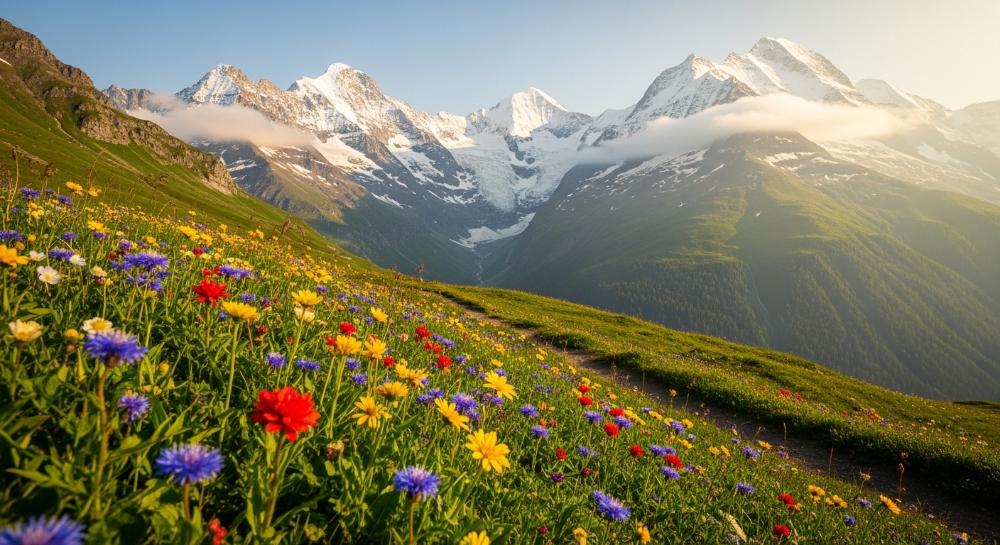
Grindelwald, Wengen, and Lauterbrunnen are the most accessible starting points for spring walks. Trails at lower elevations are clear by mid-May, while higher routes may still have snow. The Lauterbrunnen valley, with its 72 waterfalls in full melt-flow, is spectacular in spring in a way that’s completely different from any other season. Cable cars to mid-mountain stations start running again in May, opening up views that require no hiking at all.
22. Amalfi Coast, Italy
The Amalfi Coast in summer is beautiful and brutal. Narrow roads grid-locked with tourist buses, no parking anywhere, and restaurants with a 90-minute wait. In April, it’s a different story.
The lemon trees are heavy with fruit, the sea is clear and calm, the coastal path is open, and you can actually drive between the villages without losing your mind.
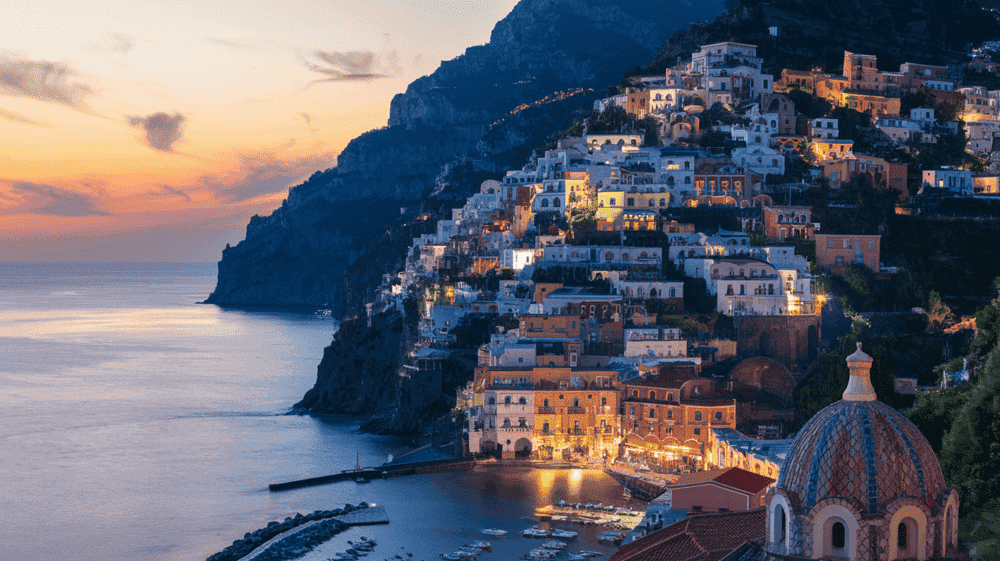
Ravello, perched high above the coast, holds its music festival in summer, but the gardens of Villa Rufolo and Villa Cimbrone are at their best in spring, full of wisteria and roses with the sea visible below.
Positano’s beach is still quiet enough in April to spread out a towel and stay for the afternoon. The ferry between villages runs on a reduced but functional schedule, so you can leave the car in one town and explore by boat.
23. Coastal Trail in Cinque Terre, Italy
Cinque Terre‘s famous coastal path, the Sentiero Azzurro, partially closes during high season due to erosion and overcrowding. In April, it’s open and the hillsides flanking it are covered in wildflowers, rosemary, and broom in brilliant yellow bloom. The five villages are accessible by train, which means you can hike one section of the trail and catch a train back without doubling your route.
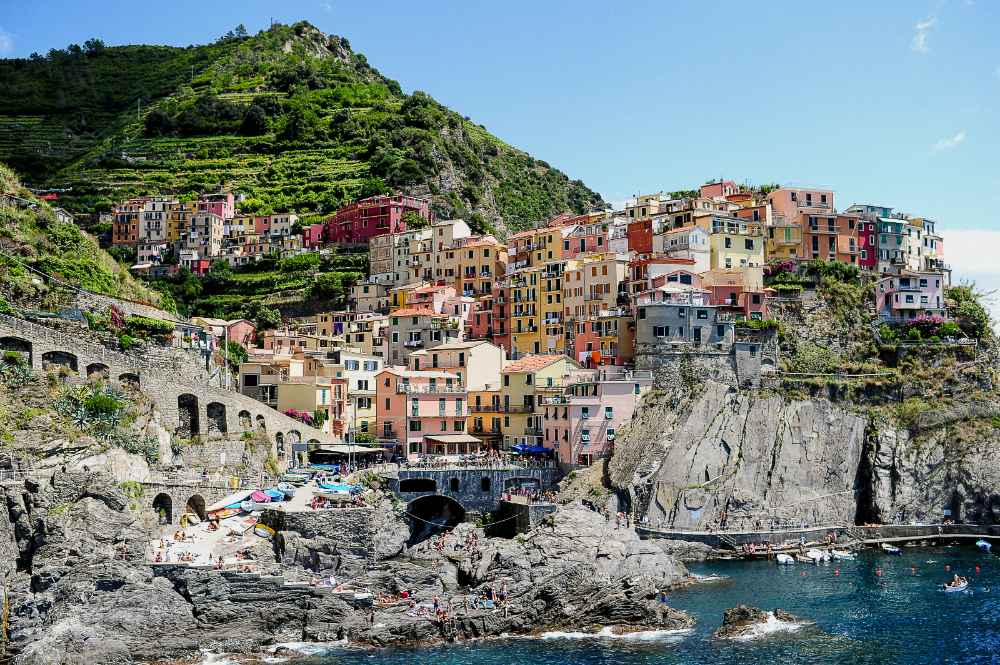
The section between Vernazza and Corniglia offers the most dramatic views and the most wildflowers in spring. Start early in the morning when the light hits the sea, and the villages below are still quiet.
The trail takes about four hours to walk the full length between Riomaggiore and Monterosso, but you can break it into shorter segments. Pack water, as there are very few places to buy it along the path itself.
24. Dubrovnik Old City, Croatia
Dubrovnik in July looks like every Instagram photo you’ve ever seen of it, except you’re shoulder to shoulder with cruise ship passengers and can barely move.
In April, you can walk the city walls without queuing, swim off the rocks below Buža bar in relative peace, and eat at restaurants that have actual space and actual attention for you. The sea is cold, but the city is at its best.
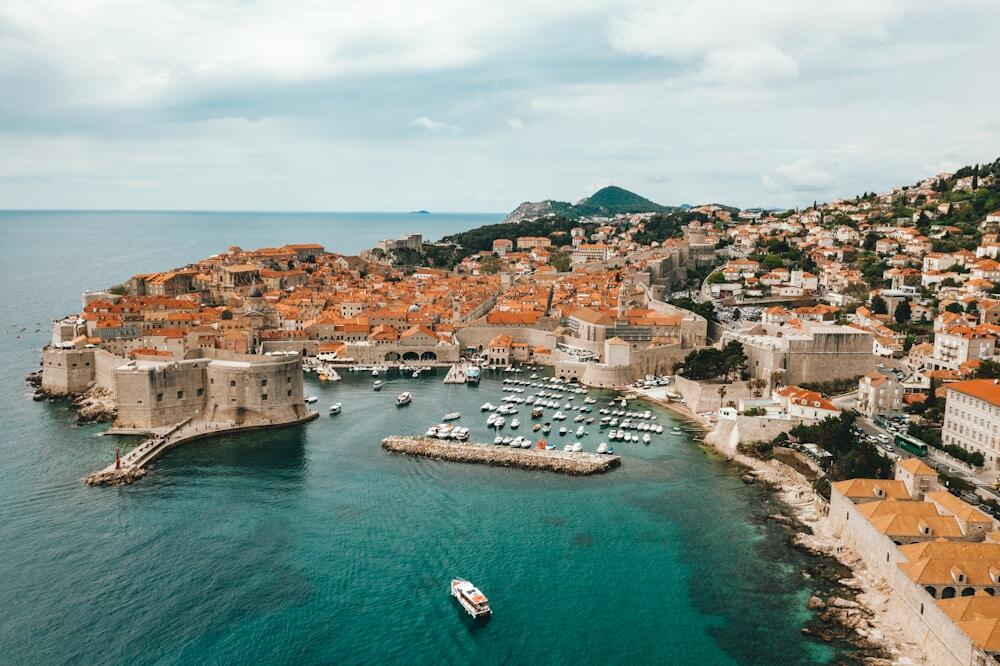
The 1.2-mile wall circuit around Dubrovnik’s old city is one of the finest walks in Europe. In spring, you do it without the summer heat and without the summer crowds, which makes a substantial difference.
Tip
Dubrovnik is extremely hilly. If you’re staying inside the old city, check exactly how many steps your accommodation involves before you book. Some are genuinely difficult with luggage.
The views over the terracotta rooftops and out to the Adriatic are extraordinary, and the admission fee includes the wall walk. Book your Dubrovnik hotel inside or just outside the old city walls for the best access.
25. Crete in Orthodox Easter Season, Greece
Crete is the one destination on this list that offers almost everything at once in spring. The island celebrates Orthodox Easter with more intensity than anywhere else in Greece, with church bells, midnight fireworks, and lamb roasting over open fires in village squares.
The wildflowers across the interior are at their peak. The Samaria Gorge, one of Europe’s longest canyon hikes, opens for the season in May. And the sea, while cold, is clear and swimmable by late April.
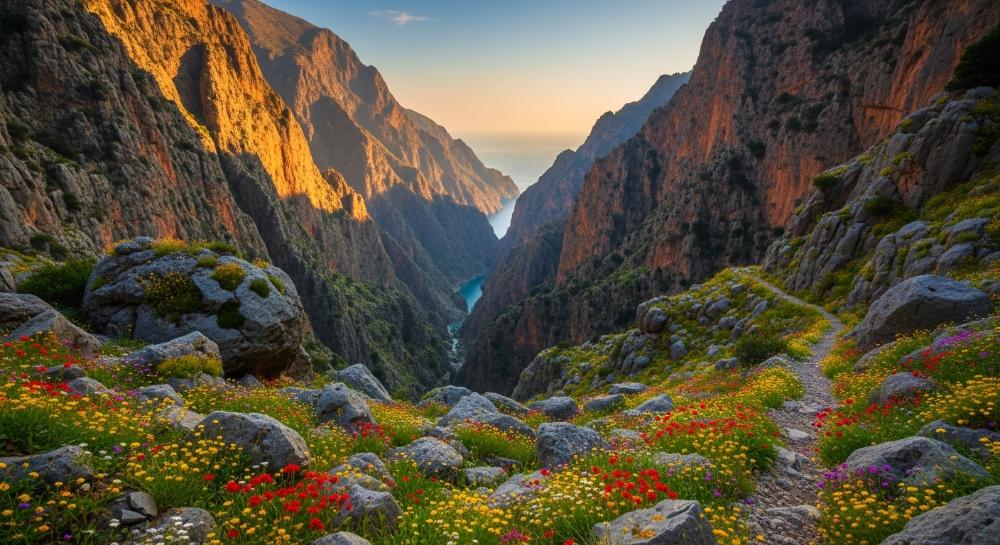
Spend Easter Sunday in a Cretan village rather than in Heraklion or Chania. Places like Anogia, Kritsa, or Zaros celebrate in deeply traditional ways that feel nothing like a tourist event.
Then spend the rest of your trip driving the interior, where the Lefka Ori mountains are still snowcapped, but the valleys below are thick with anemones, orchids, and poppies. The north coast beaches are quiet until June, and the water, though brisk, is swimmable for anyone who doesn’t mind a cold shock.