Hawaii trips don’t start at the airport. They start the moment you pick an island. And that choice matters more than most people realize. Each island has its own personality, its own pace, and its own list of things you genuinely can’t do anywhere else.
- Matching Each Island to Your Travel Style
- Oahu: The Island Everyone Should Start With
- Waikiki Beach and Honolulu’s Waterfront
- Pearl Harbor and Diamond Head History
- Kailua’s Beaches and Kayak Trails
- North Shore Surf Breaks and Local Food
- Tip
- Maui: Beaches, Waterfalls, and Wide-Open Roads
- Road to Hana Scenic Drive
- Haleakala Sunrise and Crater Trails
- Winter Whale Watching Season
- Ka’anapali and Wailea Beach Days
- Kauai: The Island That Stays Wild
- Na Pali Coast by Boat or Trail
- Waimea Canyon Hikes and Viewpoints
- Insight
- Hanalei Bay on the North Shore
- Poipu Beach for Snorkeling and Sun
- Big Island: Where the Earth Still Moves
- Tip
- Hawaii Volcanoes National Park
- Night Manta Ray Swims near Kona
- Kona Coffee Farms
- Stargazing at Mauna Kea
- So Which Hawaii Island Is Right for You?
- Tip
- Read more
This guide breaks down the best things to do on the 4 main islands: Oahu, Maui, Kauai, and the Big Island. You’ll find the highlights, the honest trade-offs, and the one thing on each island you really shouldn’t skip.
Matching Each Island to Your Travel Style
Choosing between islands is really about knowing what you want from the trip. Some people want city energy and good food. Others want to disappear into a jungle for a week. Most of us want somewhere in the middle. Here’s a quick breakdown before we get into the details.
| Island | Best For | Skip If You… | Signature Experience |
|---|---|---|---|
| Oahu | First-timers, history lovers, city vibes | Hate crowds and tourist hubs | Pearl Harbor + North Shore in one day |
| Maui | Beach lovers, honeymooners, road trippers | Prefer rugged over polished | Road to Hana scenic drive |
| Kauai | Hikers, nature seekers, romance | Need nightlife or city amenities | Na Pali Coast by boat |
| Big Island (Hawaii) | Adventure travelers, volcano chasers | Want a small, easy-to-navigate island | Manta ray night snorkel near Kona |
One practical note before you book: nearly every major attraction in Hawaii now requires an advance reservation. Diamond Head on Oahu, Haleakala sunrise on Maui, and Hanauma Bay all require timed entry. Book those before you land, not the morning of.
Oahu: The Island Everyone Should Start With
Oahu gets a bad rap in certain travel circles. The crowds at Waikiki are real, and yes, it’s the most developed of the 4 islands. But it’s also the most versatile. A surf lesson in the morning, a historic site in the afternoon, a plate lunch on the North Shore before sunset: that kind of day is genuinely possible here. For a first trip to Hawaii, Oahu makes sense. For a return trip, it still has pockets worth coming back for.
Waikiki Beach and Honolulu’s Waterfront
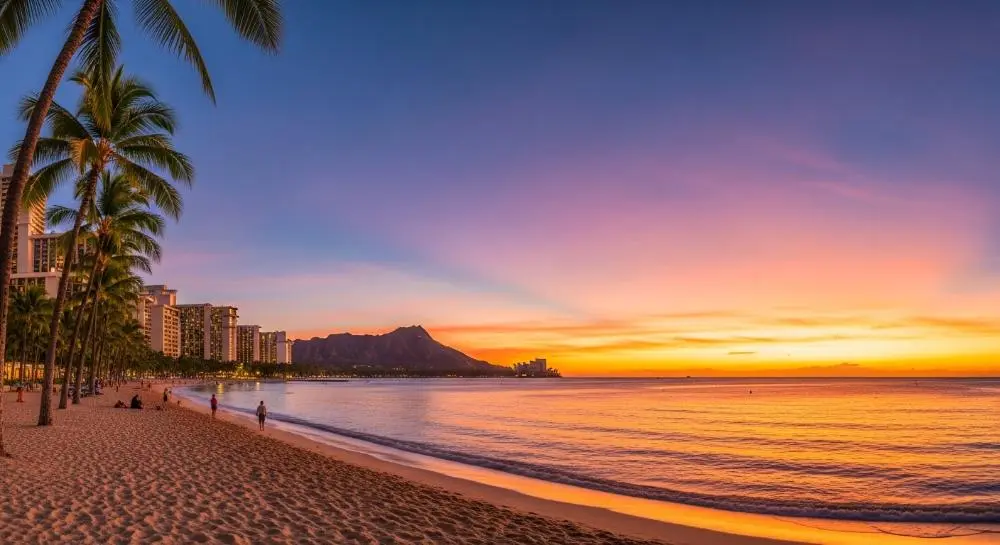
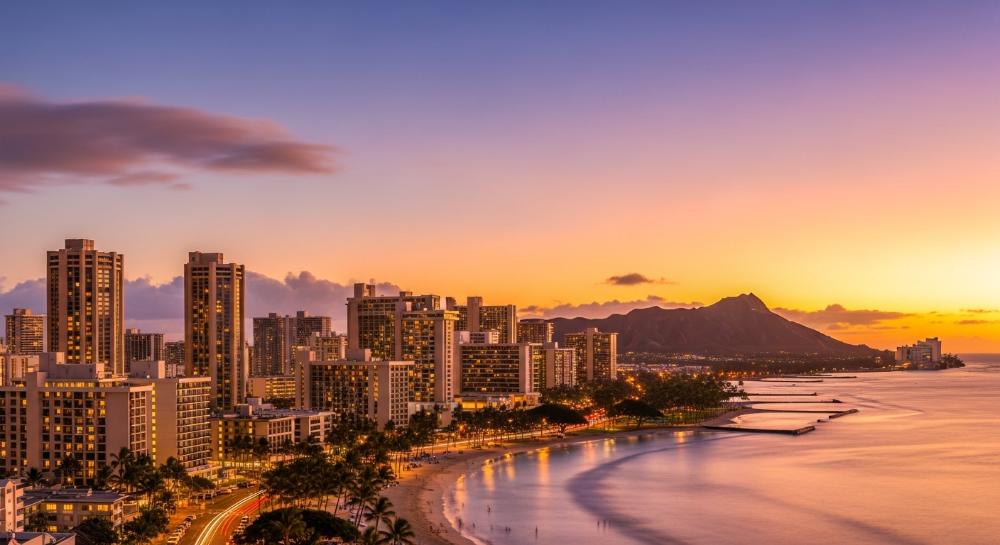
Waikiki is exactly what you expect: a long stretch of golden sand backed by hotels, shops, and restaurants. It’s busy, it’s beautiful, and the sunsets are legitimately great. The surf breaks here are mellow enough for beginners, which is why the beach stays packed with people taking their first lesson.
Hawaii Oahu’s most famous street, Kalakaua Avenue, runs parallel to the sand and is worth a slow walk in the evening, especially as the light changes and the beachfront bars start to fill up.
Honolulu has more to offer than the waterfront. Chinatown is about a 10-minute drive from Waikiki and is full of galleries, noodle shops, and some of the best local restaurants on the island.
The Honolulu Museum of Art is one of the better art museums in the Pacific, with a strong collection of Pacific and Asian works. Iolani Palace, the only royal palace on American soil, is a short walk from Chinatown and gives you a clear picture of the Hawaiian Kingdom before annexation.
Pearl Harbor and Diamond Head History
Pearl Harbor is one of those places that hits differently in person. The USS Arizona Memorial sits above the sunken hull, and the experience is quiet, respectful, and genuinely moving.
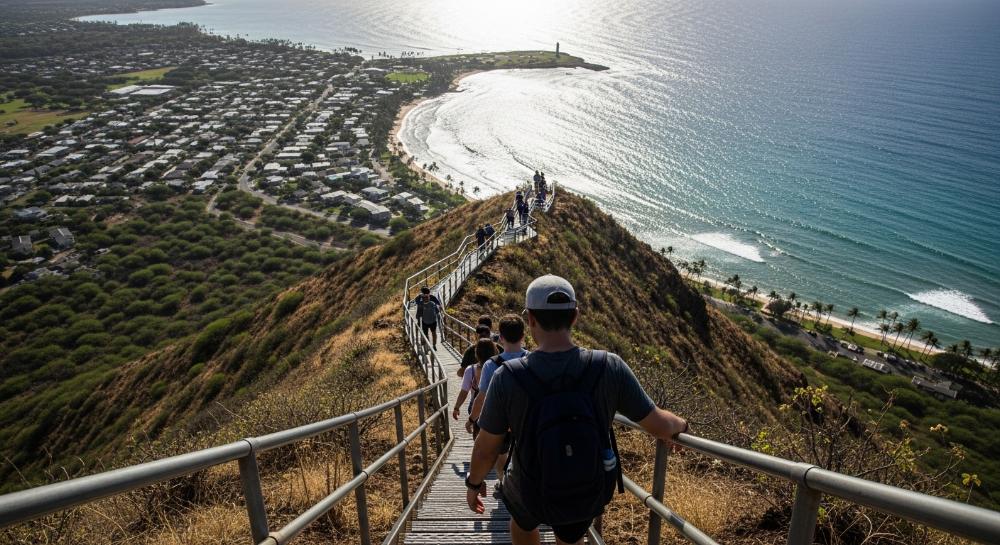
Diamond Head, the iconic volcanic crater above Honolulu, is a 1.6-mile round-trip hike that rewards you with a view of the whole south coast. It’s not strenuous, but the sun exposure at the top is real, so go early and bring water.
Kailua’s Beaches and Kayak Trails
Hawaii Kailua is the version of Oahu most visitors miss. It’s about 25 minutes from Honolulu on the windward side of the island, and it feels like a completely different place. The water is turquoise, calm, and warm year-round.
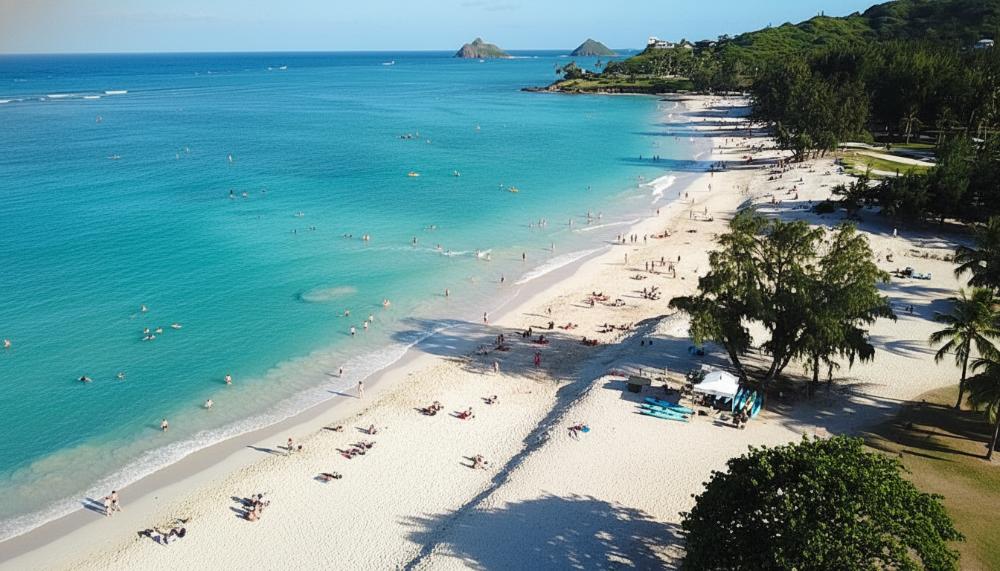
The beaches in the Kailua area are consistently ranked among the best in the country, and each one has a slightly different character:
- Kailua Beach Park: the widest and most active stretch, best for kayaking, windsurfing, and paddleboarding
- Lanikai Beach: smaller and quieter, best for swimming, with postcard views of the Mokes just offshore
- Kalama Beach Park: a local favorite between the two, less visited, and good for a calm morning swim
- Waimanalo Beach: a few miles south, one of the longest white sand beaches on the island, with almost no crowds
Kayaking out to the Mokulua Islands (known locally as “the Mokes”) is one of the most popular activities on the island. The Lanikai Pillbox hike is short and steep, but the views of the bay and Ko’olau Mountains from the top are worth every step. Downtown Kailua is worth an hour of your time too: local coffee shops, a Thursday farmers market, and the kind of low-key town energy Waikiki simply doesn’t have.
North Shore Surf Breaks and Local Food
The North Shore of Oahu is famous for its winter surf. Waves at spots like Waimea Bay and Pipeline can reach 30 feet between November and February, and the world’s best surfers come here to compete. In summer, those same breaks calm down and become swimmable.
Tip
Book Diamond Head and Pearl Harbor the moment your travel dates are confirmed. Both sell out weeks in advance during peak season, and there are no walk-up options.
The town of Haleiwa is charming and worth a stop for garlic shrimp from one of the food trucks, a scoop of shave ice, and a walk through the local shops. It takes about 45 minutes to get there from Honolulu, which makes for a solid half-day or full day out.
Maui: Beaches, Waterfalls, and Wide-Open Roads
Hawaii, Maui has a reputation for being the most polished of the islands, and that’s fair. The resorts are upscale, the beaches are incredible, and the infrastructure for visitors is very well developed.
But Maui also has real wildness to it: a volcano you can drive to the summit of, a coastline road that winds through rainforest and waterfalls, and the highest concentration of humpback whales in the world during winter. It’s a great island for people who want variety without having to work too hard to find it.
Road to Hana Scenic Drive
The Road to Hana is a 64-mile drive along Maui’s northeastern coastline, and it’s one of the best road trips in the United States. The road itself is narrow, winding, and occasionally nerve-wracking, but the payoff is consistent: black sand beaches, bamboo forests, waterfalls you can walk right up to, and jungle views that feel endless. Most people do it as a long day trip out of Ka’anapali or Wailea.
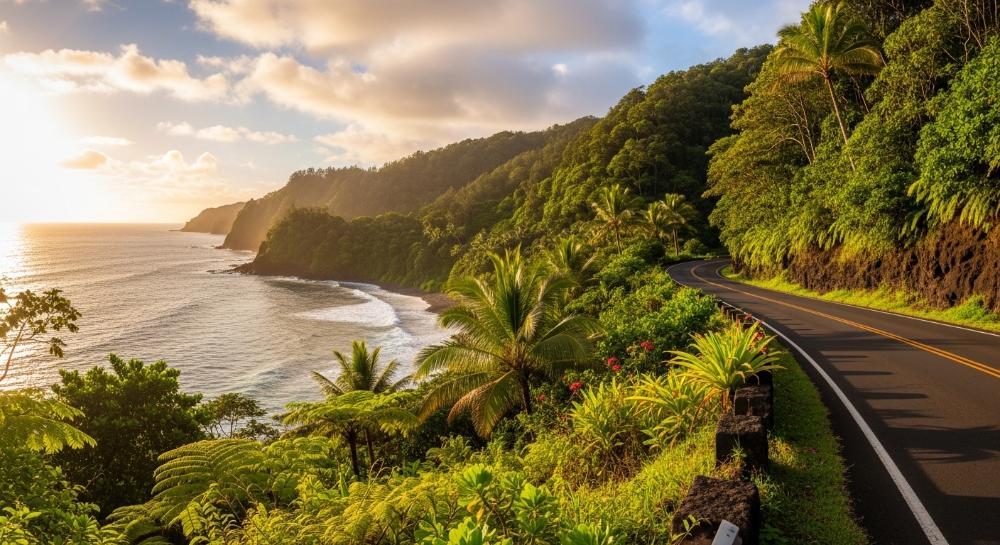
The key is to go on a weekday if you can. Weekends get congested, and parking at the popular stops fills up fast. The Garden of Eden Arboretum at mile 10 is worth a stop for the views alone. Wai’anapanapa State Park, with its black sand beach and sea caves, requires a reservation and fills up quickly. Bring snacks, a good playlist, and plan for at least 6 hours.
Haleakala Sunrise and Crater Trails
Haleakala is a dormant shield volcano that rises to 10,023 feet above sea level. The sunrise from the summit is famous, and for good reason: you’re watching the sun come up above the clouds.
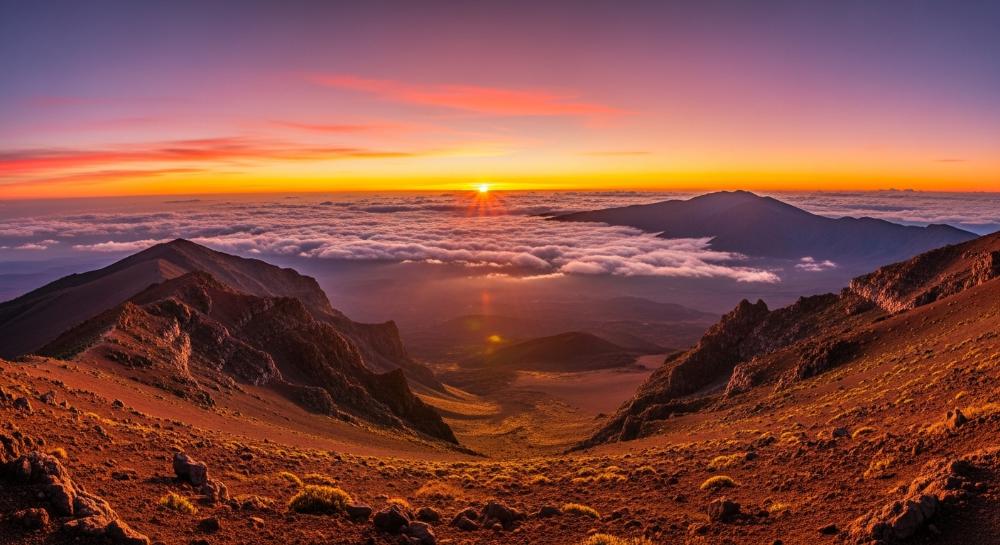
It requires a reservation at least 60 days out, and waking up well before dawn to make the drive in time. It’s cold at the top, so bring a real jacket. If sunrises aren’t your thing, the crater trails during the day are just as dramatic. The landscape looks more like the surface of the moon than anything you’d expect to find on a tropical island.
Winter Whale Watching Season
Maui gets roughly 12,000 humpback whales migrating through its waters between December and April, making it the best place in Hawaii for whale watching. They come from Alaska to breed and calve in the warm, shallow waters of the Maui channel.
You can often spot them from shore at beaches like Kaanapali, but a boat tour puts you much closer. The whales breach, slap the water with their fins, and occasionally surface right next to the boat. It’s one of those experiences that’s hard to prepare for and impossible to forget. Most tours run two to three hours and leave from Lahaina Harbor or Ma’alaea.
Ka’anapali and Wailea Beach Days
Maui has more soft, swimmable beaches than any other Hawaiian island, and 2 stretches stand out. Ka’anapali on the west side is lined with large resorts and has reliable snorkeling at Black Rock, where the reef drops off dramatically, and fish gather in large numbers.
A few of the best Maui beaches worth knowing about before you go:
- Ka’anapali Beach: the classic resort strip on the west side, great for snorkeling at Black Rock
- Wailea Beach: calmer and less crowded, lined with upscale resorts and excellent water clarity
- Big Beach (Makena): the longest stretch of natural sand on Maui, no development, strong shore break
- Hamoa Beach: near Hana, smaller and more remote, often described as one of the most beautiful in the Pacific
- D.T. Fleming Beach: family-friendly on the northwest coast, good for bodyboarding in the right conditions
Wailea, on the south side, is quieter, a bit more upscale, and has access to several beaches that are less crowded than Ka’anapali. Both have calm water for most of the year, plenty of food and drinks nearby, and the kind of sunset that makes you want to stay an extra few days.
Kauai: The Island That Stays Wild
Hawaii Kauai is the oldest of the main Hawaiian Islands and the least developed. There are no skyscrapers, no big shopping malls, and traffic moves in its own unhurried way along the island’s single main road.
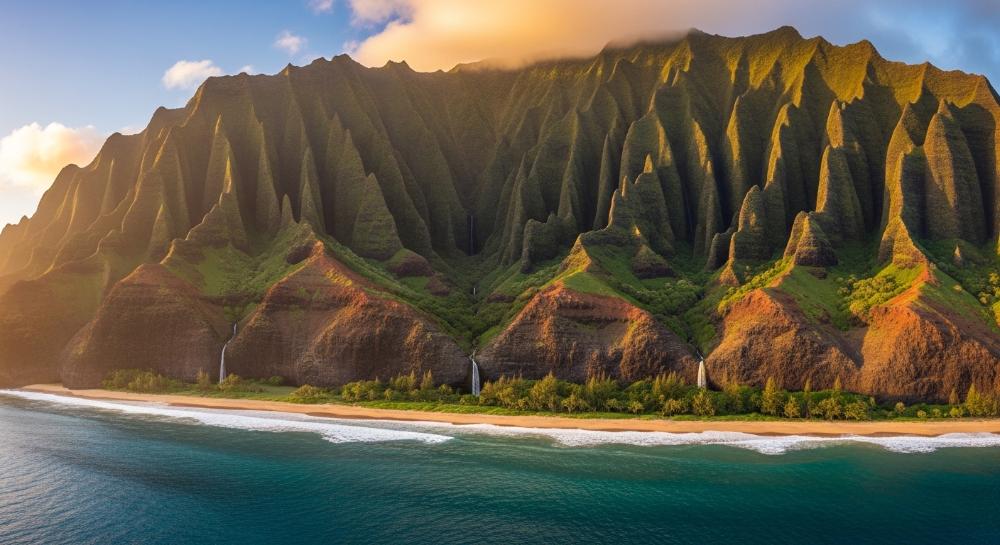
Kauai took the top spot in HAWAIʻI Magazine’s 2025 Readers’ Choice Awards, winning by a landslide. It’s the island for people who want raw, unfiltered natural beauty and don’t mind trading convenience for it. Expect some rain, especially on the north shore in winter. Also expect scenery that makes everything else feel a little ordinary by comparison.
Na Pali Coast by Boat or Trail
The Na Pali Coast is the most dramatic stretch of coastline in Hawaii, possibly in the entire United States. Sheer green cliffs rise straight out of the ocean for thousands of feet, waterfalls drop into the sea, and the whole thing is inaccessible by road.
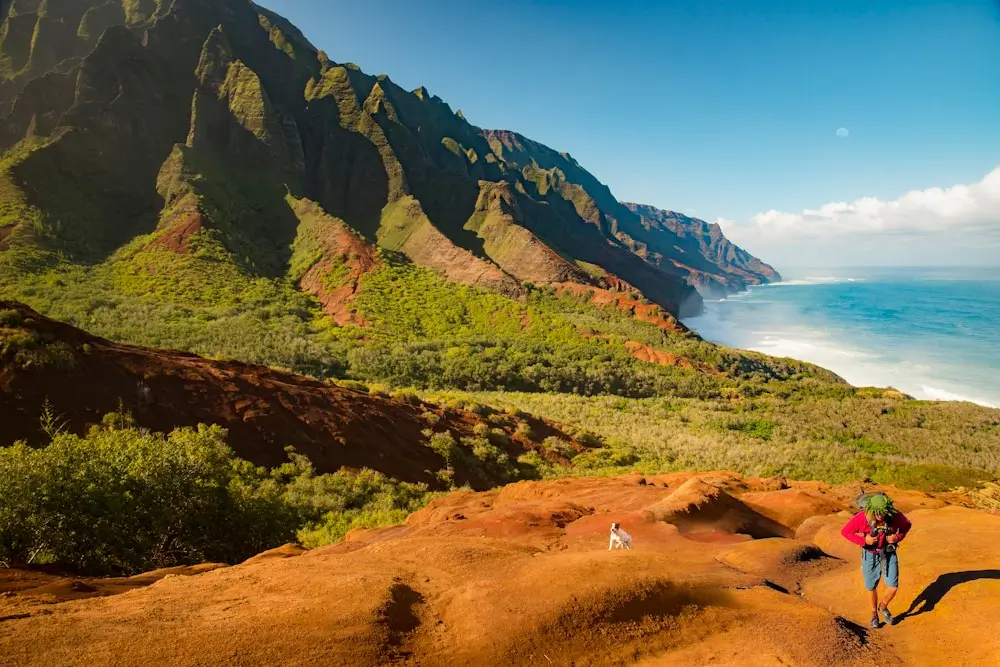
You can see it 3 ways: by boat, by helicopter, or by hiking the Kalalau Trail. The boat tours are the easiest and give you the full view, including sea caves. The Kalalau Trail is an 11-mile backcountry trail that requires a permit and is not for casual hikers. The helicopter tours are expensive but cover the most ground in the least time.
Waimea Canyon Hikes and Viewpoints
Waimea Canyon sits in the southwest of Kauai and stretches 14 miles long and more than 3,600 feet deep. People call it the Grand Canyon of the Pacific, which is accurate enough: it has the same dramatic layered colors and the same sense of scale that makes you stop talking mid-sentence.
Insight
Kauai has only one main road, and it doesn’t circle the island. If you’re staying on the north shore, plan to spend your time there. Driving from north to south and back adds up fast.
The drive up to the canyon rim takes you through several lookout points, each one better than the last. There are hiking trails at various levels of difficulty, and on clear days, you can see all the way down to the coast. It’s a full half-day at minimum, and worth every minute of it.
Hanalei Bay on the North Shore
Hanalei Bay is a broad, crescent-shaped bay on Kauai’s north shore backed by mountains that are almost always wrapped in low clouds. In summer, the water is calm enough for paddleboarding, kayaking, and easy swimming. In winter, the bay gets big surf that’s best left to experienced surfers.
The town of Hanalei is small, walkable, and full of good food, local shops, and the general feeling that time moves differently here. The drive in along the two-lane road over the old one-lane bridges is part of the experience.
Poipu Beach for Snorkeling and Sun
Poipu is on Kauai’s sunny south shore and is one of the most reliably clear-weathered spots on the island. The beach has a natural rock formation that creates a protected swimming area on one side and open ocean on the other, which makes it work for everyone. Hawaiian monk seals, one of the world’s most endangered marine mammals, regularly haul out on the sand here.
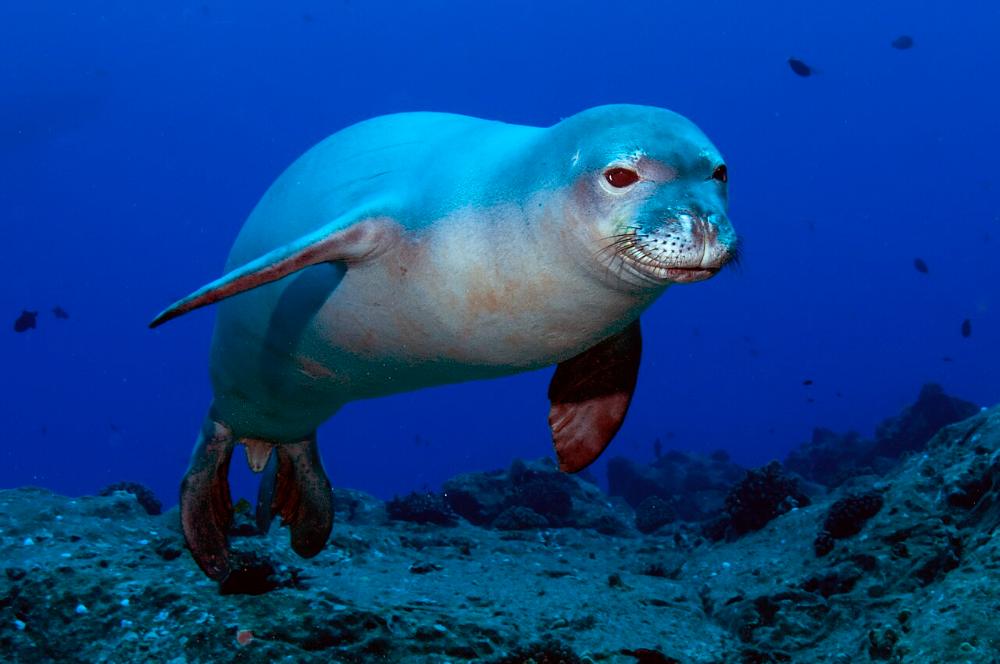
The snorkeling is good close to shore, with colorful reef fish and the occasional sea turtle. Poipu is also one of the few spots on Kauai where you’ll find restaurants and shops within walking distance of the beach.
Big Island: Where the Earth Still Moves
The Big Island of Hawaii is bigger than all the other Hawaiian Islands combined. It has 11 of the world’s 13 climate zones, active lava flows, black sand beaches, snow-capped peaks, and coffee farms that produce some of the best beans on the planet.
Tip
Split your time between the Kona side and the Hilo side. They’re completely different experiences and only about 90 minutes apart by car. Kona is sunny, beach-focused, and where most of the resorts are. Hilo is lush, rainy, and local. Most visitors only do Kona and miss half of what makes the Big Island worth the trip.
It’s the most geologically young island in the chain, which means the landscape looks raw in places where lava has only recently cooled. The trade-off is that the Big Island doesn’t have Maui’s polish or Oahu’s infrastructure. It rewards the kind of traveler who’s willing to drive, plan, and stay curious.
Hawaii Volcanoes National Park
Hawaii Volcanoes National Park is one of the most extraordinary places in the national park system. Kilauea has been erupting intermittently for decades, and the activity is real and ongoing.
The park has hiking trails that take you across hardened lava fields, into lava tubes like the Thurston Lava Tube, and along the rim of the Kilauea caldera. The Chain of Craters Road drops nearly 4,000 feet from the crater to the coast and passes through miles of ancient lava flows.
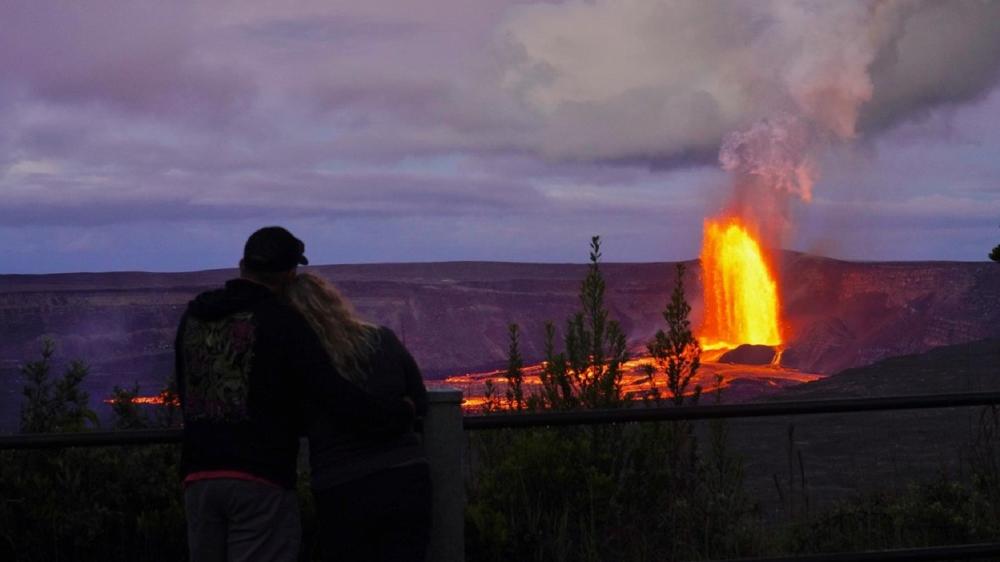
If there’s active lava visible, the park service posts viewing locations, and they’re worth the effort to reach. Even without active flows, the park is a full day at minimum. The steam vents, sulfur banks, and caldera overlook at Jaggar Museum are all within a short drive of the park entrance.
Staying overnight in the nearby town of Volcano gives you access to the park at dusk and dawn, when the glow of the caldera is most dramatic, and the crowds are thinnest.
Night Manta Ray Swims near Kona
The Hawaii Kona coast is home to one of the most unusual experiences in the Pacific: nighttime snorkeling or diving with manta rays. These animals, with wingspans that can reach 16 feet, feed on plankton near the surface at night.
Tours typically run between $90 and $150 per person. A few things to know before you book:
- Wetsuits are provided, but bring a swimsuit that layers underneath
- Motion sickness can be a factor if the water is choppy, so take precautions if you’re prone to it
- The manta rays are wild animals, and sightings aren’t guaranteed, though operators report a very high success rate
- Book at least a few days ahead during peak season
Tour operators light up the water, which draws the plankton, which draws the mantas. You float face-down on the surface and watch them barrel-roll directly beneath you. It sounds terrifying, and it ends up being one of the most peaceful, surreal things you’ll ever do in the ocean. Tours depart from Keauhou Harbor nightly, run about 90 minutes, and include all equipment.
Kona Coffee Farms
Hawaii Kona coffee is grown on the slopes of the Hualalai volcano on the west side of the Big Island, in a narrow belt where the soil and climate are nearly perfect for coffee cultivation.
There are around 630 coffee farms in the Kona region, most of them small family operations. Several offer free tours, including Greenwell Farms and Hala Tree. You’ll walk through the orchard, see how the coffee is processed, and taste several roasts side by side.
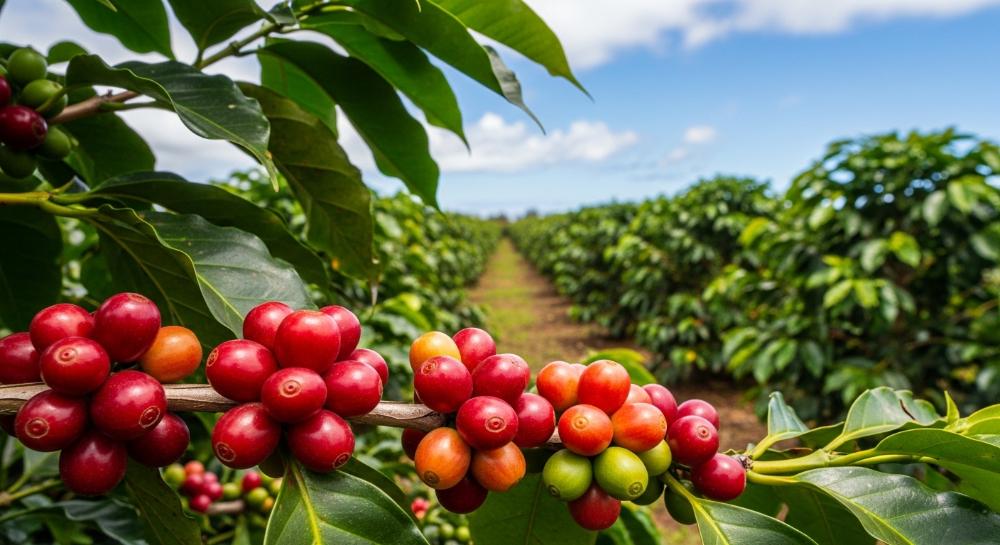
It’s a surprisingly interesting couple of hours, even for people who don’t consider themselves serious coffee drinkers. The difference between genuine Kona Typica and the blends you’ll find at a grocery store is stark enough that you’ll probably leave with a bag or two to bring home.
A note on labeling: only coffee labeled “100% Kona” is actually from Kona. Anything labeled “Kona Blend” can legally contain as little as 10% Kona coffee, so read the bag before you buy.
Stargazing at Mauna Kea
Mauna Kea rises to 13,796 feet above sea level, which puts the summit above about 40% of Earth’s atmosphere. The air is dry, the skies are dark, and the conditions for astronomy are exceptional enough that some of the world’s most powerful telescopes are located at the summit.
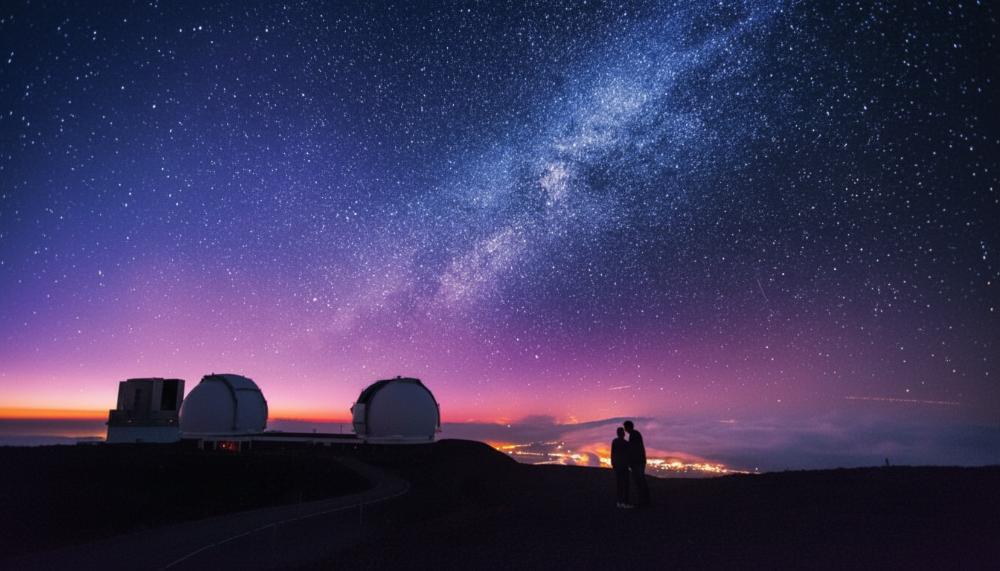
You don’t need to go to the summit to stargaze: the visitor information station at 9,200 feet is free, and the stargazing program held on Tuesday, Friday, and Saturday evenings from 6 to 9 PM lets you look through telescopes with guidance from volunteers. Dress for genuine cold. Even in summer, temperatures at the summit can drop below freezing after dark.
So Which Hawaii Island Is Right for You?
The honest answer is: most people who visit one island end up wanting to come back and visit another. They’re not interchangeable, and the differences between them are bigger than they look on a map.
If it’s your first time in Hawaii, Oahu gives you the most variety and the easiest logistics. If beaches are the whole point, Maui delivers consistently. If you want a dramatic nature and don’t mind a bit of mud or rain, Kauai is hard to beat. If you want a place that genuinely feels unlike anywhere else on earth, the Big Island earns that every time.
Tip
One practical move if you have 2 weeks: pick 2 islands. The inter-island flights are short and relatively affordable, and staying seven nights on each gives you enough time to settle in without rushing.
A popular pairing is Oahu plus Maui, or Maui plus Kauai. The Big Island works well as a standalone or paired with Maui if you want the contrast between the two. Book the flights early, secure your attraction reservations before you leave home, and leave room in the schedule for the thing you didn’t plan on finding.