North Sardinia is more than the yacht-lined marinas of Costa Smeralda. Drive twenty minutes past the glossy resorts and the island turns wild. Pink granite, empty coves, and villages where lunch still runs on nobody’s schedule but the kitchen’s.
- Day 1: Arriving in Santa Teresa Gallura
- Rena Bianca beach in Santa Teresa
- Sunset at Capo Testa
- Insight
- Dinner in Santa Teresa Gallura
- Day 2: Hidden coves of the La Maddalena archipelago
- Visiting Cala Coticcio on La Maddalena
- Quieter beaches on Caprera
- Getting to La Maddalena from Palau
- Day 3: Inland Gallura around Aggius and Tempio Pausania
- Valle della Luna near Aggius
- Vermentino tasting in Tempio Pausania
- Lunch in the Gallura hills
- Day 4: Hidden beaches around Isola Rossa
- Cala Rossa near La Marinedda
- The walk to Li Cossi beach
- Tip
- Day 5: Costa Paradiso and Castelsardo
- The old town of Castelsardo
- What to eat in Castelsardo
- Day 6: Stintino and La Pelosa beach
- Visiting La Pelosa in Stintino
- Day trip to Asinara National Park
- Tip
- Quieter beaches near Stintino
- Day 7: Alghero and Capo Caccia
- Exploring Alghero old town
- Neptune’s Grotto at Capo Caccia
- Flying home from Alghero
- Planning your North Sardinia road trip
- Renting a car in North Sardinia
- Best time to visit North Sardinia
- Sardinia beach reservation rules for 2026
- Which North Sardinia beaches need booking
- How to book Sardinia beach tickets
- Read more
This route runs west across the top of the island. You fly into Olbia, work your way toward Alghero, and stop at the beaches that never make the brochures. There’s one thing you need to know before you pack, though. As of 2026, many of Sardinia’s best beaches require an online booking, a fee, and a QR code at the gate.
I’ve built that planning into the days below so you don’t get turned away at the sand. Here’s how to spend 7 slow, salty days in the north.
Day 1: Arriving in Santa Teresa Gallura
Land at Olbia, grab your rental car, and point it north. Santa Teresa Gallura sits about an hour and fifteen from the airport, at the very top of the island. It’s a real town with brightly painted houses, a proper piazza, and a harbor that faces Corsica across the strait. Use it as your base for the first three nights.
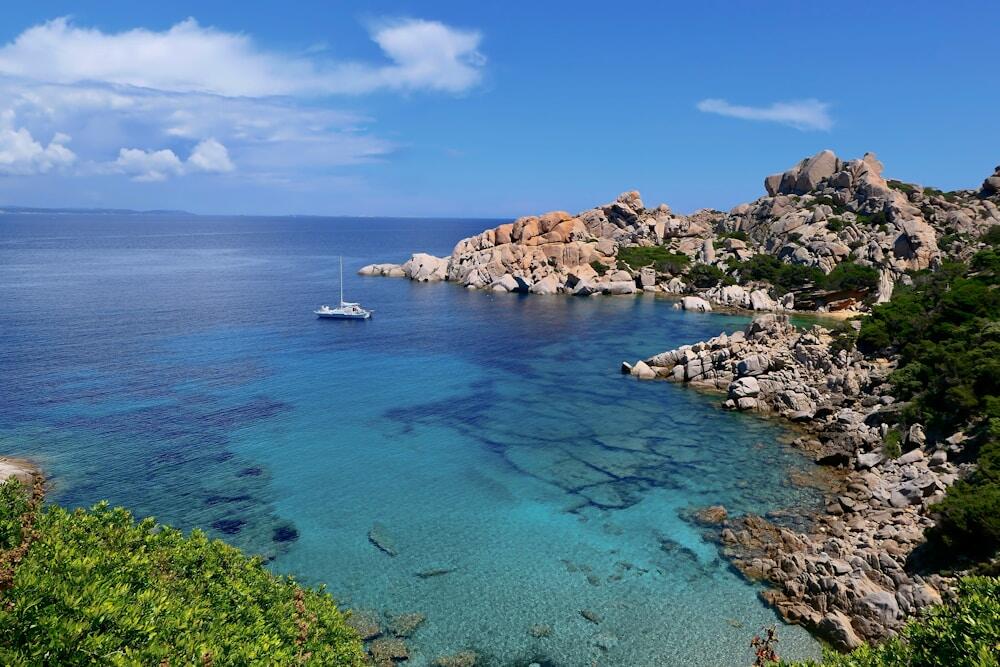
You won’t need the car much once you’re in town. Leave it at the hotel and walk. The old center is small, walkable, and full of cafes that spill onto the square in the evening.
Rena Bianca beach in Santa Teresa
The town’s own beach sits just downhill from the center. Rena Bianca is a curve of pale sand with clear, shallow water and a stone watchtower keeping guard at one end. It’s the easy win on arrival day when you don’t want to drive anywhere.
Do a few practical things on day one while you’re near shops:
- Buy a reusable water bottle and beach mat for the week
- Pick up cash, since smaller villages and coves often don’t take cards
- Check the parking situation at your hotel before you rely on street spots
The beach mixes free public sand with a couple of beach clubs. If you want a lounger, umbrella, and someone bringing you a drink, the clubs handle that for a daily fee. If you’d rather spread out a towel for nothing, there’s room for that too.
Sunset at Capo Testa
A ten-minute drive west of town brings you to Capo Testa, a rocky headland of wind-sculpted granite that looks like a sculpture park nature forgot to finish. The Romans quarried columns here, and you can still spot rough-hewn stone among the boulders. It’s the best sunset on this stretch of coast.
Insight
The mistral wind rules this whole coast. If Capo Testa is howling, the beaches on the sheltered eastern side of the cape will be calm. Always have a plan B cove facing the other way.
Park at the lot and walk out toward the lighthouse. The path weaves between giant rounded rocks, and small coves open up on either side. Cala Spinosa, tucked into the granite, is a lovely quick swim if the wind’s behaving.
Dinner in Santa Teresa Gallura
Santa Teresa is where you eat well after a beach day. The catch comes off local boats in the morning, so seafood is the move. Book ahead, because the good places are small and fill up fast in season.
For a proper grown-up seafood dinner, Da Thomas has been run by the same family since 1978 and made the Gambero Rosso guide. Order the fish of the day off-menu and let them decide how to cook it. If you want somewhere more homestyle, look for a spot serving culurgiones, the pleated Sardinian pasta pockets stuffed with potato, mint, and pecorino.
Day 2: Hidden coves of the La Maddalena archipelago
Today you trade the car for a boat. The La Maddalena archipelago is a national park of islands, islets, and improbably clear water off the northeast tip. The main island has a lively town, and the neighboring island of Caprera hides some of the quietest sand in the north.
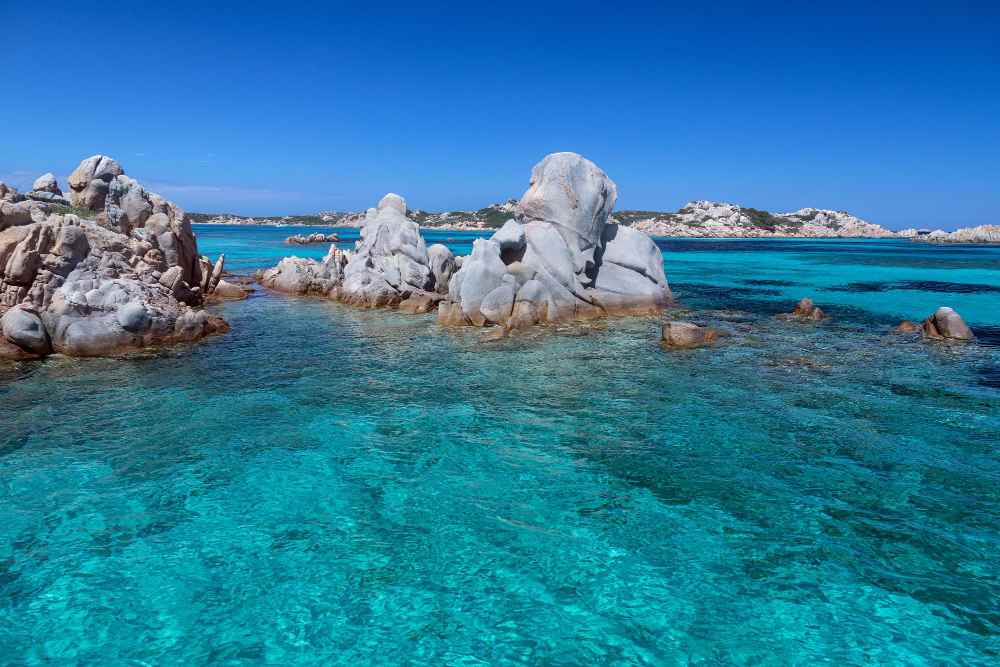
You have two ways to do this. Take the passenger ferry across and rent a small car or e-bike on the island, or join a boat tour that hops between coves. For hidden beaches over famous ones, the boat wins.
Visiting Cala Coticcio on La Maddalena
Cala Coticcio, nicknamed “Tahiti” for its impossible turquoise, is the archipelago’s crown jewel and its strictest gate. As of 2026, only 60 people per day are allowed in, and you cannot go without a licensed guide. This is not a beach you can wing.
Here’s what the numbers look like for the coves you’ll actually consider:
| Cove | Daily cap | Cost | How to access |
|---|---|---|---|
| Cala Coticcio | 60 people | €3 + guide fee | Licensed guide only |
| Cala Brandinchi | 1,447 people | €2 | Online, opens 6 PM two days ahead |
| Spiaggia Rosa (Budelli) | View only | No entry | Boardwalk viewing, no landing |
Quieter beaches on Caprera
Caprera connects to the main island by a short bridge and stays far calmer than La Maddalena town. This is where Garibaldi lived, and you can visit his compound, but the real draw is the marked trails that end at small beaches. Cala Napoletana and Cala Brigantina reward a short walk with sand you might have nearly to yourself.
Pack everything you need, because facilities out here are minimal. That means water, snacks, shade, and your own towel. The trade for a little effort is a cove without a beach club in sight.
Getting to La Maddalena from Palau
The ferry to La Maddalena leaves from Palau, about a 40-minute drive from Santa Teresa. Boats run frequently in season, and the crossing takes around 20 minutes. You can bring a car across, but parking on the island is tight, so consider leaving it in Palau.
Day 3: Inland Gallura around Aggius and Tempio Pausania
Three days of sand and you’ll want a change of texture. Gallura’s interior is granite country, all cork oak forests and villages built from stone the color of honey. This is the “local stops” heart of the trip, and almost nobody on a beach holiday bothers to come up here.
Rent stays with the car today. The drive itself is half the pleasure, winding through hills dotted with those cone-shaped Bronze Age nuraghi. Give yourself a full unhurried day.
Valle della Luna near Aggius
Aggius is a granite village that’s earned a spot on Italy’s list of most authentic small towns. Just outside it lies the Valle della Luna, the Valley of the Moon, a vast field of boulders left by ancient glaciers. Erosion has shaped the rocks into forms that look like animals and faces if you squint.
A short list of what to do in and around Aggius:
- Walk a loop of the Valle della Luna boulder field
- Visit the MEOC ethnographic museum in the village
- Browse the handwoven carpets Aggius is known for
Walk into the valley in the morning light when the granite glows. In town, the ethnographic museum is the largest of its kind on the island and worth an hour. There’s also a small museum dedicated to the region’s banditry history, which is more interesting than it sounds.
Vermentino tasting in Tempio Pausania
Tempio Pausania is the granite-built capital of inland Gallura and the gateway to Sardinia’s finest white wine. Vermentino di Gallura is the island’s only DOCG appellation, and it grows here thanks to the potassium-rich granite soil and the warm, windy climate. The wine is crisp, citrusy, and made for a hot afternoon.
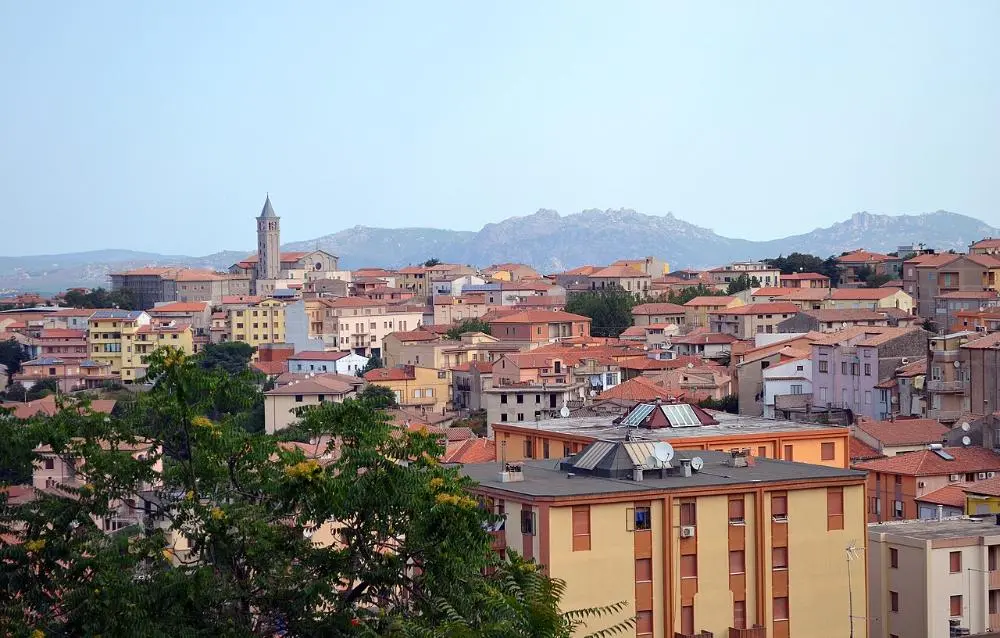
Several producers around Tempio open for tastings. Call ahead rather than turning up, since these are small family operations. A bottle bought at the source costs a fraction of what you’d pay on a coastal terrace.
Lunch in the Gallura hills
The interior is where you find the roasted meats the coast doesn’t do as well. Look for porceddu, spit-roasted suckling pig, and macarrones de busa, a hand-rolled local pasta. A hillside agriturismo is the classic setting, where the menu is whatever the kitchen made that morning.
Day 4: Hidden beaches around Isola Rossa
Time to move west. Pack up in Santa Teresa and drive along the coast toward Isola Rossa, a small fishing village named for the red granite island sitting just offshore. This half of the trip is quieter, wilder, and where the hidden coves really start.
Isola Rossa or nearby Castelsardo both work as a base for the next two nights. Isola Rossa keeps a simple, welcoming feel even in August, with a working marina and a walkable seafront. It’s a strong choice for surfers, since the wind that shapes this coast makes it a hub for windsurfing and kitesurfing.
Cala Rossa near La Marinedda
From the popular La Marinedda beach, a ten-minute walk along a dirt track leads to Cala Rossa. It’s a wild little beach studded with rocks that form natural pools, ideal for kids and for snorkeling. The short walk keeps the crowds thin even when La Marinedda is busy.
Wear something on your feet for the track and the rocky entry. Bring water, because there’s nothing out here to buy. The natural pools between the boulders warm up beautifully by midday.
The walk to Li Cossi beach
Li Cossi is the star of this stretch, a cove of fine sand hemmed in by tall cliffs with a small stream running down to the sea. You reach it on foot along a panoramic path through the Mediterranean scrub, and the views on the walk in are half the reward. It sits on the border between the Isola Rossa and Costa Paradiso areas.
Tip
The best hidden coves on this coast all involve a short walk and zero facilities. Pack a small dry bag with water, snacks, and sunscreen every morning, and you can chase whichever cove is sheltered from the day’s wind.
Give yourself about 30 minutes each way for the hike. The path is easy but exposed, so go early or late to dodge the midday heat. Once you’re down, the clear shallow water is perfect for a long snorkel.
The waters between Punta Canneddi and Costa Paradiso hide red coral and rocky gullies full of fish. Bring a mask and fins and you’ll find an underwater world most sunbathers never see. Calm mornings before the wind picks up give the best visibility.
Day 5: Costa Paradiso and Castelsardo
Today pairs a coastline of hidden fjords with one of the north’s most striking old towns. Costa Paradiso is a stretch of pink granite, dense scrub, and coves reachable only on foot. Castelsardo, a little further west, is a medieval town stacked up a headland above the sea.
Split the day. Spend the morning finding a cove along Costa Paradiso, then drive to Castelsardo for a late lunch and an afternoon in the old town. Both sit within an easy drive of an Isola Rossa base.
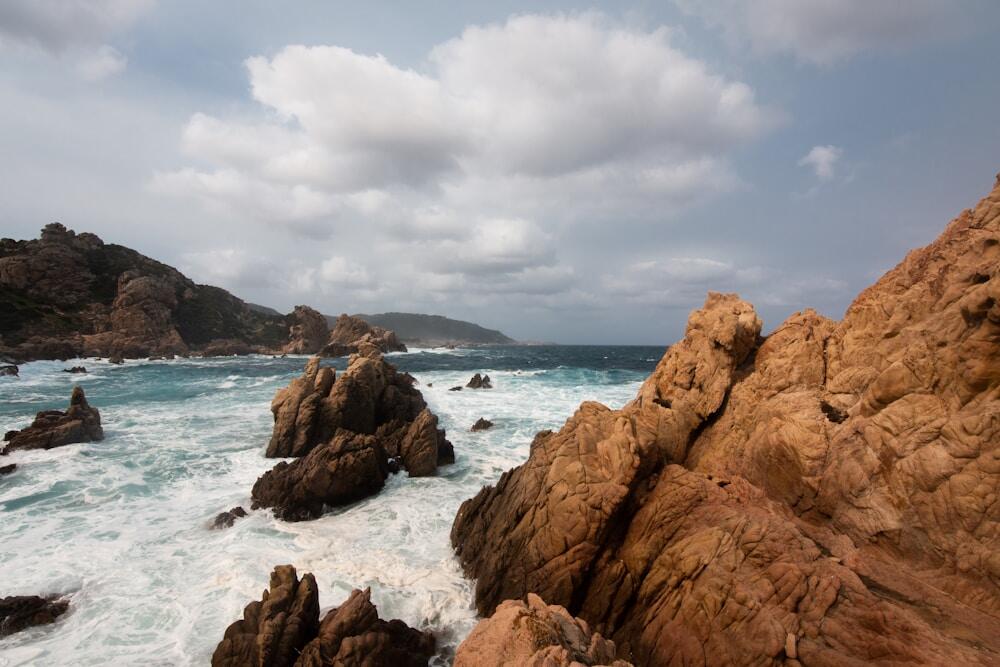
Costa Paradiso was built in the 1960s as a discreet villa community, and its beaches stay wonderfully wild. Porto Leccio is a lovely cove sheltered from the easterly winds, and the smaller inlets of white sand hide among the rocks. This is a place where the water shifts between turquoise and deep cobalt in a heartbeat.
Many of these coves need a short walk through the maquis to reach. That effort is exactly what keeps them quiet. Follow the marked paths and pick a bay facing away from the day’s wind.
The old town of Castelsardo
Castelsardo climbs a rocky point crowned by a 12th-century castle, with narrow cobbled lanes twisting up to the top. The old town is a genuine working place, not a museum, and the views over the Gulf of Asinara from the ramparts are worth the climb. Local women still weave baskets from dwarf palm in doorways along the lanes.
What to eat in Castelsardo
Castelsardo is a fishing town, so the seafood is the reason to eat here. A few dishes to hunt down:
- Aragosta alla castellanese, local lobster the town is famous for
- Zuppa di pesce, a hearty local fish stew
- Fresh sea urchin in season, eaten simply with bread
Wander up slowly and stop for a granita when the climb gets warm. The castle houses a small museum of Mediterranean basketry that fits the town perfectly. Sunset from the walls is the reward for the uphill walk.
Day 6: Stintino and La Pelosa beach
Your last full beach day heads to the far northwest tip and one of the most photographed beaches in Italy. Stintino was a fishing village, and just beyond it lies La Pelosa, all white sand and water so shallow and clear it looks fake. This is also the trip’s most tightly regulated beach, so today needs the most planning.
Move your base to Alghero or Stintino tonight to set up the final day. Stintino itself is small but has enough beaches and boat trips to fill a day or two.
Visiting La Pelosa in Stintino
La Pelosa is capped and ticketed for 2026. Between May 15 and October 15, only 1,500 visitors are allowed per day, entry costs €3.50 for anyone 12 and over, and QR codes are checked at the gate between 8 AM and 6 PM. You must book online in advance.
| Beach | Daily cap | Fee (12+) | Booking window |
|---|---|---|---|
| La Pelosa (Stintino) | 1,500 | €3.50 | 9 AM, two days ahead |
| Cala Coticcio (La Maddalena) | 60 | €3 + guide | Via licensed guide |
| Cala Goloritzé (east coast, optional) | 250 | €7 | 72 hours ahead |
The booking system has a catch worth understanding. Roughly 500 tickets are released long in advance, while the other 1,000 are held back and released on the official app at 9 AM exactly two days before your visit date. There’s also a rule about towels: you have to place a mat between your towel and the fine sand, and fines apply for breaking it or removing sand and shells.
Day trip to Asinara National Park
Off the tip of Stintino floats Asinara, a former prison island now protected as a national park. It’s home to a colony of rare white donkeys and some of the emptiest beaches you’ll find anywhere. You reach it by ferry or organized boat tour, then explore by bike, jeep, or on foot.
Tip
The water at La Pelosa stays shin-deep a long way out, so it’s calm and warm for hours. Walk toward the old Aragonese tower on the islet for the clearest stretch and the best view back to shore.
Visitor numbers are managed in summer, so it pays to sort the crossing before you go. Bring everything with you, because the island has almost no services. A day here is a complete change of pace from the mainland coves.
Quieter beaches near Stintino
If La Pelosa is booked out or the crowds put you off, the area has calmer options. Le Saline and the beaches along the road into Stintino offer clear water without the reservation stress. They lack the postcard framing, but you’ll find room to breathe
Day 7: Alghero and Capo Caccia
Your last day lands in Alghero, and it feels like a different country. This walled seaside city was ruled by the Catalans for centuries, and you still hear Catalan on the streets and see it on the signs. Alghero airport makes it the natural place to end a west-moving trip.
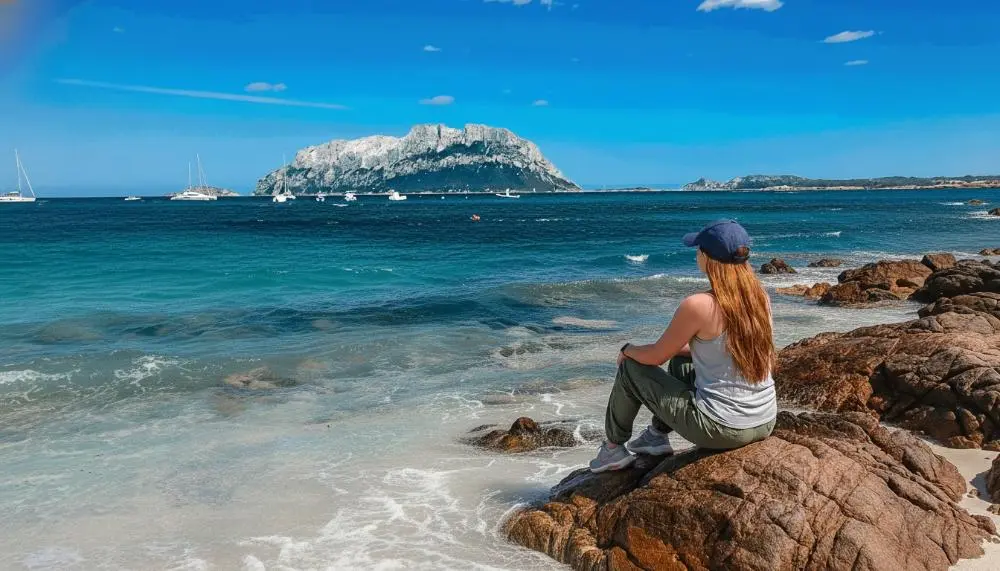
Spend the morning in the old town and the middle of the day out at Capo Caccia before your flight. If your departure is late, there’s time for one last swim.
Exploring Alghero old town
Alghero’s historic center is a maze of cobbled lanes, honey-colored churches, and sea walls you can walk along above the water. The bastions facing the harbor are the classic spot for a final aperitivo. Coral jewelry is the local craft, since the surrounding coast is famous for its red coral.
A few things worth doing before you go:
- Walk the sea-facing bastions at golden hour
- Try a plate of local seafood one last time
- Pick up a piece of Alghero coral as a souvenir
Neptune’s Grotto at Capo Caccia
A short drive west brings you to Capo Caccia, a dramatic limestone headland, and the Grotta di Nettuno hidden at its base. You reach the sea cave two ways: down the Escala del Cabirol, a staircase of over 650 steps cut into the cliff, or by boat from Alghero. Inside is a cathedral of stalactites and a still underground lake.
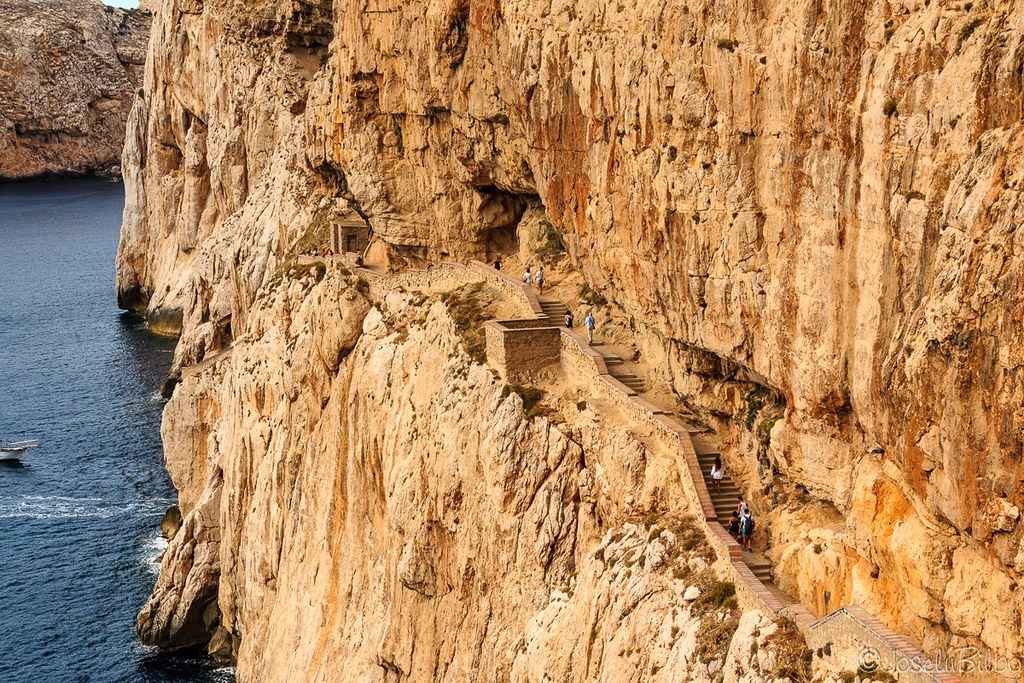
Check the timetable and the sea conditions before you commit, since rough water closes the boat access. The staircase is stunning but steep, so factor in the climb back up. Either approach delivers one of the north’s most memorable finishes.
Flying home from Alghero
Alghero airport sits about 15 minutes from the old town, which makes the last morning relaxed. Drop the rental car here to close the loop from Olbia. Build in a buffer, because summer traffic near the beaches can slow you down.
Planning your North Sardinia road trip
A little logistics goes a long way here, because the north rewards people who plan. The coves are spread out, the roads are slow and scenic, and the best beaches now gate their numbers. Sort the car, the timing, and your bases, and the rest of the trip falls into place.
Renting a car in North Sardinia
You need a car for this route, full stop. Public transport on the island is infrequent and unreliable, and it skips nearly every hidden beach between the towns. Pick the car up at Olbia airport and drop it at Alghero to avoid backtracking.
A small car or compact SUV handles the roads best. There are no motorways or tolls in the north, which keeps driving cheap, but it also means most roads are winding single lanes. They’re beautiful to drive and can get busy in high season, so leave extra time.
Best time to visit North Sardinia
The sweet spots are mid-May to early July and early September to mid-October. In those windows the sea is warm enough to swim, the crowds thin out, and the heat stays comfortable for the coastal walks this trip involves. July and August bring the hottest weather and the busiest coves.
The shoulder season also eases the beach-booking scramble. Caps still apply, but slots are easier to land outside the peak weeks. One thing to note: many coastal restaurants close from late October until April or May, so this is a summer and shoulder-season route.
| Base | Best for days | Why stay here |
|---|---|---|
| Santa Teresa Gallura | 1 to 3 | Near La Maddalena, lively but authentic, ferry to Corsica |
| Isola Rossa or Castelsardo | 4 to 5 | Quiet, hidden coves, easy reach to Costa Paradiso |
| Alghero or Stintino | 6 to 7 | La Pelosa, Catalan old town, departure airport |
Rather than unpacking once, this route uses two or three bases as you move west. It cuts your daily driving and puts you closer to each day’s beaches. Here’s how the bases break down:
Sardinia beach reservation rules for 2026
The single biggest change for anyone planning a Sardinia beach trip is access control. What started as a pilot at La Pelosa has grown into a network of caps, fees, and QR-code bookings across the island’s most sensitive beaches. It’s designed to protect fragile ecosystems from erosion and crowds, and it means spontaneity no longer works at the famous spots.
The upside is real. Booked beaches are cleaner, calmer, and genuinely more pleasant once you’re in. The trick is treating the reservation as part of the plan, not an afterthought.
Which North Sardinia beaches need booking
Not every beach is capped, but the headline ones on this route are. La Pelosa in Stintino and Cala Coticcio on La Maddalena are the two you’ll definitely need to book. Rena Bianca in Santa Teresa and the San Teodoro beaches further east also run reservation systems in peak months.
Plenty of gorgeous beaches stay free and open, though. The hidden coves around Isola Rossa and Costa Paradiso, the walk-in bays on Caprera, and many stretches near Stintino need no ticket at all. That’s part of why this itinerary leans on them.
How to book Sardinia beach tickets
Each capped beach uses its own official app or website, and the booking windows vary a lot. Some open weeks ahead, while others release slots on rolling windows just days before.
Official beach booking links (North Sardinia, 2026)
- La Pelosa (Stintino) — https://spiaggialapelosa.it/en/ (booking runs through app.stintinospiagge.it; the site flags fake sellers directly)
- Cala Coticcio & Cala Brigantina (Caprera, La Maddalena) — https://lamaddalenapark.iswebcloud.it/pagina21966_coticciobrigantina-escursioni-info-utente.html (national park page with the authorized-guide list; €3 park ticket paid via PagoPA, guide booked separately)
- Cala Brandinchi & Lu Impostu (San Teodoro) — https://santeodorospiagge.it/en/ (also the sole authorized seller per its own notice)
- Rena Bianca (Santa Teresa Gallura) — https://www.lovesantateresa.it/en/booking/ (€3.50, June–Sept, mat required)
North Sardinia asks a little more of you than it used to. A few beaches now cap their numbers, and the best coves still make you walk. That’s the deal now, and honestly, it makes the whole coast better.
Because the reward is still there. Empty granite bays, a plate of fish that came off a boat that morning, a hill village where nobody’s in a hurry. The crowds cluster at the famous names, and everywhere else stays quiet.
So sort the two or three capped beaches when you plan, then leave the rest of your days loose. That unmarked strip of sand at the end of a scrubby path is the one you’ll remember. Buon viaggio.