Most “best shipwreck” lists send you straight to the deep end. Trimix tanks, 40-meter descents, a logbook full of stamps before anyone lets you near the good stuff. That’s a shame, because some of the coolest wrecks on the planet need none of that.
- What makes these shipwrecks cool
- Shipwrecks you can walk right up to
- 1. Peter Iredale, Oregon, USA
- 2. SS Ayrfield, Sydney, Australia
- 3. Plassey, Aran Islands, Ireland
- 4. SS Maheno, K’gari (Fraser Island), Australia
- 5. Eduard Bohlen, Skeleton Coast, Namibia
- 6. Z2 Georg Thiele, Narvik, Norway
- 7. MV Panagiotis, Navagio Beach, Zakynthos
- Shipwrecks you can see while snorkeling
- 8. Antilla Wreck, Aruba
- 9. USAT Liberty, Tulamben, Bali
- 10. Sweepstakes, Tobermory, Ontario
- 11. Wreck of the Rhone, British Virgin Islands
- 12. Cali and Balboa, Grand Cayman
- 13. Star of Greece, Port Willunga, Australia
- 14. Vixen, Daniel’s Head, Bermuda
- 15. Evangelia, Costinești, Romania
- Coolest wrecks worth going deeper for
- 16. SS Yongala, Queensland, Australia
- What is the shallowest shipwreck you can visit?
- Shallowest wrecks you can snorkel over
- Record-breaking shipwrecks worth knowing
A ship sits in a field in Ireland. Another is stranded in the Namib Desert. Plenty more sit in a few feet of clear water, close enough to see with a mask and a snorkel.
This is a list of coolest shipwrecks for people who want the wow without the wetsuit certifications. We’ll cover the walk-up wrecks, the snorkel-friendly ones, a few worth going deeper for, and a straight answer to the question everyone asks: what is the shallowest shipwreck you can actually visit?
What makes these shipwrecks cool
Not every wreck earns a spot on a list like this. Age helps, but a rusted hull on its own gets old fast. The ones that stick with you tend to have a few things going for them at once, and the picks below all clear that bar.
Here’s what earned each wreck its place:
- A story worth telling. A dramatic sinking, a strange twist, or a second life as a movie set.
- Something you can actually see. Structure that reads as a ship, not a shapeless pile of metal.
- Marine life or scenery. Coral, fish, cliffs, dunes, or a beach that makes the trip worth it on its own.
- Real accessibility. You can reach it on foot, by snorkel, or with a basic dive, not a week-long expedition.
- A genuine wow factor. The kind of place you photograph and immediately want to show someone.
If you’re after the classic deep dive wrecks like the Thistlegorm, the Zenobia, or the wrecks of Truk Lagoon, we covered those in detail in 15 Famous Shipwreck Locations You Can Visit. This list leans toward the cooler, stranger, and more surprising end of the spectrum.
Shipwrecks you can walk right up to
The shallowest wrecks of all are the ones that never fully went under. These sit on beaches, in fields, and in one case in the middle of a desert. No gear, no boat, no swimming. Just good timing and a pair of shoes, which makes them the easiest cool wrecks on this entire list.
Most beach wrecks look their best at low tide, when more of the hull is exposed and the light is soft. Check the tide table for that specific beach before you go, and aim for a minus tide if you can.
1. Peter Iredale, Oregon, USA
The Peter Iredale ran aground on Clatsop Spit in October 1906, caught in fog and a stiff southeast wind near the mouth of the Columbia River. This 4-masted steel barque was inbound for Portland when the weather turned, and the crew made it to shore on foot. The ship stayed put.
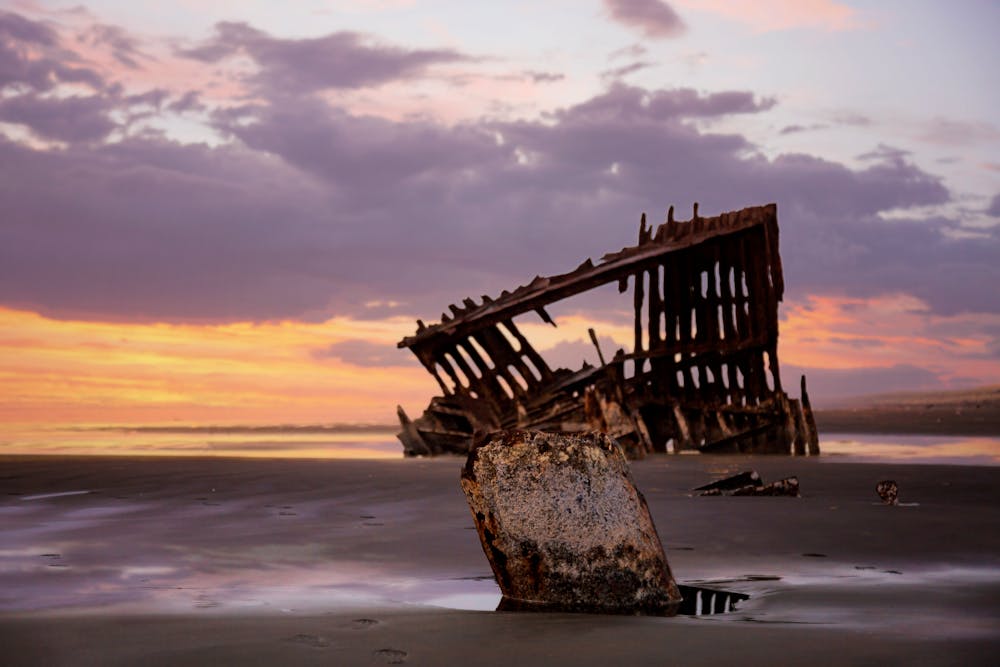
More than a century later, its skeletal iron ribs still rise out of the sand at Fort Stevens State Park, a short drive from Astoria, and it costs nothing to visit. The wreck has eroded steadily over the decades, so what you see today is less than visitors saw 10 years ago, which is a good reason not to keep putting the trip off.
- Location: Fort Stevens State Park, near Warrenton, Oregon
- Year lost: 1906
- How to see it: Walk up from the beach, best at low tide
- Why it’s cool: One of the most photogenic wrecks in America, and you can touch it
2. SS Ayrfield, Sydney, Australia
Homebush Bay used to be a ship graveyard, and the SS Ayrfield is what happens when nature takes a wreck and makes it beautiful. This early 1900s steam collier was left in the bay after its working life ended, and mangroves slowly took root inside the rusted hull.
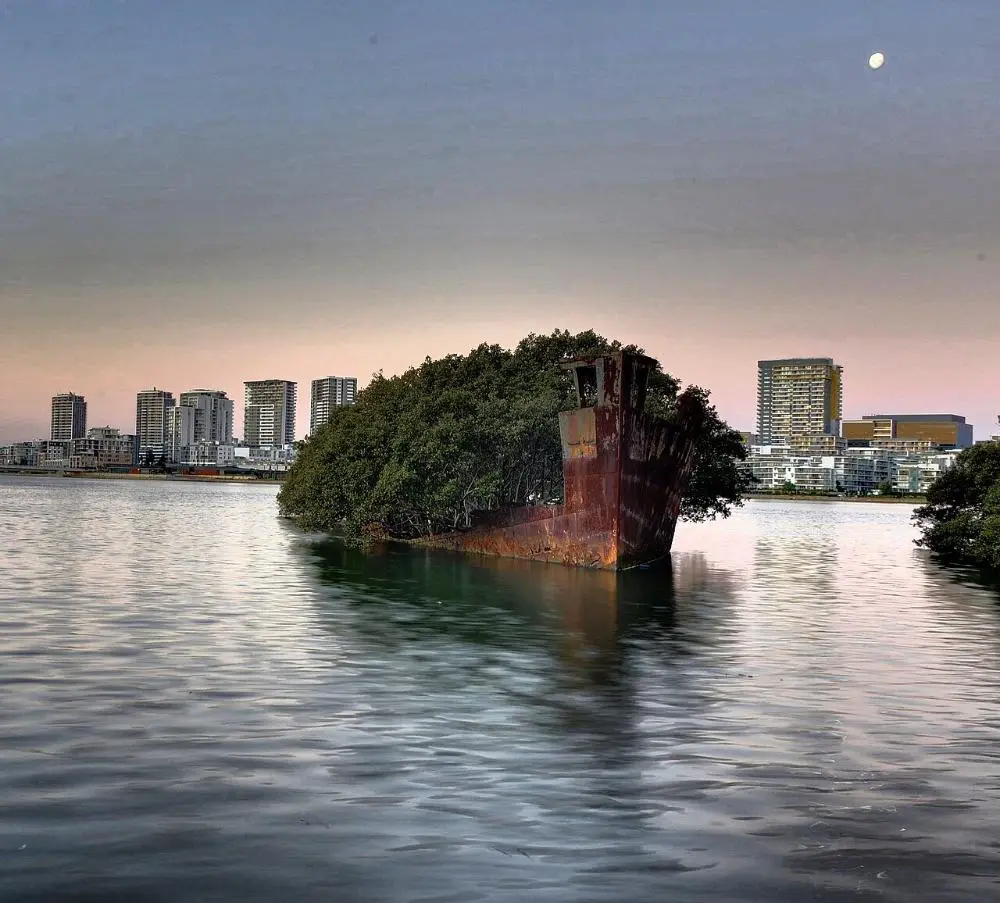
Today a small forest grows straight out of the ship, earning it the nickname “the Floating Forest.” Photographers love it at sunrise and sunset, when the light turns the rust and greenery almost golden. It sits within easy reach of the shoreline and the surrounding parkland, so no boat is required.
- Location: Homebush Bay, Sydney
- Year retired: Left in the bay in the 1970s
- How to see it: Viewable free from the shoreline and boardwalk
- Why it’s cool: A living forest sprouting from a century-old hull
3. Plassey, Aran Islands, Ireland
The Plassey was a cargo steamer blown onto the rocks of Inis Mór during a fierce storm in 1960. Islanders rescued the entire crew using a breeches buoy rigged from the shore, one of those small heroic details that makes the wreck feel human.
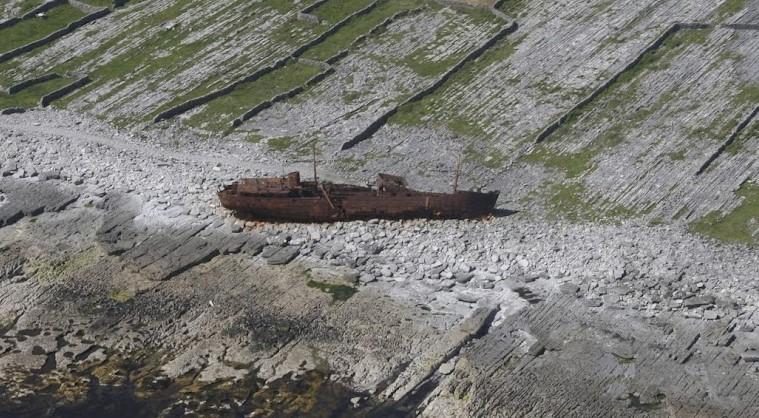
They later salvaged much of the cargo too, hauling it up the rocks by hand. Stronger storms then shoved the ship further inland, so it now sits in a rocky field, nowhere near the water. Fans of the sitcom Father Ted will recognize it instantly from the opening credits.
- Location: Inis Mór, Aran Islands
- Year lost: 1960
- How to see it: Short walk across the island, free
- Why it’s cool: A full ship marooned in a grassy field, with a happy rescue story
4. SS Maheno, K’gari (Fraser Island), Australia
The Maheno had 2 lives before it became a wreck. It was a luxury trans-Tasman ocean liner, then a hospital ship during World War I. In 1935, while being towed to Japan for scrap, it broke free in a cyclone and washed up on the beach at K’gari, formerly Fraser Island.
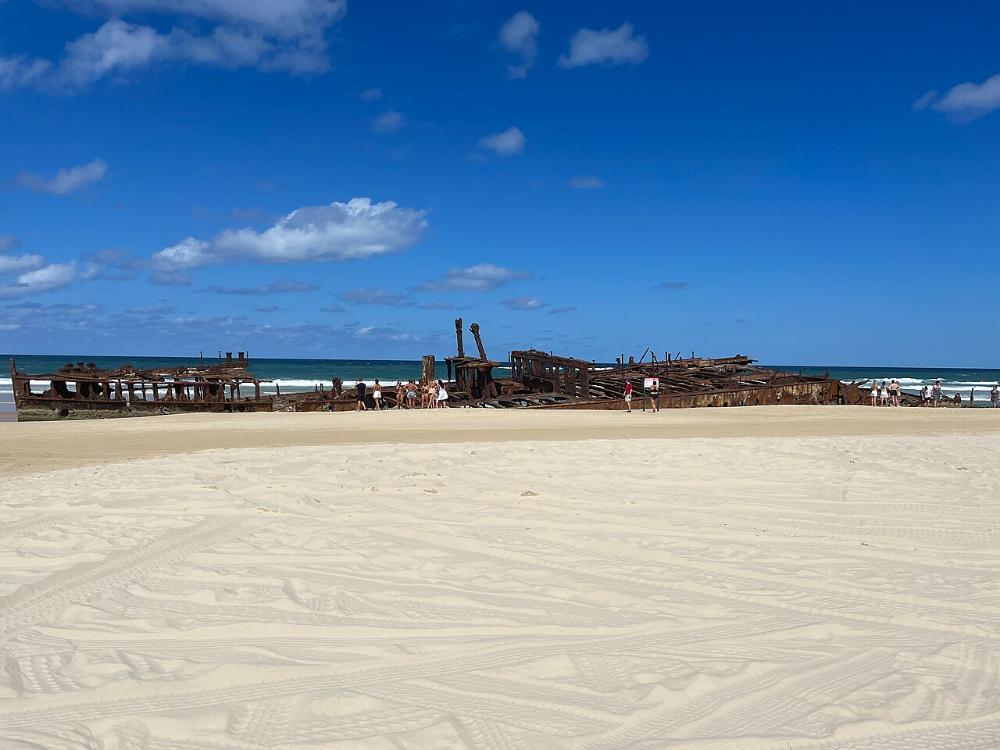
During World War II it was even used for aerial bombing practice, which sped up its decay. It has been rusting in the surf ever since, and you can drive a 4WD right up the sand to reach it.
- Location: 75 Mile Beach, K’gari
- Year lost: 1935
- How to see it: 4WD along the beach at low tide
- Why it’s cool: A grand old liner slowly dissolving on one of the world’s great sand islands
5. Eduard Bohlen, Skeleton Coast, Namibia
This one barely looks real. The Eduard Bohlen, a German cargo ship, ran aground in thick fog on Namibia’s Skeleton Coast in 1909. That coast earned its grim name from whale bones and the many ships lost along it, where cold currents throw up dense fog with almost no warning.
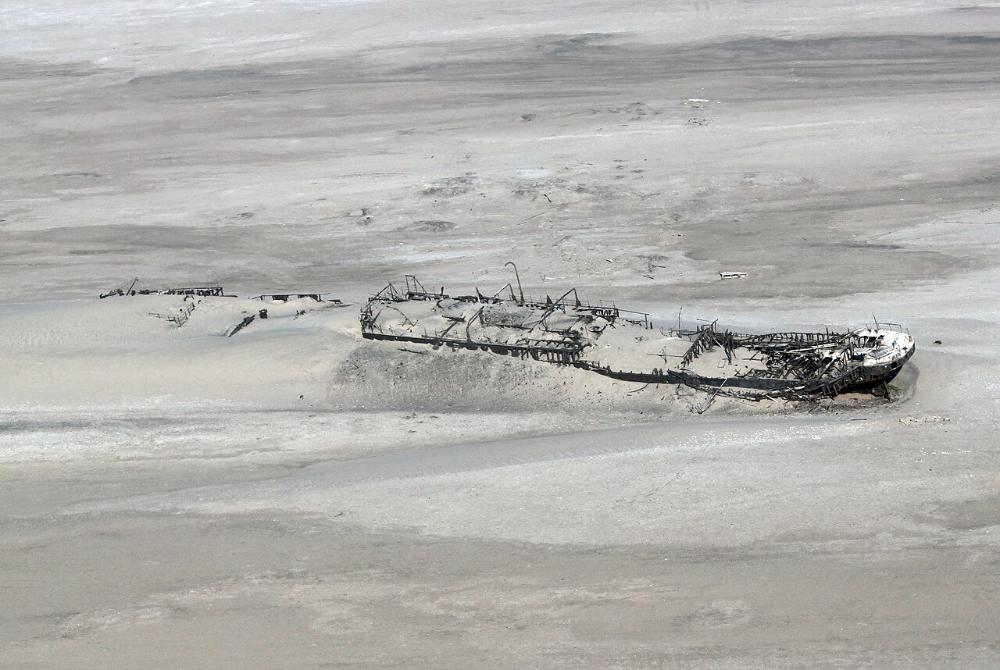
Over the decades the coastline crept seaward and the dunes marched in, and now the wreck sits stranded hundreds of meters inland, surrounded by sand instead of surf. It’s the definition of a ship in a desert.
- Location: Skeleton Coast, Namibia
- Year lost: 1909
- How to see it: Scenic flight or a guided 4×4 expedition
- Why it’s cool: A full shipwreck marooned in the desert, far from any water
6. Z2 Georg Thiele, Narvik, Norway
After being badly damaged during the Battle of Narvik in May 1940, the captain of this German destroyer ran it aground to save his surviving crew. The ship split in 2, and its rusted hull still sits on the Ofotfjord shoreline inside the Arctic Circle.
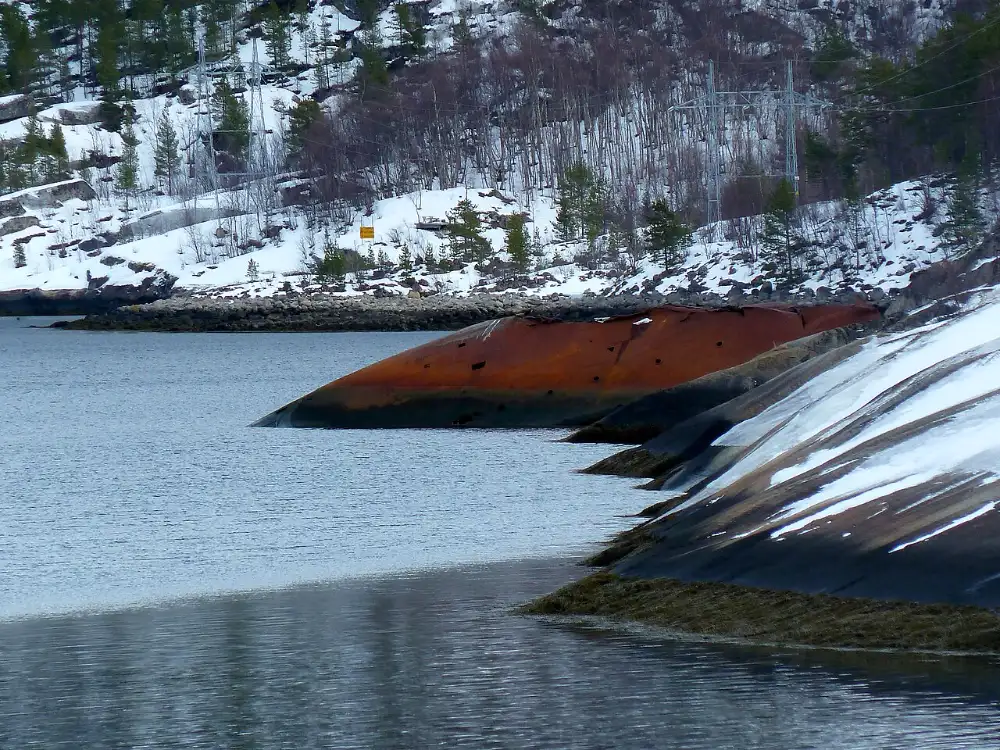
It’s one of the few accessible World War II destroyer wrecks anywhere, and the setting alone justifies the trip. A short hike gets you to it, and divers can explore the submerged sections nearby.
- Location: Near Narvik, northern Norway
- Year lost: 1940
- How to see it: About a 30-minute hike, or dive the deeper parts
- Why it’s cool: A wartime wreck in dramatic Arctic fjord scenery
7. MV Panagiotis, Navagio Beach, Zakynthos
You’ve almost certainly seen this beach, even if you didn’t know the ship’s name. The Panagiotis, reportedly a smuggler’s boat, ran aground in 1980 on a cove now known as Navagio, which simply means “shipwreck.” White cliffs wrap around 3 sides, the sand is bright, and the rusted orange hull sits in the middle like a prop. It’s one of the most photographed beaches on Earth, and it shows up on postcards worldwide.
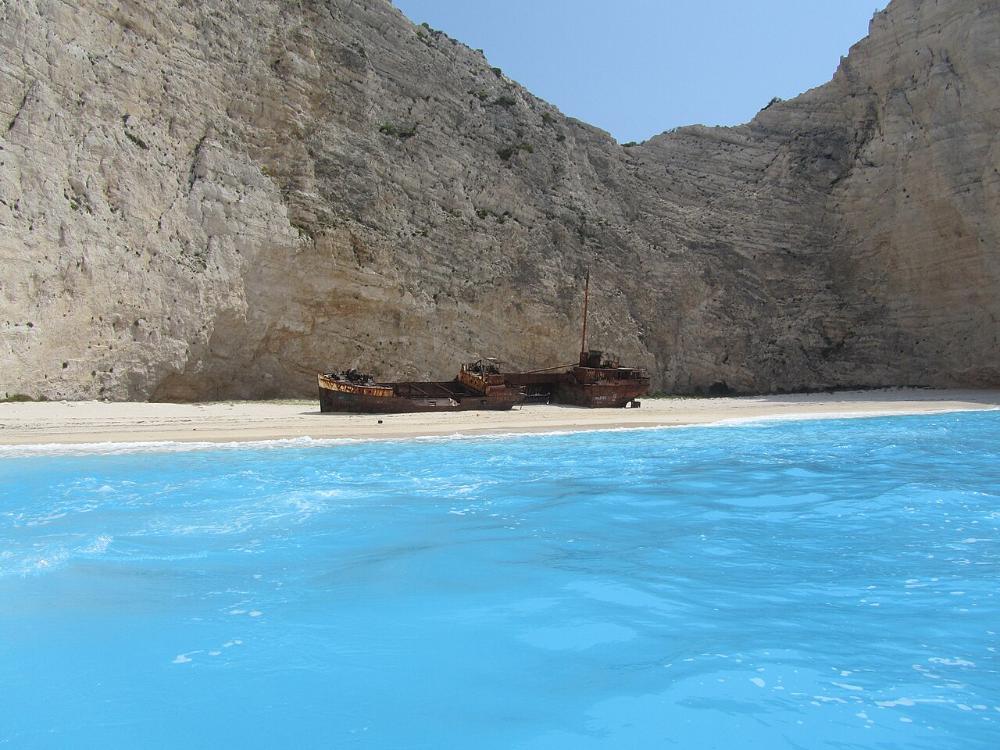
Access to the sand at Navagio has been restricted at times after a 2022 rockslide. Check current local guidance, and know the clifftop viewpoint is often the safest way to see it.
- Location: Zakynthos, Greece
- Year lost: 1980
- How to see it: Boat tour to the cove or the clifftop viewpoint
- Why it’s cool: A shipwreck framed by one of the most beautiful beaches anywhere
Shipwrecks you can see while snorkeling
You don’t need a scuba certification for these. A mask, a snorkel, and a little confidence in the water are enough to float above real history. Several of these sit shallow enough to see clearly from the surface, which makes them ideal first wrecks.
Bring a surface marker buoy in any area with boat traffic, and skip the gloves near coral-covered wrecks. Many sites ask you to keep your hands to yourself so the reef stays healthy.
8. Antilla Wreck, Aruba
The Antilla is the largest wreck in the Caribbean, a German freighter close to 400 feet long, and locals sometimes call it the “ghost ship.” When Germany invaded the Netherlands in 1940, the crew scuttled the ship rather than let Dutch authorities seize it. It has been lying off Aruba’s northwest coast ever since.
The topmasts reach to within about 5 feet of the surface, so snorkelers can see the outline of the hull and the coral-crusted railings clearly, while divers drop into the deeper sections. Most Aruba snorkel boats include it on their routes.
- Location: Northwest coast of Aruba
- Year lost: 1940
- How to see it: Snorkel the upper deck, or dive the interior
- Why it’s cool: The Caribbean’s biggest wreck, shallow enough to see from above
9. USAT Liberty, Tulamben, Bali
The Liberty might be the easiest great wreck in the world to reach. This US Army cargo ship was torpedoed in 1942 and beached at Tulamben on Bali’s north coast.
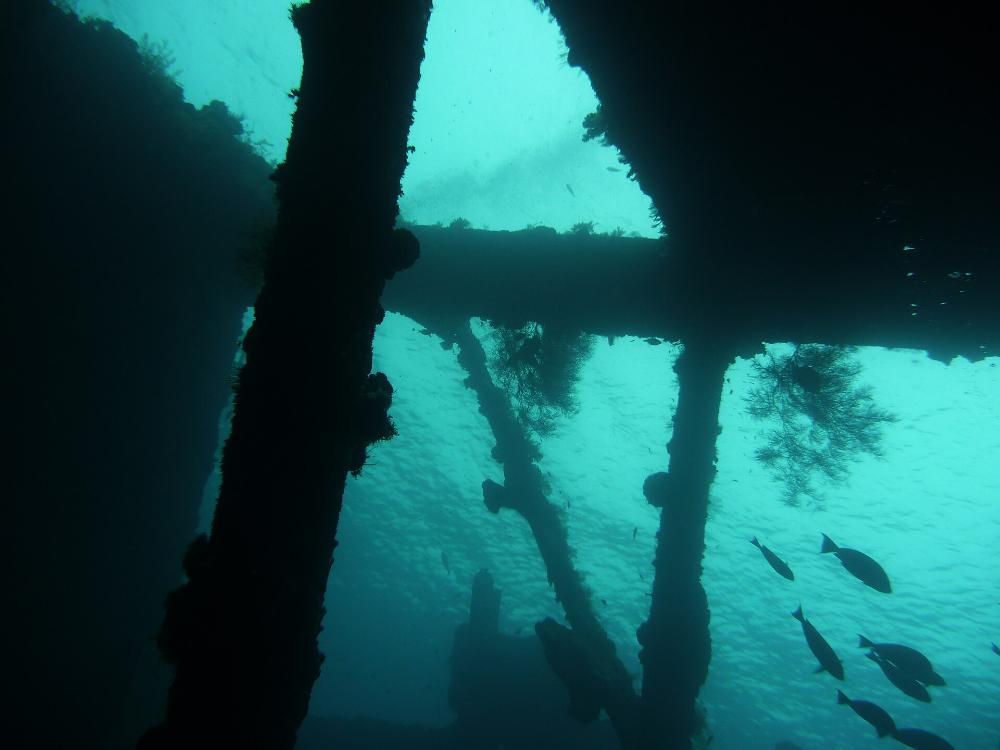
When Mount Agung erupted in 1963, the lava flow nudged the hull off the beach and into the sea. It now lies between 5 and 30 meters, walkable straight from shore, and it’s carpeted in some of the most colorful coral growth you’ll find on any wreck. It’s also one of the most dived sites on the planet, so go early to beat the crowds.
- Location: Tulamben, north Bali
- Year lost: 1942, moved in 1963
- How to see it: Shore entry, shallow sections perfect for snorkeling
- Why it’s cool: A coral-covered wreck you wade to from the beach
10. Sweepstakes, Tobermory, Ontario
Cold, clear freshwater is a preservation machine, and Tobermory proves it. The Sweepstakes is a 2-masted schooner that sank in 1885, and it rests in just 20 feet of water in Big Tub Harbour. It sits inside Fathom Five, Canada’s first national marine park, alongside more than 20 other documented wrecks.
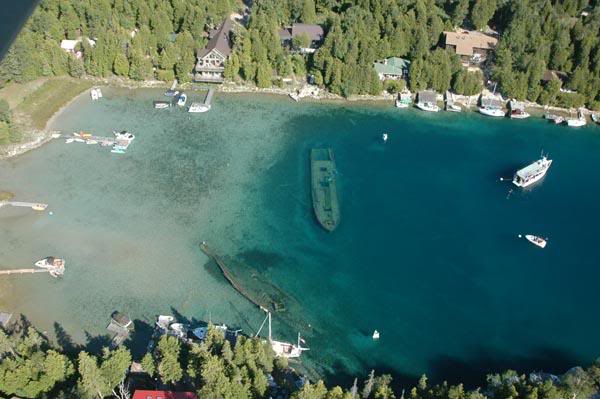
The hull is remarkably intact, and visibility is so good you can take in the whole ship from the surface. Snorkelers, divers, and glass-bottom boat passengers all get a clear view.
- Location: Fathom Five National Marine Park, Ontario
- Year lost: 1885
- How to see it: Snorkel, dive, or glass-bottom boat
- Why it’s cool: A near-perfect 19th-century schooner in glassy freshwater
11. Wreck of the Rhone, British Virgin Islands
The RMS Rhone was a Royal Mail steamer destroyed by a hurricane in 1867 and driven onto the rocks off Salt Island. It broke into 2 pieces that now rest at very different depths, which makes this a rare wreck a mixed-ability group can share.
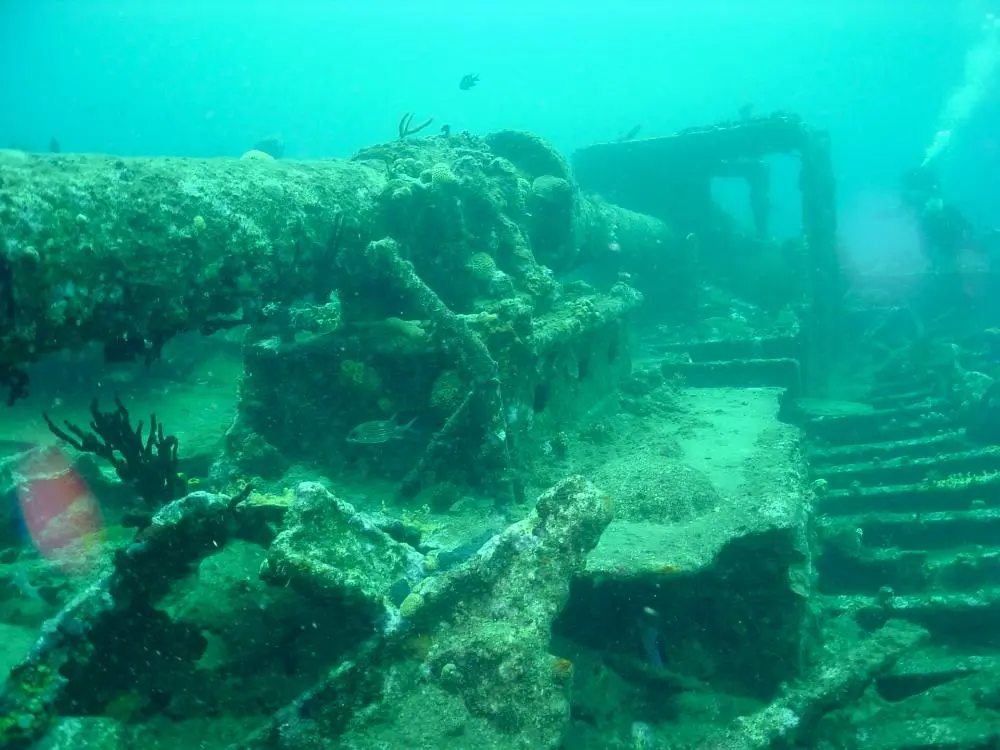
The stern sits at 6 to 9 meters, shallow enough for confident snorkelers, while the bow lies deeper for divers. Turtles, rays, and eels drift through it, and it earned fame after appearing in the 1977 film The Deep. It has been a protected marine park since 1980.
- Location: Off Salt Island, BVI
- Year lost: 1867
- How to see it: Snorkel the shallow stern, dive the deeper bow
- Why it’s cool: A movie-famous wreck split across 2 depths
12. Cali and Balboa, Grand Cayman
2 shallow wrecks sit right off George Town, and both are easy snorkel targets. The Cali, an old sailing freighter, rests in around 15 to 20 feet of water, its ribs spread across the sandy bottom. The Balboa, a freighter lost in the 1932 hurricane, lies nearby at a similar depth and has become a favorite night dive. You can reach both close to shore, and visiting costs nothing, which is rare for a Caribbean cruise port.
- Location: George Town harbor, Grand Cayman
- Year lost: Cali in the 1940s, Balboa in 1932
- How to see it: Snorkel close to shore, free
- Why it’s cool: 2 accessible wrecks in warm, clear Caribbean water
13. Star of Greece, Port Willunga, Australia
The Star of Greece is a wreck you can enjoy with zero diving experience. This British clipper ran aground off Port Willunga in 1888 during a sudden storm while anchored offshore to load cargo.
The iron hull and timbers now sit in just 2 to 6 meters of water, visible from the beach at low tide and easy to reach for beginner snorkelers. It’s about 40 minutes south of Adelaide, inside a protected marine sanctuary, so nothing can be removed or disturbed. Summer brings the clearest water and the warmest days for getting in.
- Location: Port Willunga, South Australia
- Year lost: 1888
- How to see it: Snorkel from the beach, or spot it at low tide
- Why it’s cool: A clipper wreck in a couple of meters of water, steps from the sand
14. Vixen, Daniel’s Head, Bermuda
Bermuda has more shipwrecks per square mile than anywhere on Earth, thanks to the reef ring around the island. The Vixen is one of the most approachable. This Victorian gunboat was deliberately sunk near Daniel’s Head in the 1890s to block a channel against torpedo attack, and its bow still pokes above the surface.
Snorkelers can circle it easily, and boat tours and jet-ski safaris pass by regularly. With more than 150 known wrecks around the island, it makes a great starting point.
- Location: Daniel’s Head, Bermuda
- Year lost: Scuttled in the 1890s
- How to see it: Snorkel around the exposed bow
- Why it’s cool: A wreck that still breaks the surface, in the world’s densest wreck field
15. Evangelia, Costinești, Romania
The Black Sea gets left off most wreck lists, and the Evangelia is a good reason to change that. This cargo ship ran aground near the resort town of Costinești in 1968 in heavy fog, and some locals still suspect it was steered ashore on purpose for the insurance. Decades later it remains a rusting landmark close to shore, shallow enough that swimmers wade and paddle out to it in summer. It has become a symbol of the town itself, and it’s a favorite sunset photo spot.
- Location: Costinești, Romania
- Year lost: 1968
- How to see it: Wade or swim out from the beach in summer
- Why it’s cool: An accessible Black Sea wreck most travelers never hear about
Coolest wrecks worth going deeper for
A couple of wrecks are cool enough to justify a proper dive, even on a list built around easy access. If you already have an Open Water certification, this is where the “best shipwreck” conversation usually lands.
The wrecks with the richest marine life are often the ones protected from penetration. When you can’t go inside, everyone spends their time watching the animals instead.
16. SS Yongala, Queensland, Australia
The Yongala tops more “best wreck dive in the world” lists than any other ship, and it’s easy to see why. This steamer sank in a cyclone in 1911, taking 122 people, a racehorse, and a bull with it, and it lay undiscovered until 1958.
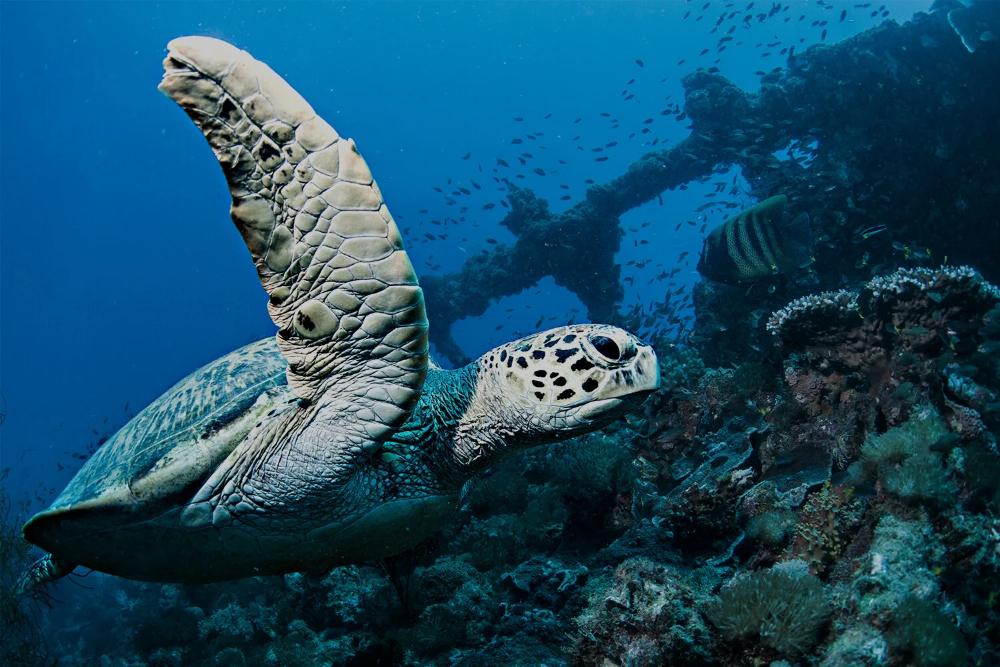
At around 110 meters long, it’s Australia’s largest historic wreck, and divers aren’t allowed inside, partly to protect it and partly because it’s treated as a maritime grave. That keeps the whole experience focused on the sea life swarming around it: sea snakes, turtles, giant groupers, rays, and sharks in numbers that feel almost unreal.
- Location: Off Cape Bowling Green, Queensland
- Year lost: 1911
- How to see it: Boat dive, Advanced certification recommended
- Why it’s cool: Possibly the best wreck dive on the planet for marine life
What is the shallowest shipwreck you can visit?
Here’s the honest answer. The shallowest shipwrecks are the ones that aren’t really underwater at all. Beach and desert wrecks like the Peter Iredale, the Plassey, the SS Maheno, the Ayrfield, and the Eduard Bohlen sit at an effective depth of zero. You don’t need water, a boat, or a mask to reach them, just the right tide and a bit of walking. If “shallowest” means “least effort to see,” those win outright.
If you mean the shallowest wreck you can actually snorkel over, plenty of sites sit in just a few feet of water. Freshwater lakes and warm reef flats hold some of the most accessible ones anywhere, and several are gentle enough for kids.
Shallowest wrecks you can snorkel over
| Wreck | Location | Depth to top of wreck |
|---|---|---|
| Wisconsin Shipwreck Coast wrecks | Lake Michigan, USA | 5 to 17 feet |
| Star of Greece | Port Willunga, Australia | 6 to 20 feet |
| Sweepstakes | Tobermory, Ontario | around 20 feet |
| Cali and Balboa | Grand Cayman | 15 to 25 feet |
| Antilla (topmasts) | Aruba | about 5 feet |
The wrecks along the Wisconsin Shipwreck Coast are especially beginner-friendly, with 19th-century wooden ships resting in 5 to 17 feet of clear, cold freshwater, often close enough to shore for families to reach. Elsewhere in the Great Lakes, shifting water levels sometimes leave wrecks visible right from the beach, like those at Sleeping Bear Dunes National Lakeshore. Cold water slows decay, so many of these look far younger than their age. Warm-water sites like the Antilla trade a little clarity for easy year-round conditions, so the best pick really depends on the trip you’re already planning.
Record-breaking shipwrecks worth knowing
If you want the superlatives to round out your reading, these are the wrecks that hold the records. Most sit far beyond snorkel range, but they’re worth knowing when someone asks you which wreck is the biggest or the deepest.
- Deepest famous wreck: The Titanic rests around 3,800 meters down and is reachable only by submersible. Its sister ship, the Britannic, lies at about 120 meters in Greece, a target for elite technical divers only.
- Largest artificial reef: The USS Oriskany, a 900-foot aircraft carrier sunk off Pensacola in 2006. We cover how to dive it in 15 Famous Shipwreck Locations You Can Visit.
- Most wrecks in one place: Bermuda has the most shipwrecks per square mile of anywhere on Earth. Truk Lagoon in Micronesia holds a sunken World War II fleet of more than 60 ships, and Scapa Flow in Scotland guards the scuttled German fleet of World War I.
The biggest and deepest wrecks get the headlines, but the ones you’ll actually remember are usually the ones you reached yourself, on foot or with a mask.
What is the shallowest shipwreck you can visit?
The shallowest shipwrecks are the ones that never fully sank. Beach and desert wrecks like the Peter Iredale, the Plassey, and the SS Maheno sit at an effective depth of 0, so you can walk straight up to them. If you want a wreck to snorkel over instead, the wooden ships along the Wisconsin Shipwreck Coast rest in as little as 5 feet of water, and the Antilla’s topmasts off Aruba reach to about 5 feet below the surface.
What are the coolest shipwrecks in the world?
Cool comes down to the story and the setting, not the depth. Standouts include the SS Ayrfield in Sydney, a rusted hull with a whole forest growing out of it, and the Eduard Bohlen, stranded deep in the Namib Desert. The Plassey sits in an Irish field, and the MV Panagiotis rests on the bright sand of Navagio Beach in Zakynthos. Each of these you can reach without any serious diving.
What are the best shipwrecks to see without diving?
Plenty of great wrecks need only a mask or a good pair of shoes. For walk-ups, head to the Peter Iredale in Oregon or the SS Maheno on K’gari in Australia. For snorkeling, the Antilla in Aruba, the USAT Liberty in Bali, and the Sweepstakes in Tobermory all sit shallow enough to see clearly from the surface.
What is the best shipwreck dive in the world?
The SS Yongala off the Queensland coast tops most lists. It sank in a cyclone in 1911, stayed undiscovered until 1958, and now swarms with sea snakes, turtles, rays, groupers, and sharks. Diving inside is not allowed, which has kept the wreck remarkably intact and its marine life dense.
Can you see shipwrecks while snorkeling?
Yes, and it’s often the best way to enjoy them. Many wrecks sit in just a few feet of water, close enough to take in with a mask and snorkel. Good beginner-friendly options include the Antilla in Aruba, the USAT Liberty in Bali, the Star of Greece in South Australia, and the Cali and Balboa off Grand Cayman.
Cool doesn’t have to mean deep. Some of the most striking wrecks in the world are the ones you can drive to, hike to, or float above on a calm afternoon.
A ship in an Irish field. A liner rusting on an Australian beach. A hull just below the surface of a Caribbean bay.
You don’t need a tank or a logbook to stand next to real maritime history. Pick one that fits the trip you’re already planning, check the tides, and go see it before the sea finishes reclaiming it. The shallow ones are disappearing faster than the deep ones, so the best time to visit is usually now.