Spring is the season most national parks don’t talk about loudly enough. Crowds are thinner than in summer, temperatures are actually manageable, and the wildlife is doing things it won’t do any other time of year.
- 1. Great Smoky Mountains: Peak Wildflower Season in the US
- Wildflower blooms by elevation
- Best trails for spring flowers in the Smokies
- 2. Yosemite: Tallest Waterfalls at Full Roar
- 3. Yellowstone: Bison Calves and Bear Emergence
- 4. Zion: Hanging Gardens and Canyon Wildflowers
- Hanging gardens along Zion Canyon
- Spring wildflowers near the Virgin River
- 5. Grand Canyon: The Safest Hiking Window of the Year
- Raptors and condors on the South Rim
- 6. Big Bend: Bluebonnets, Cacti, and Rare Warblers
- 7. Everglades: Wildlife Density at Its Absolute Peak
- Tip
- 8. Saguaro: Two Distinct Blooms, One Spring
- 9. Pinnacles: Caves and California Poppies
- 10. Death Valley: Superbloom and Dark Sky Season
- Superbloom conditions in Death Valley
- Stargazing in spring at Death Valley
- 11. Joshua Tree: Prime Climbing and Desert in Bloom
- Spring wildlife near Barker Dam
- Tip
- 12. Channel Islands: Coreopsis Gold and Whale Migrations
- Gray whale migration and seal pupping
- 13. Shenandoah: The Blue Ridge Green-Up in Motion
- Spring birding in the Blue Ridge
- 14. Congaree: Synchronous Fireflies and Ancient Swamp Forests
- Canoeing Cedar Creek in spring
- 15. Acadia: Nesting Falcons on the Maine Coast
- Warbler migration on the Maine coast
- Read more
We’re talking synchronized fireflies, bison calves wobbling across valleys, and waterfalls running so hard you can hear them before you see them. If you’ve been defaulting to a summer visit out of habit, this list might change your mind. Here are 15 US national parks that are genuinely better in spring, and what’s actually worth showing up for.
1. Great Smoky Mountains: Peak Wildflower Season in the US
The Smokies get called “Wildflower National Park” by scientists, and spring is exactly why. With over 1,500 flowering plant species, this is the most botanically diverse park in the entire National Park System, and April and May are when that diversity becomes visible.
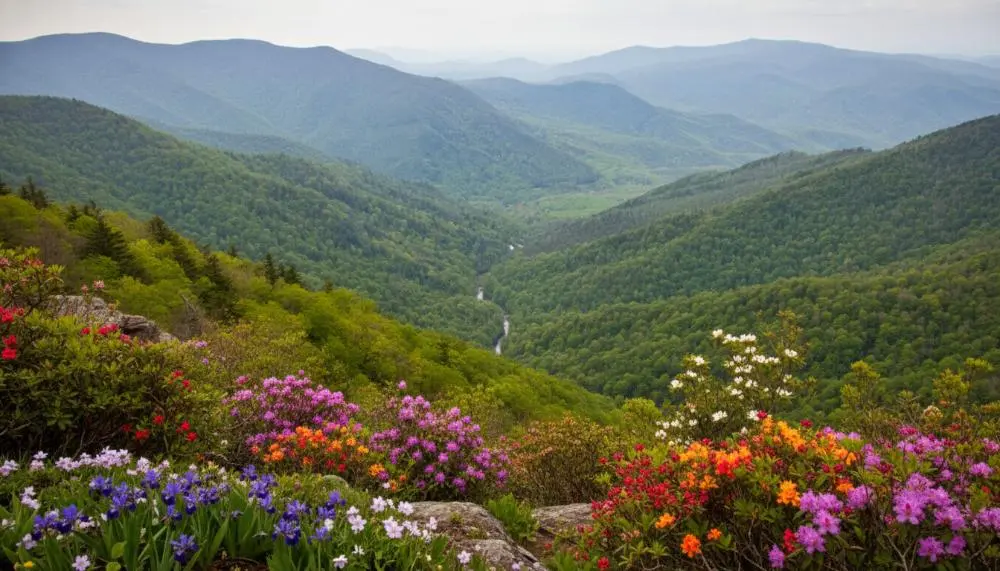
The secret is the park’s dramatic elevation range, which runs from about 875 feet to over 6,600 feet at Clingmans Dome. That vertical spread means the bloom doesn’t happen all at once.
Wildflower blooms by elevation
It starts low. In the cove hardwood forests, spring ephemerals push up in late March and early April: dwarf crested iris, hepatica, and multiple trillium species racing to flower before the canopy closes and shuts out the light.
| Spring Ephemerals | Dwarf Crested Iris, Hepatica | Late March – April | Lowland Cove Forests |
| Trilliums | Yellow Trillium, White Trillium | April | Rich, moist hardwood floors |
| Woody Shrubs | Pink Azalea, Flame Azalea | May | Mid-elevation ridges |
| High-Elevation Blooms | Mountain Laurel | Late May – June | Subalpine forest edges |
As those fade, the bloom travels uphill. By May, pink and flame azaleas are taking over the mid-elevation ridges, followed by mountain laurel near the subalpine edges.
Best trails for spring flowers in the Smokies
Lead Cove and Chestnut Top are the go-to trails for high-density flower spotting, including rarer finds like showy orchis and yellow trillium. The annual Wildflower Pilgrimage draws researchers and enthusiasts every spring, so it’s worth checking the schedule if you want guided expertise alongside the views.
2. Yosemite: Tallest Waterfalls at Full Roar
Yosemite in spring is a completely different park from the version you’ve seen in summer photos. The Sierra Nevada snowpack melts between April and June, and that runoff turns the valley into something almost theatrical: thundering waterfalls, mist-covered trails, and creeks that are genuinely moving fast. Yosemite Falls, at 2,425 feet total, typically hits its peak discharge in May.
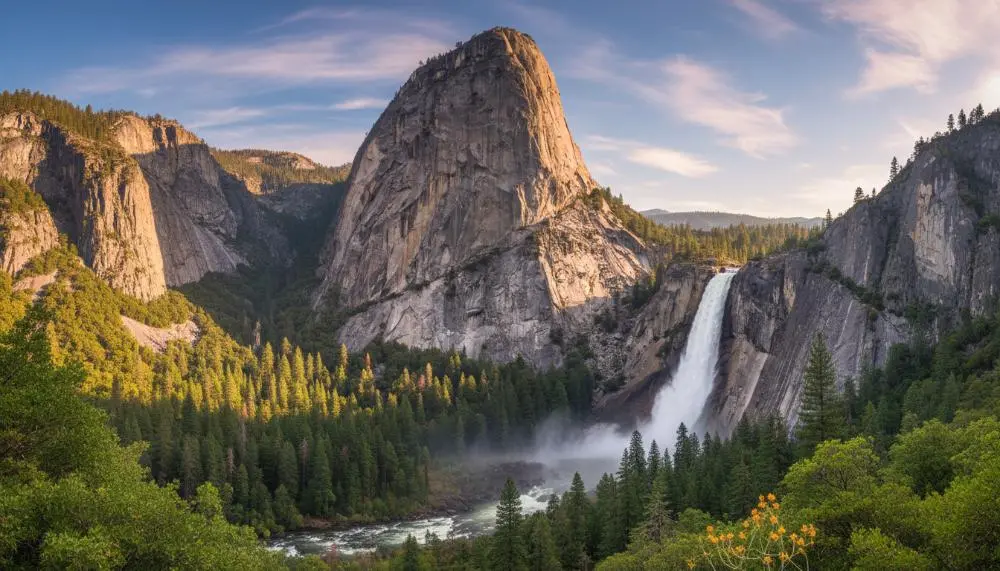
Several of the park’s falls are seasonal or ephemeral, which means spring is the only time you can see them at all. Sentinel Fall, reaching 2,000 feet, is only visible during the melt window. Meanwhile, Bridalveil and the falls along the Mist Trail (Vernal and Nevada) are running at their most powerful, creating localized microclimates of ferns and early mosses.
| Yosemite Falls | 2,425 ft | May – June | Seasonal |
| Sentinel Fall | 2,000 ft | May | Ephemeral |
| Bridalveil Fall | 620 ft | May | Year-round |
| Nevada Fall | 594 ft | Late May | Year-round |
| Vernal Fall | 317 ft | Late May | Year-round |
Here’s something most visitors don’t know about: in March and early April, when overnight temperatures drop below freezing during the early melt, the mist from waterfalls can freeze mid-air. The result is frazil ice, a slurry of tiny ice crystals that accumulates in creek beds and flows slowly through the valley like a frozen river. It’s rare, fleeting, and genuinely strange to witness.
3. Yellowstone: Bison Calves and Bear Emergence
Yellowstone in spring is one of the best wildlife spectacles in North America, full stop. The park’s megafauna time their births to coincide with the “green-up,” the surge of high-protein spring grasses that nursing mothers need. Everything arrives at once: calves, cubs, and the predators that follow them.
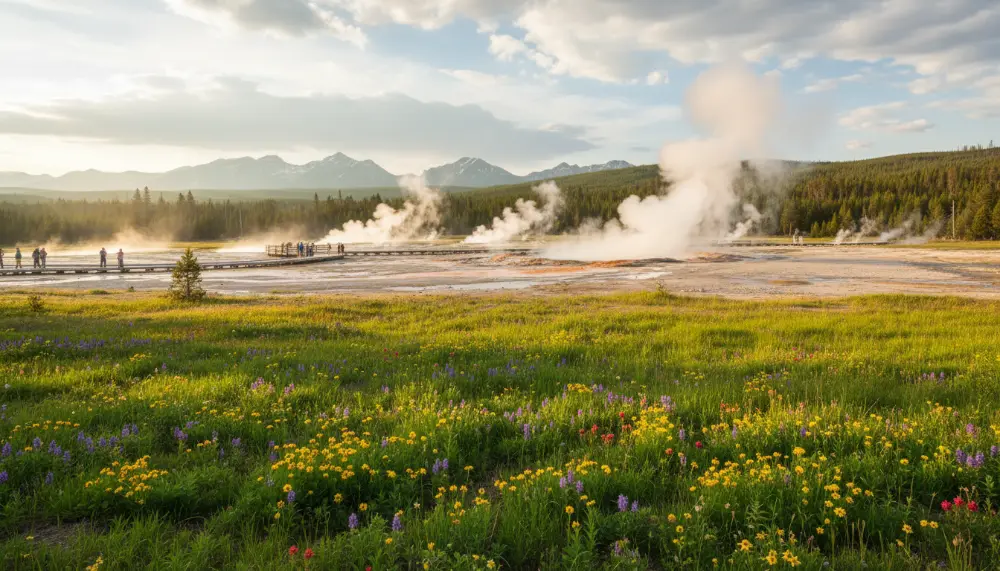
Bison calves, born between mid-April and May, come out with a reddish-brown coat that park staff affectionately call “red dogs.” They’re precocial, standing and walking within hours of birth, which means they have to be given the wolves and grizzlies sharing their habitat. Lamar Valley is the best place to watch this, with herd densities that make it feel like a wildlife documentary.
| Bison | Red Dog Calves | Lamar & Hayden Valleys | Mid-April – May |
| Grizzly Bear | Cubs of the Year | Northern Range Meadows | April – May |
| Wolf | Pup Season (in den) | Lamar Valley | April |
| Elk | Calving | Grasslands / Sagebrush | Late May – June |
Grizzly sows with cubs, born over winter, emerge from their dens in April and May, grazing on early grasses and scavenging winter-kill carcasses revealed by receding snow. Wolf activity is also high, particularly in Lamar Valley, where den sites are established. Spring is the one season where patience at a single overlook can reward you with multiple species in a single morning.
4. Zion: Hanging Gardens and Canyon Wildflowers
Zion in spring looks like someone turned up the saturation on the whole canyon. The red Navajo sandstone gets offset by brilliant greens and the Virgin River running loud and fast. It’s dramatic in the best way, but the specific feature that sets Zion apart in spring is something most visitors walk right past.
Hanging gardens along Zion Canyon
The “hanging gardens” are botanical communities growing directly out of the canyon walls, fed by water that has percolated through porous sandstone for centuries until it hits an impervious shale layer and seeps out.
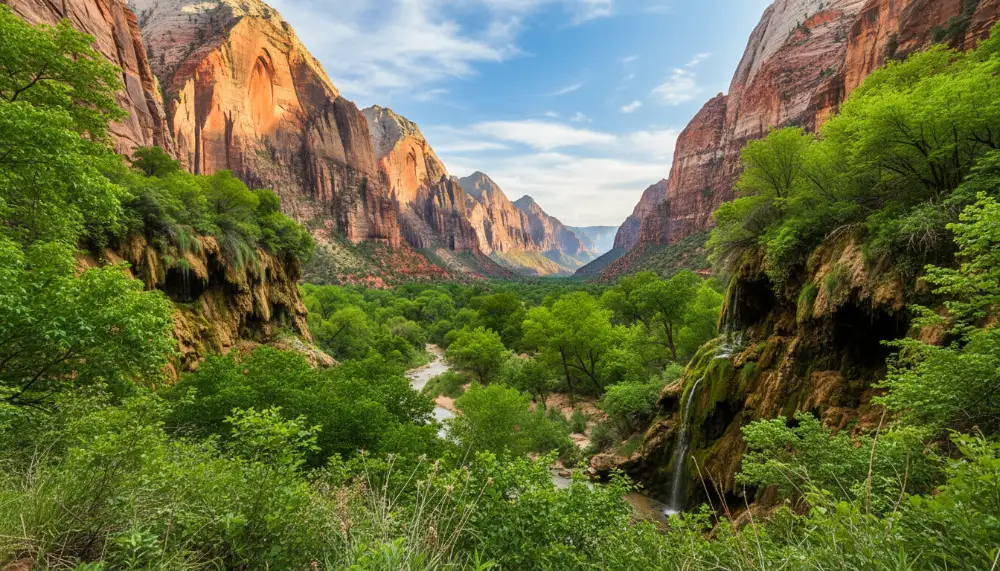
The result is a vertical garden of ferns and rare species, including the Zion snail found nowhere else on Earth, clinging to the weeping walls. The Emerald Pools area offers the easiest access, with spring runoff creating waterfalls over the canyon rim.
Spring wildflowers near the Virgin River
Desert marigold, lupine, and Indian paintbrush bloom across the canyon floor between March and May. The Riverside Walk is the most accessible spot for both wildflower viewing and bird life. Just keep an eye on conditions: the Narrows, Zion’s famous river hike, is frequently closed in late April and May when snowmelt pushes the Virgin River above safe levels.
5. Grand Canyon: The Safest Hiking Window of the Year
Summer in the Grand Canyon’s inner canyon regularly exceeds 110°F. Spring doesn’t. Between March and early May, the rim stays comfortably cool while the canyon interior sits at a temperature that actually allows for rim-to-river hiking without serious heat risk. That’s the entire argument for visiting in spring, and it’s a strong one.
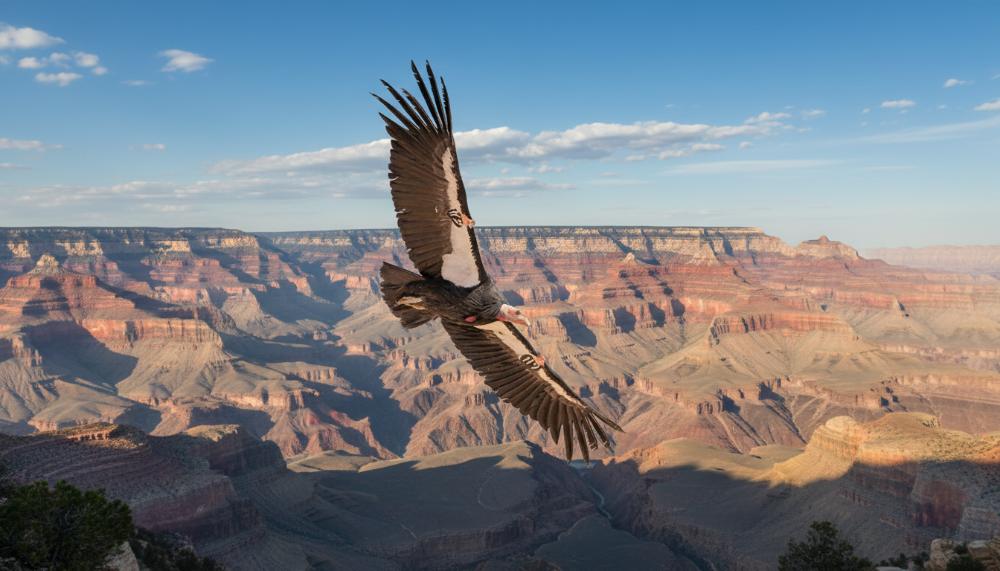
The South Kaibab and Bright Angel trails are the two main corridor routes, and by mid-April, the winter ice has typically cleared, giving you full access to geological layers spanning billions of years. The crowd levels are also a fraction of summer, which matters on trails this narrow. This is genuinely the season these hikes were meant to be done.
Raptors and condors on the South Rim
Spring brings Peregrine falcons and California condors to the South Rim, both of which use the warming thermals rising off the canyon walls to support their nesting. Condors, with wingspans up to 9.5 feet, are a striking sight against the canyon backdrop. Birding along the rim in April and May also picks up with warbler and tanager migration moving through the canyon corridors.
6. Big Bend: Bluebonnets, Cacti, and Rare Warblers
Big Bend is remote, 5 or 6 hours from any major city, depending on your starting point, and that keeps it quiet even during its best season. Spring is undeniably that season, with a convergence of wildflower blooms and a bird list that professional birders travel internationally to access.
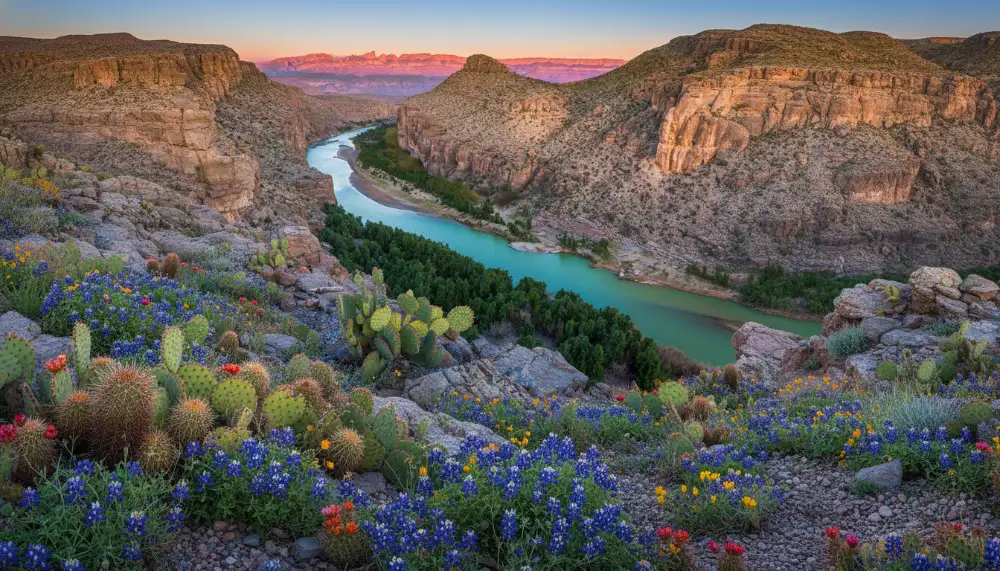
Big Bend is the only place in the United States where the Colima warbler nests. It arrives from Mexico in mid-April, settling into the high-elevation pine-oak-juniper woodlands above 6,000 feet.
Seeing it requires a 9-mile round-trip hike to Boot Canyon or Laguna Meadow, not casual, but entirely doable. The park has recorded over 450 bird species total, more than any other national park, making it a genuine crossroads for eastern and western species during spring migration.
| Boot Canyon | Colima Warbler | Pine-Oak Woodland | Late April – May |
| Rio Grande Village | Vermilion Flycatcher | Riparian Corridor | March – May |
| Sam Nail Ranch | Painted Bunting | Desert Oasis | April – May |
| Blue Creek | Lucifer Hummingbird | Foothills / Agave | April |
The Big Bend Bluebonnet, the tallest bluebonnet species in Texas, typically peaks in February and March. By April, giant Dagger Yucca and various cacti take over the blooming calendar. These provide critical forage for migrating hummingbirds, including the rare Lucifer hummingbird with its iridescent purple gorget.
7. Everglades: Wildlife Density at Its Absolute Peak
Spring in the Everglades coincides with the end of the dry season, and that timing matters more than anything else here. As water levels drop across the 1.5-million-acre “River of Grass,” fish and aquatic life are forced into smaller, deeper pools. Every predator in the park follows.
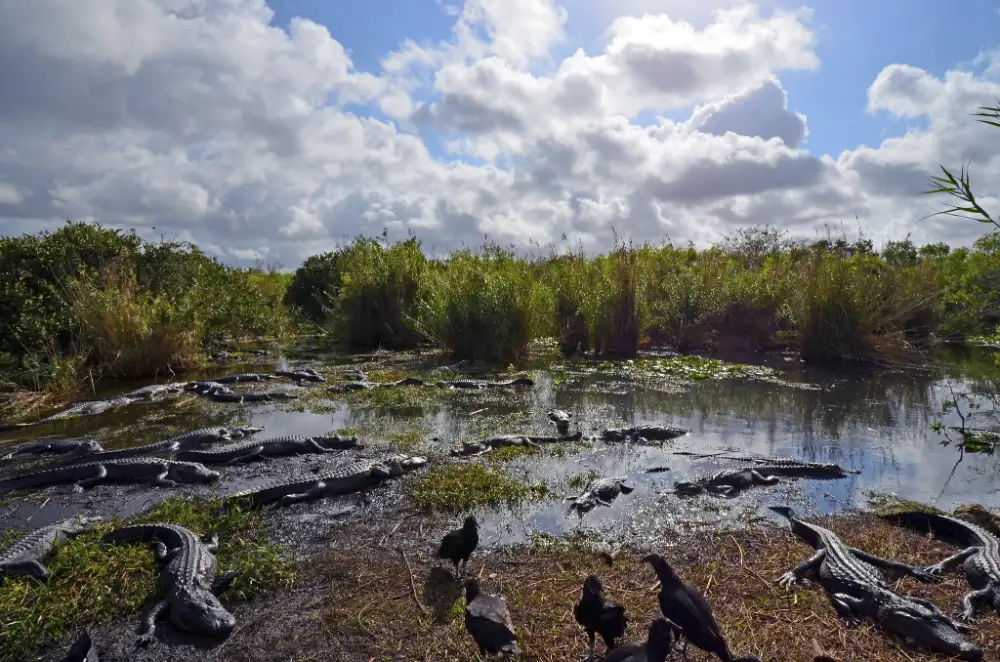
The Anhinga Trail in March and April is one of the most productive short wildlife walks in the country. American alligators are practically guaranteed. The rare American crocodile, far shyer and less numerous, also shows up with regularity during this concentration period.
Roseate spoonbills, wood storks, and great blue herons crowd the shallows in numbers that are genuinely hard to believe until you’re standing there.
Tip
Book backcountry permits for the Ten Thousand Islands early: spring availability fills up fast, and the paddling routes are limited in number.
Beyond the famous trail, spring is the only comfortable time for multi-day backcountry exploration. Humidity and mosquito levels are dramatically lower than in summer, and the mild heat makes full-day kayaking through the mangrove forests of the Ten Thousand Islands actually enjoyable.
West Indian manatees and dolphins are active in the coastal bays, and water clarity is at its best before summer rains introduce tannins.
8. Saguaro: Two Distinct Blooms, One Spring
Saguaro National Park runs on a split schedule in spring, which makes it unusual among parks on this list. You essentially get two separate bloom events within the same season, with each one worth the trip on its own.
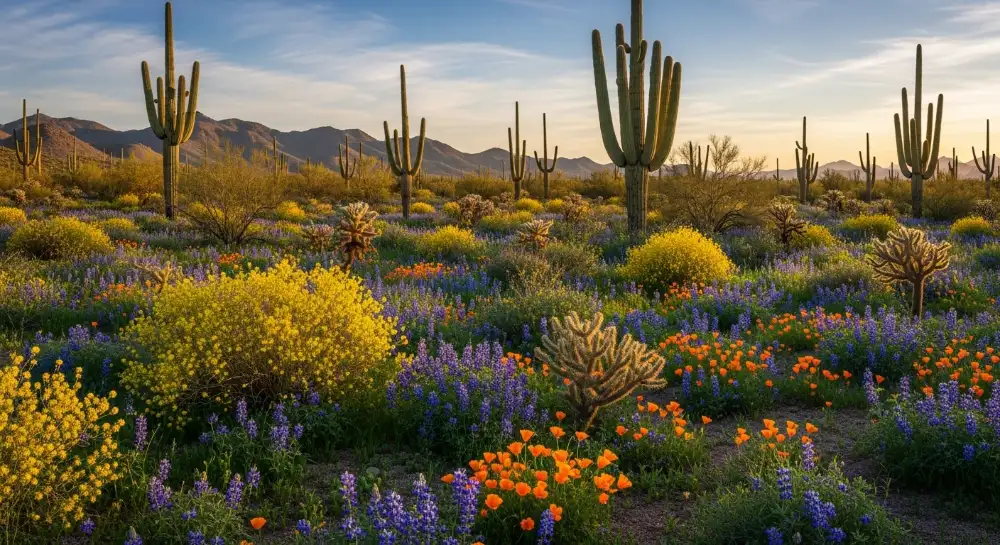
The first act depends entirely on winter rainfall. In good years, brittlebush, desert lupine, and Mexican poppies turn the desert floor into a mosaic of yellow, blue, and orange through March. The Cactus Forest Loop Drive in the Rincon Mountain (East) district gives easy access to the best patches.
The second act belongs to the saguaro itself, the Arizona state flower. These iconic cacti bloom in late May, producing waxy white flowers that open at night to attract nectar-feeding bats and close by mid-afternoon. The Tucson Mountain (West) district has the highest density of saguaros, creating a forest-like landscape that’s especially striking at golden hour.
9. Pinnacles: Caves and California Poppies
Pinnacles doesn’t receive the same name recognition as Yosemite or Zion, but it punches well above its weight in the spring. Around 80% of the park’s plant species bloom between March and May, and the park happens to sit at the meeting point of three distinct ecosystems: the Central Valley, the Coast Range, and the Mojave Desert.
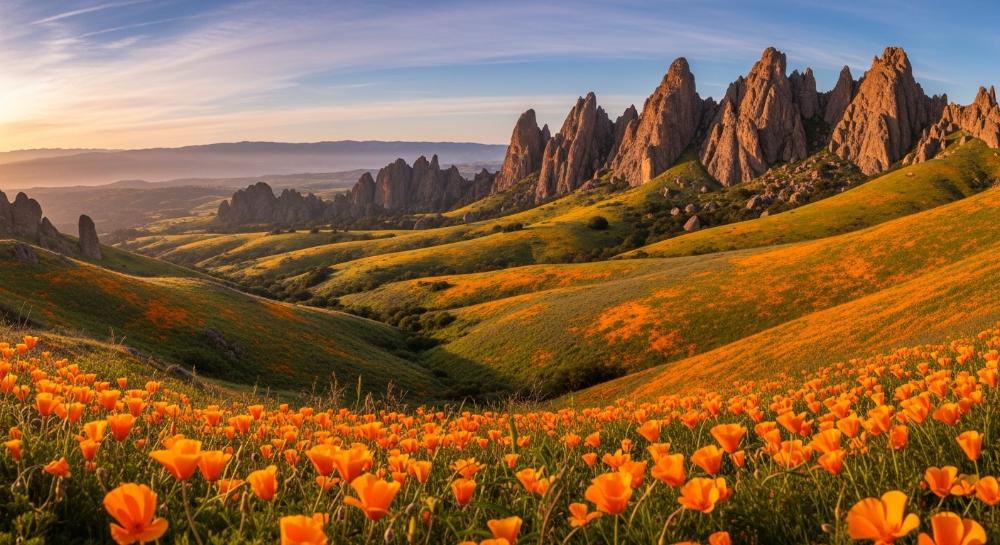
California poppies, bush lupines, shooting stars, and various orchids all peak between March and May, making this one of the most florally diverse parks in California. Spring is also breeding season for Townsend’s big-eared bats in the park’s talus caves.
Note that some caves are closed to protect them, so check current access before planning a cave visit.
10. Death Valley: Superbloom and Dark Sky Season
Death Valley is famous for being extreme. But spring is the exception: the brief window when Badwater Basin sits in the 80s and 90s instead of 120°F, and the park becomes one of the most accessible geological landscapes in the American West.
Superbloom conditions in Death Valley
The superbloom is not guaranteed every year. It requires heavy autumn and winter rains, a mild spring, and no desiccating winds at the wrong moment. When those conditions align, the desert floor carpets itself in Desert Gold and other ephemerals in a spectacle that draws global attention.
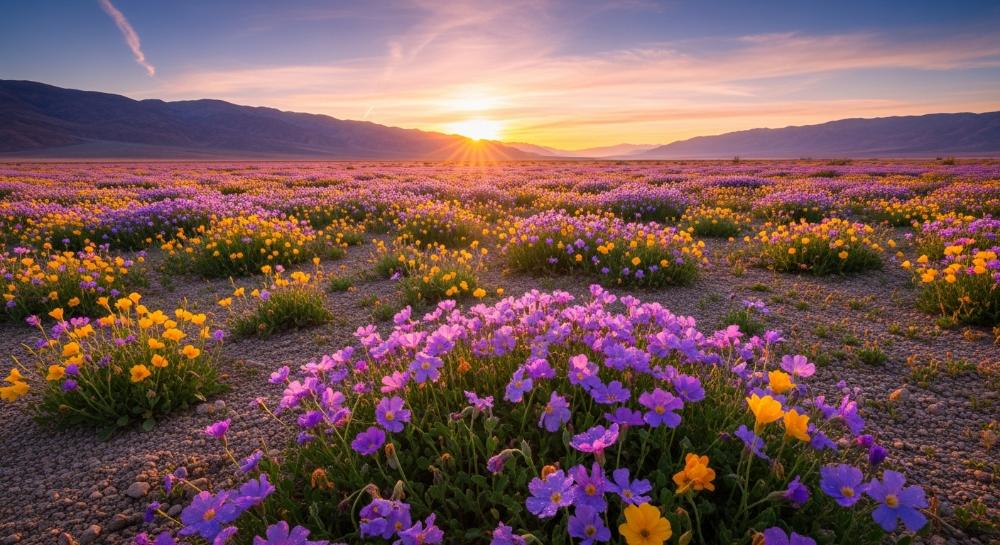
Even in non-superbloom years, March and April offer comfortable temperatures for exploring Artist’s Palette, Mesquite Flat Sand Dunes, and Badwater Basin without heat risk.
Stargazing in spring at Death Valley
As an International Dark Sky Park, Death Valley has some of the lowest light pollution in the contiguous US. Spring nights are cool and atmospherically stable, which improves clarity for deep-sky observation. The Milky Way rises earlier as the season progresses, and the combination of geological drama by day and stellar clarity by night makes this one of the most complete park experiences on this list.
11. Joshua Tree: Prime Climbing and Desert in Bloom
Joshua Tree sits at the convergence of the Mojave and Colorado Deserts, which means higher biodiversity than either one alone. Spring is peak season here: for climbers, for wildflower enthusiasts, and for anyone who wants to be outside in the desert without suffering for it.
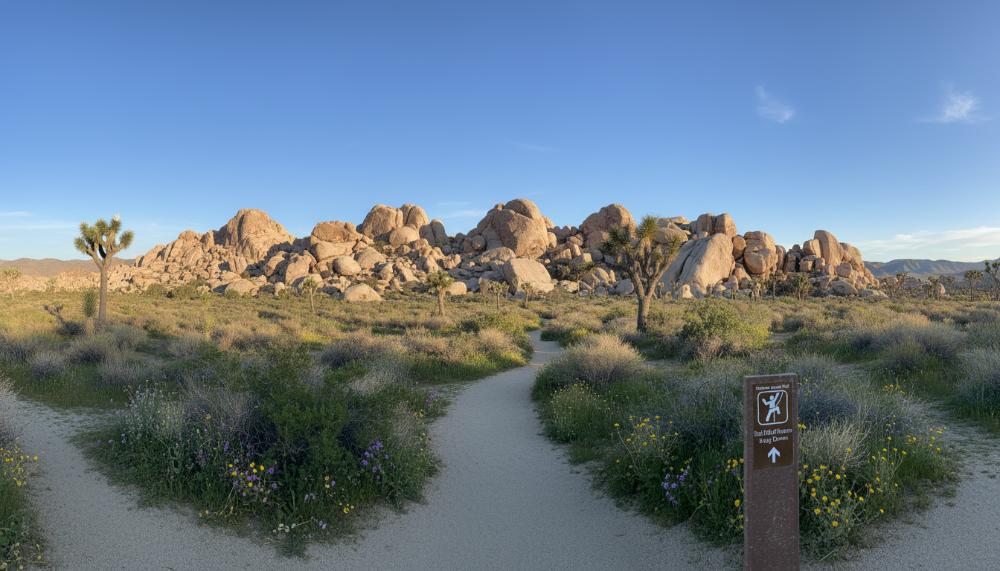
The monzogranite formations at Joshua Tree are world-class, and spring delivers the “friction window” the climbing community plans around: cool enough for good grip, warm enough for full days outside. Hidden Valley and Hall of Horrors see climbers from around the world in March, April, and May. If you’re not a climber, these areas still offer some of the best bouldering scenery in the park.
Spring wildlife near Barker Dam
Barker Dam is one of the more productive wildlife spots in spring, particularly for bighorn sheep drawn to the water. Chuckwallas, large desert lizards, emerge from winter dormancy and can be found sunning on rocks throughout the park.
Tip
Sunrise at Hidden Valley costs you nothing extra and gets you the light, the quiet, and the wildlife before the crowds arrive
The Cholla Cactus Garden in the southern Colorado Desert section is blooming as well, though the advice to stay on the trail there is worth taking seriously: cholla spines attach to skin with minimal contact.
12. Channel Islands: Coreopsis Gold and Whale Migrations
The Channel Islands require a ferry, which keeps the crowds manageable year-round, but that effort pays off most in late winter and early spring, when the islands stage one of California’s most concentrated ecological events.
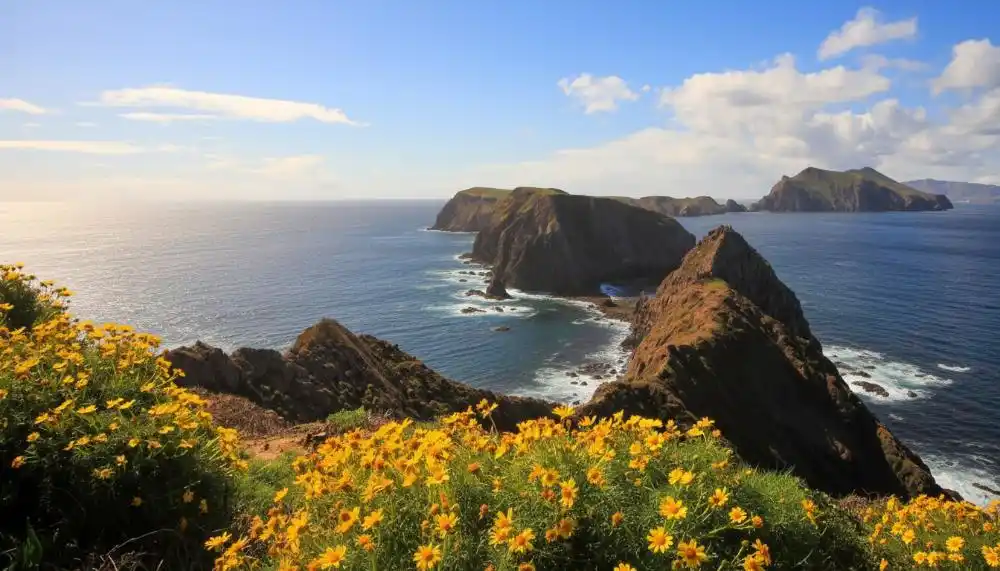
Giant coreopsis (Coreopsis gigantea) peaks between January and March on Anacapa and Santa Barbara Islands, turning them a saturated gold against the Pacific. This isn’t a subtle wildflower meadow. It’s dense enough to be visible from the ferry. Anacapa is also one of the largest breeding colonies for the California brown pelican, with nesting activity running through spring.
Gray whale migration and seal pupping
The northward gray whale migration continues through May, with mothers and calves frequently spotted near the islands. On San Miguel Island, spring is pupping season for harbor seals and Northern fur seals. The nutrient-rich upwelling driven by spring ocean currents supports this whole system, making the Channel Islands a prime destination for marine biology and wildlife photography.
13. Shenandoah: The Blue Ridge Green-Up in Motion
Shenandoah’s spring is slower and more sequential than most parks on this list, and that’s the appeal. The “green-up” travels up the mountain at roughly 100 feet of elevation per day, meaning the season unfolds visibly over weeks rather than arriving all at once.
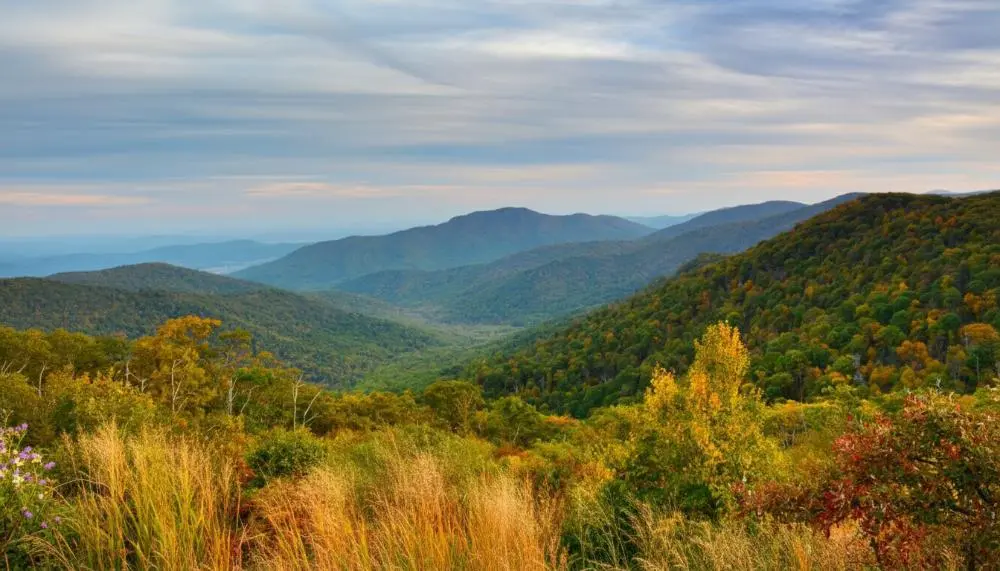
Spring in Shenandoah starts with skunk cabbage and hepaticas in the wetlands in March, then moves through redbud and serviceberry along Skyline Drive overlooks in April. By May, trillium and azaleas are at full intensity on trails like Lewis Mountain to Slaughter Fire Road. Mountain laurel closes the season in June along Big Meadows.
Spring birding in the Blue Ridge
May birding in Shenandoah is legitimately world-class. The park sits within a major migratory flyway for neotropical species, and the diversity of habitat, rich woods, rocky summits, and open meadows, provides niches for wood thrushes, scarlet tanagers, and Blackburnian warblers all within a single day’s hiking.
14. Congaree: Synchronous Fireflies and Ancient Swamp Forests
Congaree protects the largest expanse of old-growth bottomland hardwood forest in the country. For most of the year, it’s a quiet, undervisited park. For two weeks in May, it hosts one of the rarest natural phenomena on Earth.
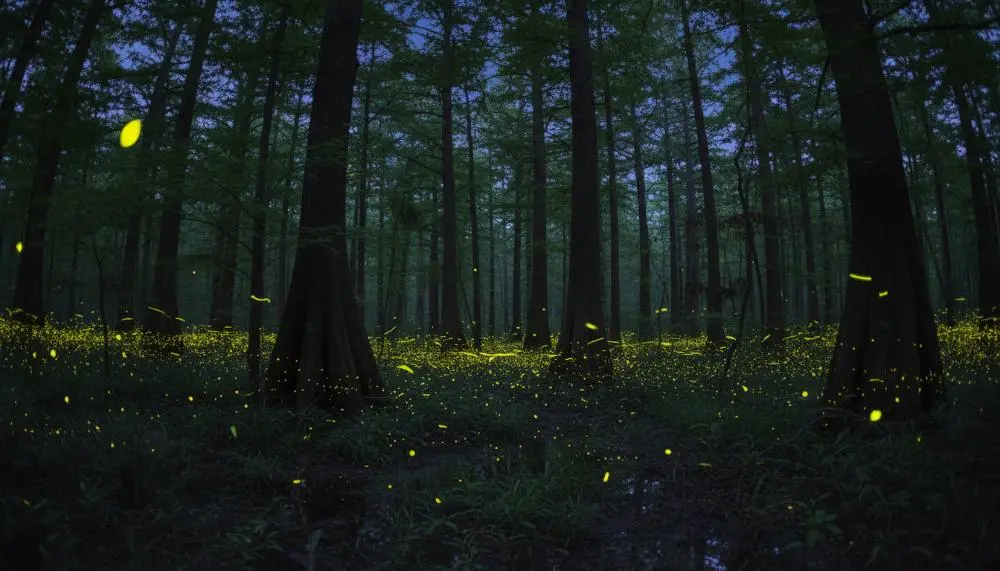
Most firefly species flash at different intervals. The Photuris frontalis found in Congaree flash in unison, a pulsing, coordinated wave of light moving through the swamp forest. There are only a handful of places in North America where this happens, and Congaree is the most accessible.
The National Park Service runs a lottery system every April for viewing nights in May, limiting access to 145 vehicles per night to protect the habitat. Book the moment the lottery opens.
Canoeing Cedar Creek in spring
The spring floods that follow winter rains leave Cedar Creek with enough water for canoeing through a canopy of baldcypress and water tupelo trees, many over 500 years old. Spring also brings Prothonotary warblers to the swamp, nesting in the cypress knees. It’s an unusual birding experience: bright yellow birds in an ancient, flooded forest.
15. Acadia: Nesting Falcons on the Maine Coast
Acadia sits at the northern end of this list geographically, and spring arrives later there than anywhere else on it. But the Maine coast in May offers something specific: one of the best opportunities in the eastern US to watch Peregrine falcons, the fastest animal on the planet, during active nesting.
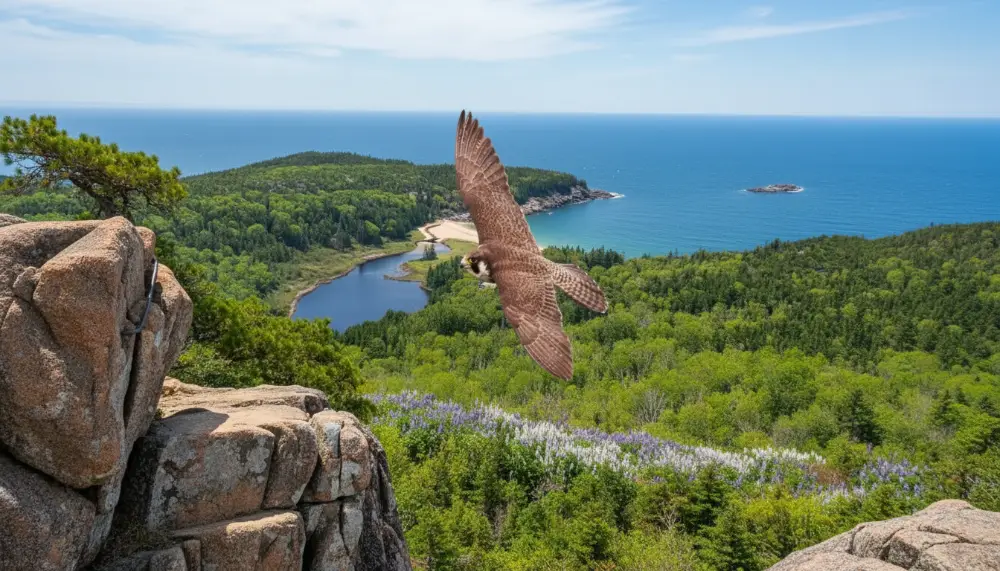
From March through mid-August, the Precipice Trail and Jordan Cliffs close completely to protect nesting falcons from human disturbance.
Rangers set up a viewing station at the Precipice trailhead with high-powered scopes, making it one of the more unusual park experiences: a trail closure that actually improves what you see. Watching a falcon bring prey to chicks at speed is worth the detour.
Warbler migration on the Maine coast
Late May brings the Acadia Birding Festival, drawing enthusiasts for over 20 warbler species moving through the park. Atlantic puffins, found on offshore islands, are accessible via boat tour during this window. Rhodora, a native azalea, blooms magenta against the granite peaks in a way that feels distinctly, specifically, Maine.
| Peregrine Falcon | Nesting / Fledging | Precipice Trailhead |
| Blackburnian Warbler | Breeding Arrival | Jordan Pond Trails |
| Atlantic Puffin | Return to Burrows | Offshore Island Boat Tours |
| Common Loon | Summer Plumage | Long Pond / Jordan Pond |
The parks on this list aren’t here because they’re famous, though they are. They’re here because spring does something specific at each one: bison calves in Yellowstone, synchronous fireflies at Congaree, frazil ice in Yosemite.
That’s the real case for spring travel: not that the weather is nicer or the crowds are smaller (though both are true), but that some things only happen once a year, and you either show up for them or you miss them entirely.