Hawaii has a way of making you forget everything else. The beaches are obvious. The sunsets are a given. But what most people don’t realize until they’re actually there is that the best parts of a Hawaii itinerary happen on the road.
- Oahu: The Circle Island Loop
- Windward Coast Stops on Oahu
- North Shore Beaches and Towns
- Tip
- Maui: Road to Hana and Beyond
- Road to Hana Key Stops
- Kahekili Highway on Maui’s West
- Tip
- Kauai: Canyon Roads and the North Shore
- Waimea Canyon Drive Stops
- Kuhio Highway and Hanalei Valley
- Big Island: Lava Fields and Lush Coasts
- Chain of Craters Road, Volcanoes National Park
- Hamakua Coast North of Hilo
- Car Rental Tips for Hawaii
- Read more
Renting a car and driving each island at your own pace changes the whole trip. You stop when something catches your eye. You find beaches that aren’t on anyone’s map. This Hawaii road trip travel guide covers the most scenic drives across four islands: Oahu, Maui, Kauai, and the Big Island.
Oahu: The Circle Island Loop
Oahu gets a reputation as the busy, urban island. That’s partly fair. But drive past Honolulu and the whole mood shifts. The circle island loop takes you through lush valleys, quiet beaches, and small surf towns that feel genuinely local.
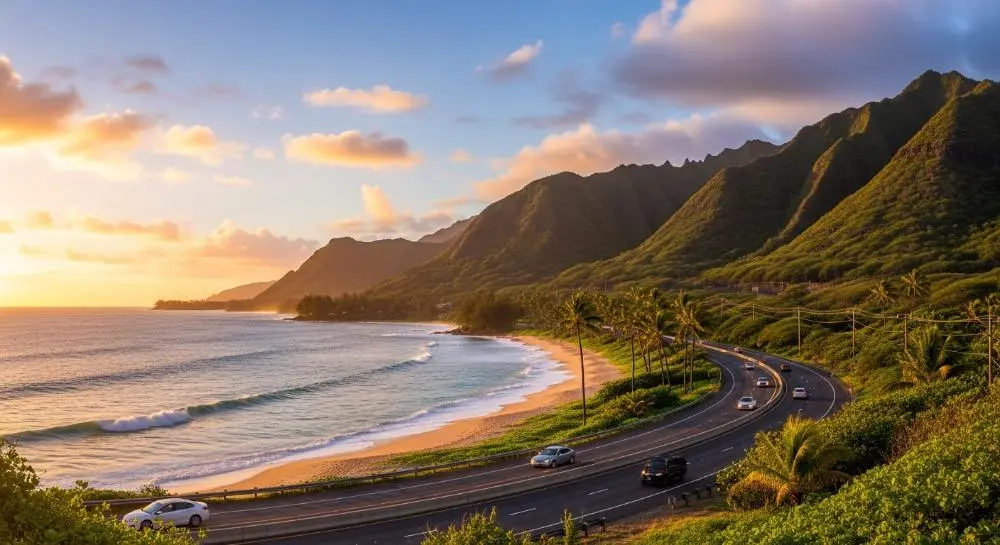
You can complete the full loop in one long day, but 2 days give you room to actually stop and enjoy it. Start from Waikiki and head east along the coast for the best flow. The Kamehameha Highway (HI-83) is the main artery and handles most of Oahu, with landmarks that visitors want to hit. The total loop is about 100 miles and passes through a dozen distinct neighborhoods and landscapes along the way.
Windward Coast Stops on Oahu
The east side of Oahu is one of the prettiest stretches of road on the island. You’ll pass through Hawaii Kai and Kailua with the Koolau Mountains rising sharply to your left. The road is well-maintained with wide shoulders and decent parking at most stops.
Don’t rush this stretch. Key stops on the windward coast include:
- Lanikai Beach — consistently ranked among the most scenic beaches in all of Hawaii
- Kualoa Ranch — the filming location for Jurassic Park and 50 First Dates, with sweeping valley views
- Halona Blowhole — a lava tube that shoots seawater skyward when the surf cooperates, and another 50 First Dates filming location
- Mokoli’i Island viewpoint — a small basalt island rising from the bay, best seen from the roadside pullout near Kaaawa
Plan about two to three hours for this stretch if you want to stop at each one. Lanikai Beach in particular, is worth arriving at before 9 am, when the parking lot fills, and the light on the water is at its best. The short paddle out to the Mokulua Islands offshore is a popular kayak trip if you have extra time in the area.
North Shore Beaches and Towns
The North Shore is about 45 minutes past Kailua and feels like a different island. Haleiwa is the main town, with shave ice shops, surf stores, and a pace that makes it easy to linger. The road from Haleiwa runs along seven miles of the most famous surf breaks in the world.
Tip
Leave Waikiki by 7 am if you’re driving to the North Shore on a weekend. Beach parking fills up fast, and the shave ice lines in Haleiwa get long by 10 am.
Sunset Beach, Waimea Bay, and the Banzai Pipeline are all within a short drive of each other. In summer the water is calm and swimmable. In winter (November through February), the swells can reach 30 feet and it becomes a spectator sport. Turtle Bay at the northern tip is worth a stop for the coastal scenery before the road curves back toward Honolulu.
Maui: Road to Hana and Beyond
Maui has two very different road trip personalities. The Road to Hana is famous for good reason: it’s lush, dramatic, and unlike any drive you’ve done before. The Kahekili Highway on the west side offers scenery that’s just as striking, with almost none of the crowds.
Road to Hana Key Stops
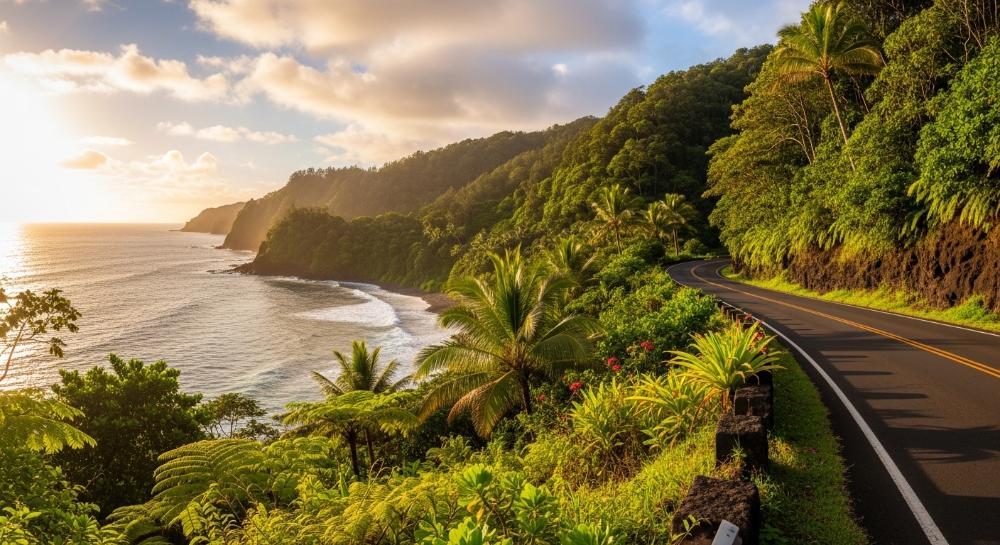
The Hana Highway (HI-360) runs 44 miles along the northeastern coast of Maui and crosses 54 one-lane bridges. It takes around two to three hours without stopping, which nobody actually does. The road passes through dense rainforest where the air smells cooler and heavier with moisture.
These are the stops worth building time around:
- Twin Falls — a good first stop early in the drive when the light is still fresh
- Waianapanapa State Park — the black sand beach surrounded by lava rock and sea caves that shows up in every Maui photo
- Pipiwai Trail — a 4-mile round trip through bamboo forest leading to the 400-foot Waimoku Falls
- Hana town — small and quiet, a good place to eat and recharge before the return drive
Kahekili Highway on Maui’s West
The Kahekili Highway (HI-340) is technically a road and practically an adventure. It runs along Maui’s northwest coast through some of the most remote scenery on the island. There’s minimal cell service, almost no guardrails in sections, and parts are narrow to a single shared lane.
Tip
Waianapanapa State Park requires an advance reservations for both parking and beach access. Book through the GoState Parks official site before you leave home. Walk-ins are not guaranteed entry.
The pace is slow by necessity, which means you end up seeing more. The Olivine Pools are shallow lava rock tide pools with vivid green coloring. The Nakalele Blowhole shoots seawater up to 100 feet in the air when the swell cooperates. Most rental car companies technically restrict their vehicles from this road, so check your agreement before committing.
Kauai: Canyon Roads and the North Shore
Kauai is called the Garden Isle, and the nickname earns its keep. The island is older and greener than the others, with geological formations that take a minute to fully absorb. There are two main driving routes here, and they feel like entirely different islands.
Waimea Canyon Drive Stops
Waimea Canyon Road (HI-550) starts in the town of Waimea and climbs to over 4,000 feet. The canyon it follows is 10 miles long, a mile wide, and 3,600 feet deep, which is why it’s called the Grand Canyon of the Pacific. The colors shift between deep reds, burnt oranges, and layers of green from vegetation clinging to the walls.
The road’s best stopping points, in order from bottom to top:
- Waimea Canyon Lookout (mile marker 10) — the broadest view of the full canyon expanse
- Puu Hinahina Lookout (mile marker 13) — a cross-sectional view of the walls plus a clear sightline to Niihau offshore
- Kokee State Park — cloud forest at an elevation where the temperature drops noticeably
- Kalalau Lookout (mile marker 18) — the road’s end, peering over the Na Pali Coast cliffs and the deep green Kalalau Valley
Kuhio Highway and Hanalei Valley
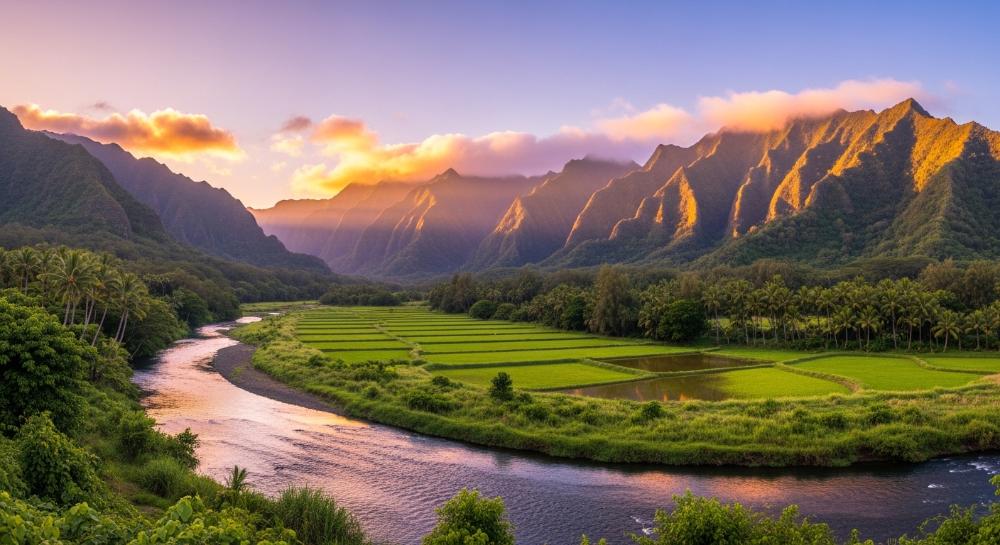
The Kuhio Highway (HI-56) runs northeast from Lihue along the east coast, then curves up to the North Shore. The Hanalei Valley Lookout, about an hour from Lihue, is a genuine stop-the-car moment. The valley below is carpeted in taro patches with mountains rising sharply behind it.
The town of Hanalei is small and relaxed, with good lunch options and beach access at Hanalei Bay. Keep driving west, and the road reaches Ha’ena State Park, which requires advance reservations and a peak-season shuttle. The road ends at Ke’e Beach, where the Kalalau Trail begins its 11-mile run along the Na Pali cliffs. The first two miles to Hanakapi’ai Beach are accessible without a permit and worth the effort.
Big Island: Lava Fields and Lush Coasts
The Big Island is the youngest island in the chain and the one that still feels actively alive. The landscape shifts more dramatically here than anywhere else in Hawaii. You can drive through lava fields on one side and past waterfalls and tropical forest on the other, all in the same afternoon.
Chain of Craters Road, Volcanoes National Park
Chain of Craters Road runs 19 miles from the park’s main area down to the coast, dropping 3,700 feet in elevation. The road passes through hardened lava flows that covered entire neighborhoods as recently as the 1990s. At the bottom, it ends where lava overtook it, with a sea arch sitting just offshore.
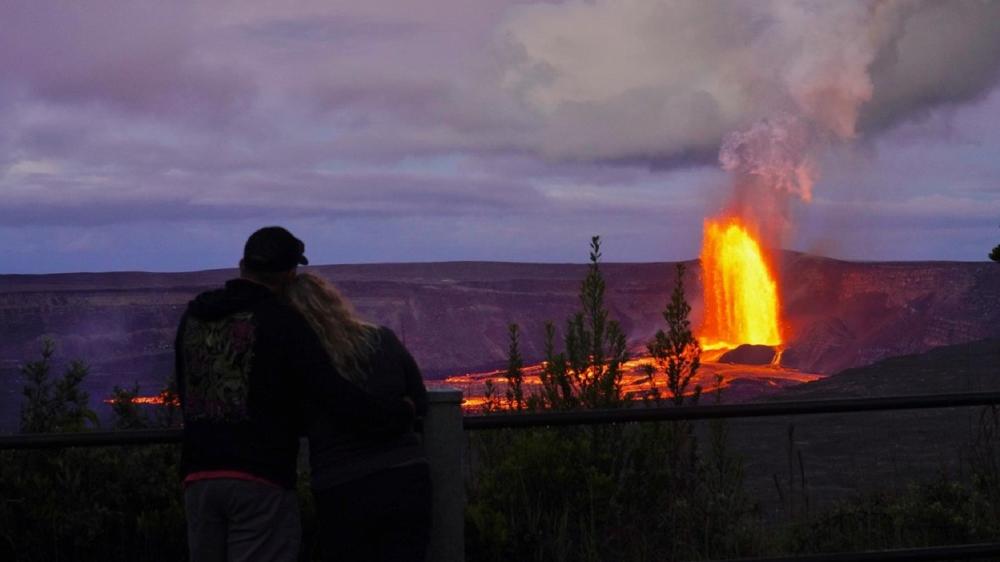
Before heading down the chain, spend time at the Kilauea summit area near the park entrance. The Halemaumau Crater is massive and often emits steam or volcanic gas. The Kilauea Iki trail (4 miles, moderate) lets you walk across a solidified lava lake floor that last erupted in 1959. It’s one of the more memorable hikes in the state.
Hamakua Coast North of Hilo
From Hilo, HI-19 runs north along the Hamakua Coast through former sugar plantation towns and lush clifftop scenery. The road passes over gulches and offers consistent ocean views far below. Most visitors skip this stretch entirely, which makes it one of the quieter drives on the island.
The best stops along the Hamakua Coast:
- Akaka Falls State Park — a short loop trail passing two waterfalls, including the 422-foot Akaka Falls
- Waipio Valley Overlook — one of the most dramatic valley views in Hawaii; the overlook is free and requires no hiking
- Honokaa town — a small plantation-era main street worth a quick walk
The Hamakua Coast pairs well with a morning at Hawaii Volcanoes National Park, about 30 miles south of Hilo. Together, they cover 2 completely different landscapes without any backtracking.
Car Rental Tips for Hawaii
Book your rental car before you arrive, especially for summer (June through August) or major holidays. Hawaii rental car inventory runs tight, and prices spike at the last minute. Airport desks have more availability than hotel locations, and booking weeks ahead is always the safer call.
A standard sedan handles every route in this guide except the optional Kahekili Highway on Maui. Most rental agreements restrict driving on unpaved roads, so check your policy before heading onto any dirt road. Fuel costs in Hawaii are higher than on the mainland, so a full tank each morning is the right habit.
| Island | Main Route | Drive Time | Road Type |
|---|---|---|---|
| Oahu | Circle Island Loop | 6 to 8 hours | Highways and two-lane roads |
| Maui | Road to Hana | 2 to 3 hours each way | Two-lane, one-lane bridges |
| Kauai | Waimea Canyon + North Shore | 2 full days | Paved, some narrow |
| Big Island | Volcanoes + Hamakua Coast | 6 hours minimum | Mixed highway and two-lane |
Spring (April and May) and fall (October and November) are the sweet spots for road tripping in Hawaii. Crowds are smaller than in peak summer, temperatures are comfortable, and the landscape is lush without the heaviest rainfall. Winter brings big surf to Oahu’s North Shore and occasional road closures near active volcanic areas on the Big Island.
Kauai’s North Shore and Waimea Canyon can get rain at any time of year, since Kauai is the wettest of the main islands. Morning drives almost always offer clearer skies at elevation. If the forecast shows rain, start earlier and aim to reach the high lookouts by 9 am.
Each island has a completely different character on the road. Oahu rewards a full circle loop past surf towns and valley lookouts. Maui offers a legendary coastal highway through the rainforest. Kauai takes you up into canyon country and out to the wild North Shore. And the Big Island puts you face-to-face with active volcanic landscapes unlike anything else in the Hawaiian Islands.