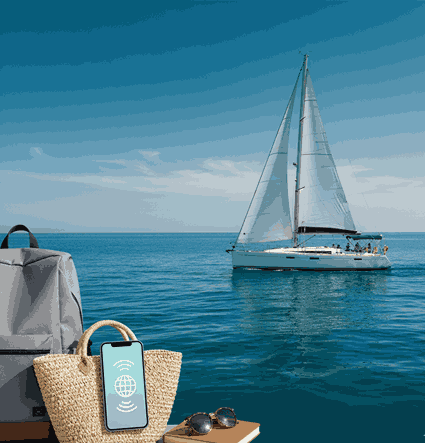
The galley on a day boat is barely a kitchen. It’s a counter the size of a cutting board, maybe a cooler, and a lot of good intentions. On a hot day out on the water, the last thing you want is to be down below sweating over food while everyone else is swimming.
- What makes a good no-cook boat meal
- 1. Mediterranean mezze box for boat days
- Tip
- 2. Cold pesto pasta salad cups
- 3. Deli wraps that won’t go soggy
- Insight
- 4. Tuna and chickpea cracker plates
- 5. Charcuterie grazing box for anchoring
- 6. Antipasto skewers you eat one-handed
- Tip
- 7. Greek couscous salad jars
- 8. Make-ahead breakfast sandwiches for early starts
- Tip
- 9. Fruit and yogurt cups for the cooler
- 10. Overnight oats jars for dawn departures
- Packing and keeping boat meals cold
- Tip
- Bringing it all together
- Read more
So the trick is to stop thinking about cooking at all. Every idea here gets built cold, holds up in a cooler, and won’t slide off the deck when a wake rolls through. You do the prep at home the night before, and the boat just becomes the place you eat.
Below are 10 no-cook galley meals that actually feel like meals, plus the cooler-packing routine that keeps them safe all day. Pick a couple, prep them the evening before, and your day gets easier before it even starts.
What makes a good no-cook boat meal
Not every picnic food survives a boat. Heat, motion, and cramped space quietly ruin meals that seemed fine in your kitchen. Here are the 4 things every idea below is built to handle.
- Mess-free. The deck moves. Wet toppings and anything requiring two hands and a plate often end up on the floor. Contained meals win.
- One-handed where possible. You’re often holding a rail, a rope, or a drink. Food you can eat with one hand keeps the day moving.
- Cooler-stable. It has to taste good cold after hours in a cooler. No reheating.
- Sturdy. Ingredients that don’t bruise, wilt, or go soggy. Firm produce beats delicate greens.
Keep those 4 in mind, and almost any home meal can be adapted.
1. Mediterranean mezze box for boat days
A mezze box is the easiest way to feel like you brought real food without cooking a thing. You assemble good cold ingredients into one container and let everyone graze. It reads as a proper spread, but it’s just assembly.
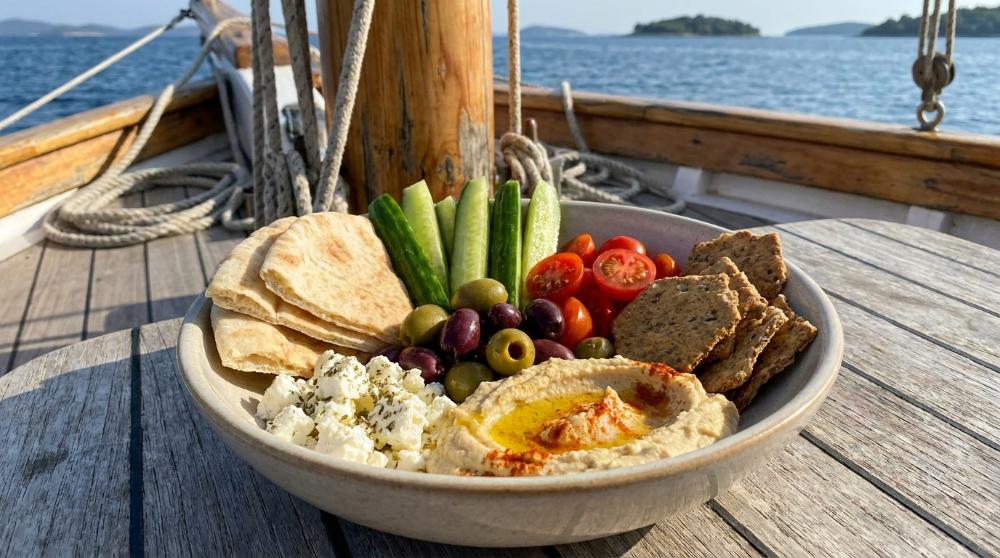
Build it around hummus, then add feta, olives, cucumber spears, cherry tomatoes, and a few folded rounds of pita or sturdy crackers. Everything holds up cold and the flavors lean bright and salty, which is exactly what you crave after a swim.
Tip
Keep the pita sealed away from the dips until serving. Bread that sits against hummus for 3 hours turns to paste.
The one thing that ruins a mezze box is soggy bread. Pack the pita or crackers separately in a zip bag, away from the wet ingredients, and add them only when you’re ready to eat.
2. Cold pesto pasta salad cups
Pasta salad is the classic boat meal for a reason. It’s filling, happy, cold, and actually tastes better after a few hours of the flavors settling. The upgrade skips the large shared bowl and portions it into individual deli cups with lids.
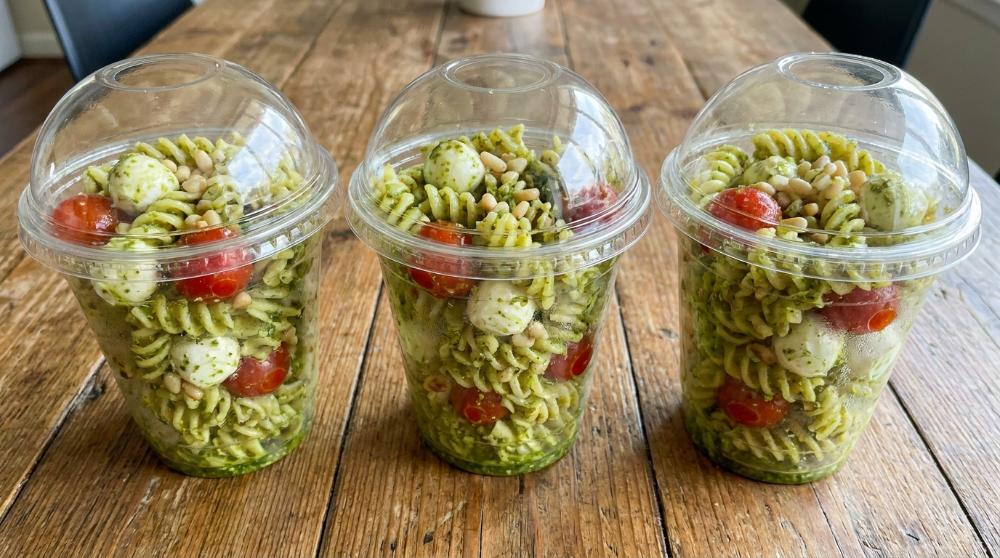
Cups solve 2 boat problems at once. Nobody needs a plate, and one spill stays one spill instead of dumping the whole batch. Here’s the make-ahead flow:
- Cook short pasta like fusilli the night before, drain, and toss with a little oil so it doesn’t clump.
- Stir through pesto, halved cherry tomatoes, and shaved parmesan.
- Add a splash more pesto than feels right, since cold pasta dulls the flavor.
- Spoon into deli cups, seal, and refrigerate overnight.
- Load the cups into the cooler in the morning and go.
Chickpeas or shredded rotisserie chicken turn this from a side into a full lunch. Both hold up cold and keep everyone full until you’re back at the dock. Make a few extra cups while you’re at it, since they get picked at all afternoon and the leftovers are just as good on the ride home.
3. Deli wraps that won’t go soggy
Wraps are the workhorse of boat lunches. A tortilla holds everything together, so there’s no mess in the cooler and no plate on the deck. The sogginess people complain about is completely avoidable once you know the layering order.
The rule is simple. Wet ingredients never touch the tortilla. Lay down cheese or a thin swipe of hummus as a barrier, add your protein next, then put lettuce, tomato, and anything juicy in the very center. Roll it tight, wrap it in foil, and it holds for hours.
Insight
Put a dry layer against the tortilla and the wet layer in the middle. That single change is the difference between a fresh wrap at noon and a soggy one.
Wrap each one individually and label them if your crew has different fillings. Picky eaters get sorted before you leave, with no negotiating on the water.
4. Tuna and chickpea cracker plates
Some days you don’t want a constructed meal. You want to open a container, spoon something onto a cracker, and keep moving. 2 salads cover this and feed both the seafood people and the plant-based crowd from the same setup.
Mix a classic tuna salad in one container and a mashed chickpea salad in another. Both come together in minutes and spoon neatly onto sturdy crackers or into lettuce cups. Bring the crackers separately so they stay crisp.
| Feature | Tuna salad | Chickpea salad |
|---|---|---|
| Protein | High, from the fish | Good, from the beans |
| Keeps in the cooler | Best within a few hours | Holds a little longer |
| Kid-friendly | Usually a yes | Depends on the kid |
| Diet fit | Pescatarian | Vegan and vegetarian |
| Prep time | About 10 minutes | About 10 minutes |
Because these lean on mayo, keep both containers deep in the cooler against the ice and don’t leave them in the sun between servings.
5. Charcuterie grazing box for anchoring
There’s a specific moment on a boat day when you drop anchor, cut the engine, and everyone relaxes. That’s grazing time, and a charcuterie box is built for it. You put out one container and let people pick at it for over an hour.
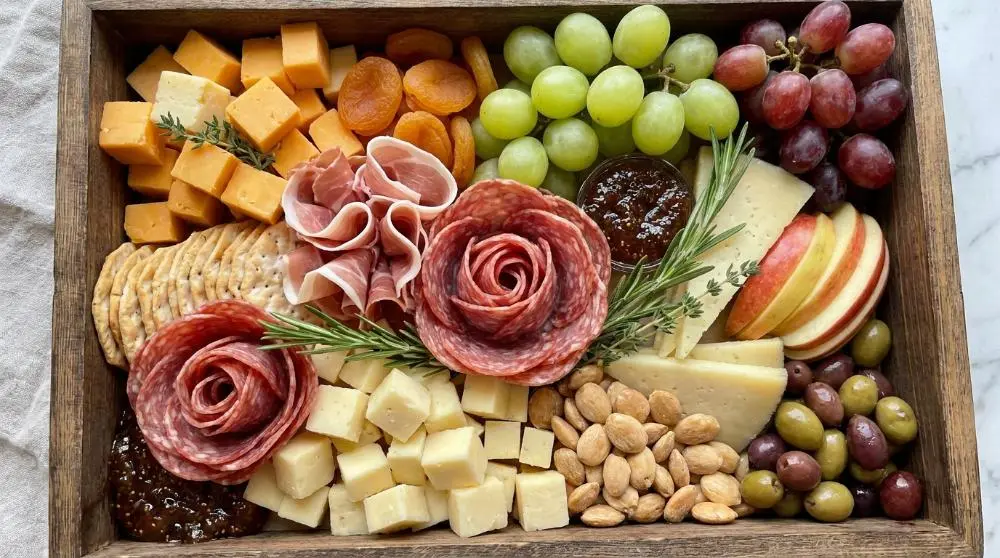
The move for a boat is a sealed grazing box, not an open board that slides around. You want a tight lid so it survives transit and closes back up between grazes. Firm cheeses and cured meats are ideal because they’re happy at cool temperatures.
- A hard cheese like manchego or aged cheddar, cut into cubes so nobody needs a knife
- Cured meats such as salami or prosciutto, folded rather than laid flat
- Crackers or breadsticks in a separate bag so they stay crisp
- Dried apricots, grapes, or firm apple slices for something sweet
- Marcona almonds or olives to fill the gaps
Skip anything runny, like a soft brie that turns to liquid in the heat. Everything should be pick-up-able with fingers, because that’s how it gets eaten out there. Portion it a little more generously than you think you need, since a grazing box is the meal everyone keeps returning to between swims.
6. Antipasto skewers you eat one-handed
If there’s a single most boat-friendly food here, it’s the skewer. It’s the one meal you can genuinely eat with one hand while the other stays on a rope or a rail. No plate, no fork, just a stick of good things.
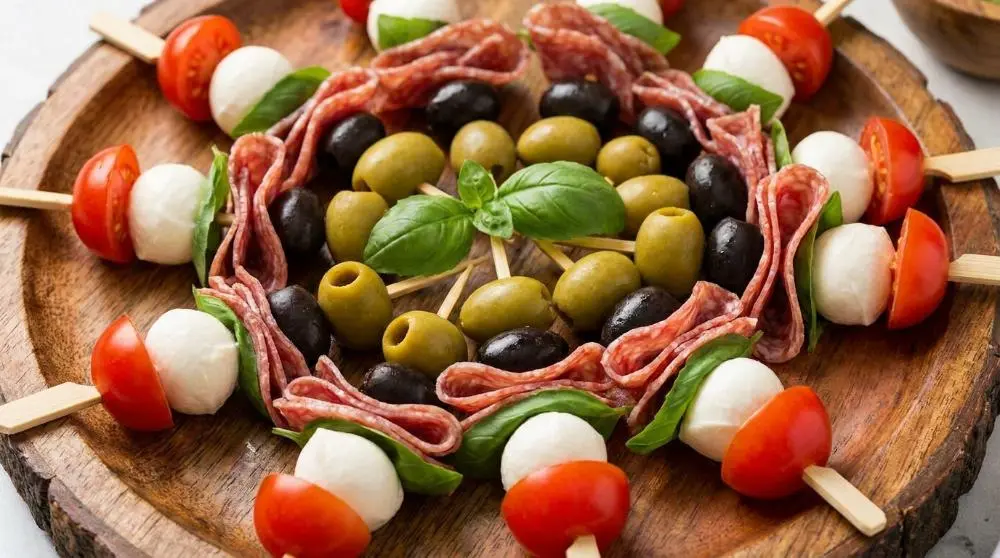
Thread mini mozzarella balls, cherry tomatoes, olives, and folded salami onto short skewers. Basil tucked between adds a fresh note. Each skewer is a caprese and antipasto bite in one, and a few of them add up to a satisfying lunch.
Tip
Freeze the mozzarella balls for about 20 minutes before threading. Firmer cheese skewers cleanly and holds its shape better in a warm cooler.
Assemble them the night before and lay them flat in a single-layer container so they don’t get crushed. Pull the container out at anchor and pass it around.
7. Greek couscous salad jars
Grain salads are underrated boat food. They’re hearty, they hold their texture cold, and they don’t wilt the way leafy salads do. Couscous is especially easy since it needs no real cooking, just hot water and a few minutes of soaking.
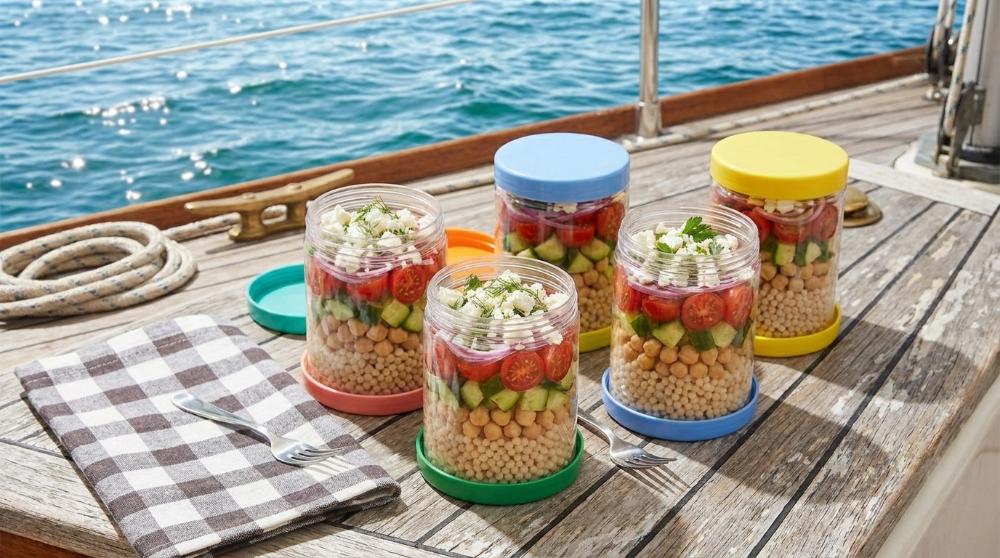
The smart way to pack any grain salad is in a jar with the dressing at the bottom. This keeps everything crisp until you shake it, and then you eat straight from the jar with a fork.
- Dressing goes in first, at the very bottom.
- Chickpeas and cucumber next, since they can sit in dressing without suffering.
- Cherry tomatoes and red onion in the middle.
- Feta and herbs on top, kept away from the wet layers.
- Couscous packed on top as a dry cap.
Seal the jars and lay them upright in the cooler. Because the dressing stays separate until you shake, these hold for hours and taste just-made. Swap the couscous for quinoa or orzo if that’s what you have, since the same layering trick works with any small grain.
8. Make-ahead breakfast sandwiches for early starts
Plenty of boat days begin at dawn, especially if you’re chasing calm water or good fishing. Nobody wants to make breakfast at 6 a.m., so this one gets built the night before and eaten cold at the dock.
Cook an egg the evening before, layer it with cheese and maybe some ham on a sturdy roll, and wrap each sandwich tightly in foil. They’re genuinely good cold, and they double as a mid-morning snack if breakfast was rushed.
Tip
Use a bagel or an English muffin, not a soft bun. The firmer the bread, the better it survives a night in the cooler without turning gummy.
The roll matters more than anything else. A soft white bun collapses under a day of cooler moisture, while something denser holds its structure.
Wrap each one separately and set them near the top of the cooler where they stay cool but not waterlogged. They’ll be ready the moment someone gets hungry.
9. Fruit and yogurt cups for the cooler
You need something light and refreshing on a hot boat, and fruit does the job with almost no prep. The key is picking fruit that travels without turning to mush, then adding a yogurt trick that doubles as an ice pack.
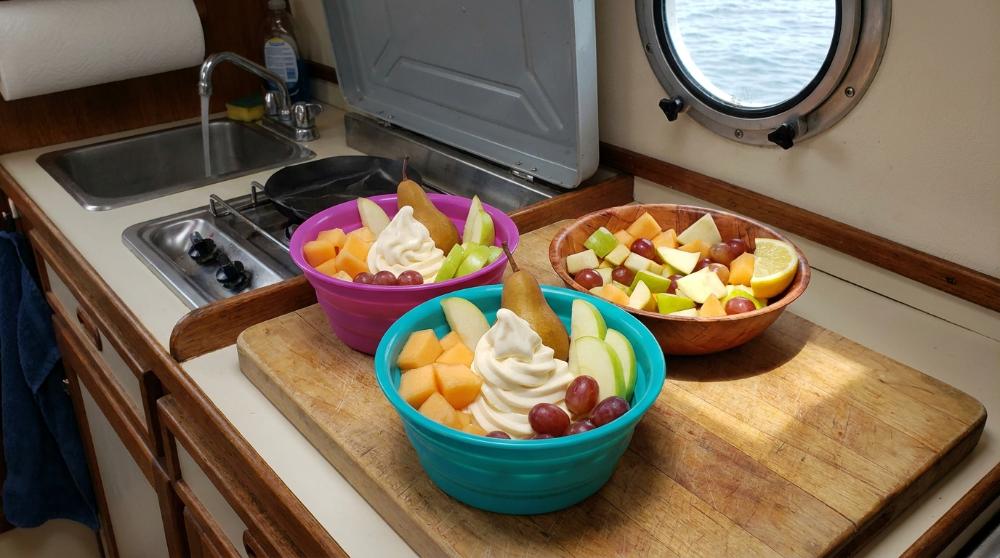
Firm fruit survives a bouncing cooler. Soft, delicate fruit does not.
- Grapes, which need no cutting and stay firm
- Apple and firm pear slices, tossed with a little lemon so they don’t brown
- Melon chunks, which are hydrating and sturdy
- Whole clementines, which peel easily and make zero mess
- Berries, if you keep them in a rigid container, so they don’t get crushed
For the yogurt, freeze individual cups the night before. They go into the cooler solid, help keep everything else cold, and thaw to a soft, spoonable treat. Kids love them, and it’s one less ice pack to buy.
10. Overnight oats jars for dawn departures
For the earliest starts, overnight oats are already done before you wake up. You mix them the night before, they sit in the fridge, and you pull the jar straight into the cooler on your way to the dock.
The base is forgiving, so you can make it your own:
- Combine 1/2 cup rolled oats with 2/3 cup milk or a dairy-free alternative.
- Add a spoon of yogurt for creaminess and a little chia if you have it.
- Sweeten lightly with maple syrup or honey.
- Stir in your mix-ins, seal, and refrigerate overnight.
Dried fruit and nuts hold up best since they won’t get watery. Fresh banana is delicious but browns fast, so add it only if you’ll eat the jar early. These keep for a couple of days in a cold cooler, so make extras for the ride home.
Packing and keeping boat meals cold
The best meal plan falls apart if your cooler can’t hold the temperature. A warm cooler at noon is a real hazard, not just a disappointment, so a little strategy keeps your food safe all day.
- Freeze your drinks the night before. Frozen water bottles act as ice packs, then become cold drinks as they thaw. You lose nothing to melted ice.
- Put ice and cold drinks at the bottom. A base layer of ice keeps everything above it chilled longer.
- Keep mayo-based foods deepest. Tuna salad and egg sandwiches should sit against the ice, not near the lid.
- Keep the cooler shaded and closed. Sun and constant opening warm a cooler fastest. Open it only when you need to.
- Skip glass entirely. Glass breaks on a moving boat and creates a hazard underfoot. Use plastic or metal instead.
- Secure a trash bag. Tie a bag to the boat so wind doesn’t scatter your wrappers.
The advice below comes from a boater who provisions without any refrigeration at all, and it’s a useful reality check on what actually holds up.
Tip
Make a solid block of ice at home in a large container instead of buying bags of cubes. Block ice melts far more slowly and keeps your cooler colder through a long day.
One last habit: bring more water than you think you need, especially if there’s any drinking involved, because sun and salt air dehydrate you faster than you notice.
Bringing it all together
None of this is complicated, and that’s the point. The good boat days are the ones where the food was handled before you left the driveway, so you can spend the hours swimming instead of fussing in a hot galley.
Pick 2 or 3 of these, prep the night before, and pack your cooler with a little intention. Everything travels, everything holds up cold, and nothing needs a stove. Save this one for your next trip, then go enjoy the day. The food will keep.